
























• Latest
Neurowellness & Mental Fitness

Neurowellness & Mental Fitness: Train Focus and Build Resilience

November 23, 2026
protein at meals

Protein at Meals: Practical Ways to Build Satisfying Meals

November 21, 2026
GLP-1 nutrition

GLP-1 Medications and Everyday Nutrition: Questions to Discuss With Your Clinician

November 19, 2026
women’s healthspan

Women’s Healthspan: What It Means and What It Doesn’t Promise

November 18, 2026
menopause symptoms

Menopause Symptoms: Prepare for a More Useful Appointment

November 17, 2026
midlife strength training

Midlife Strength Training: A Beginner’s Guide to Getting Stronger Safely

November 16, 2026
sleep regularity

Sleep Regularity: Why a Consistent Wake Time May Matter More Than a Perfect Bedtime

November 15, 2026
Heart attack in young adults

Heart Attack in Young Adults: Reproductive History and Risk

November 14, 2026
perimenopause sleep

Perimenopause Sleep: How to Sleep Through the Night

November 12, 2026
insulin resistance symptoms

Insulin Resistance Symptoms: Why Overworked Workers Can’t Lose Belly Fat?

August 4, 2026
Sugar Withdrawal Effects: What 14 Days Without Sugar Really Does to Your Organs

Sugar Withdrawal Effects: What 14 Days Without Sugar Really Does to Your Organs

August 1, 2026
Metabolic Health

Metabolic Health: Master Blood Sugar & Insulin Sensitivity Naturally

July 31, 2026
anti ageing supplements

Unlock Your Youth Code: The Truth About Anti Ageing Supplements & Biological Reversal

July 24, 2026
Monday, November 23, 2026
Subscribe to get Updates
  • Login
Wellness and Us Magazine
50 Wellness Resources
  • Home
  • Health
    • All
    • Blog
    • Disease
    • Eyes Health and Vision
    • Fitness
    • Health
    • History
    • Kids Health
    • Lifestyle
    • Longevity
    • Medical Innovations
    • Medications
    • News
    • Nutrition
    • Oral Health
    • Research
    • Weight Loss
    • Wellness
    • Women Health
    protein at meals

    Protein at Meals: Practical Ways to Build Satisfying Meals

    GLP-1 nutrition

    GLP-1 Medications and Everyday Nutrition: Questions to Discuss With Your Clinician

    women’s healthspan

    Women’s Healthspan: What It Means and What It Doesn’t Promise

    menopause symptoms

    Menopause Symptoms: Prepare for a More Useful Appointment

    midlife strength training

    Midlife Strength Training: A Beginner’s Guide to Getting Stronger Safely

    sleep regularity

    Sleep Regularity: Why a Consistent Wake Time May Matter More Than a Perfect Bedtime

    Heart attack in young adults

    Heart Attack in Young Adults: Reproductive History and Risk

  • Weight Loss
    protein at meals

    Protein at Meals: Practical Ways to Build Satisfying Meals

    GLP-1 nutrition

    GLP-1 Medications and Everyday Nutrition: Questions to Discuss With Your Clinician

    insulin resistance symptoms

    Insulin Resistance Symptoms: Why Overworked Workers Can’t Lose Belly Fat?

    Metabolic Health

    Metabolic Health: Master Blood Sugar & Insulin Sensitivity Naturally

    The Truth About Popular Diets: Keto vs. Intermittent Fasting

    The Truth About Popular Diets: Keto vs. Intermittent Fasting

    10 Surprising Benefits of Drinking Water First Thing in the Morning

    10 Surprising Benefits of Drinking Water First Thing in the Morning

    How to Lose Belly Fat Without Exercise: Simple Science-based Tips

    How to Lose Belly Fat Without Exercise: Simple Science-based Tips

  • Our Channel
  • Disease
    insulin resistance symptoms

    Insulin Resistance Symptoms: Why Overworked Workers Can’t Lose Belly Fat?

    Breast Thermography: Technology, Benefits, and Cancer Signs

    Breast Thermography: Technology, Benefits, and Cancer Signs

    selective focus of senior woman holding digital tablet with heartbeat rate on screen

    Exploring the Efficacy of Digital Health Interventions for Heart Health

    Legs injury, swimming and sports person massage calf problem from exercise, training or workout cri

    What Your Legs Could Be Telling You About Your Heart Health

    Uncovering the Causes of Psoriatic Arthritis: Identifying Triggers and Risk Contributors

    Uncovering the Causes of Psoriatic Arthritis: Identifying Triggers and Risk Contributors

    What is Salicylic acid and why should I use it on my skin?

    What is Salicylic acid and why should I use it on my skin?

    Roasted coffee beans and ground coffee in filter holder

    Coffee and Cancer: Separating Fact from Fiction

  • Fitness
    The Paleo Lifestyle: How to Get Fit Naturally and Reclaim Your Energy in 2026

    The Paleo Lifestyle: How to Get Fit Naturally and Reclaim Your Energy in 2026

    How to Lose Belly Fat Without Exercise: Simple Science-based Tips

    How to Lose Belly Fat Without Exercise: Simple Science-based Tips

    Unrecognizable female with manicure checking smartwatch on hand while sitting on yoga mat

    Fitness and Fun: Mastering Your Vitals for a Healthier You

    Thigh and butt exercises

    Bootylicious Gains: Unveiling the Best Exercises for a Toned Glutes

    Sportsman working out with kettlebell in gym

    A Trainer Answers: What’s the Best Workout For Losing Weight?

    Runners training in New York

    Mastering the Half Marathon: How This Simple Cardio Swap Boosts Your Training

    Man with weight training equipment exercising in sport gym club

    Loose Weight Fast: Ditch the Weight, Embrace Your Best Self with Expert Tips

  • Nutrition
    protein at meals

    Protein at Meals: Practical Ways to Build Satisfying Meals

    GLP-1 nutrition

    GLP-1 Medications and Everyday Nutrition: Questions to Discuss With Your Clinician

    insulin resistance symptoms

    Insulin Resistance Symptoms: Why Overworked Workers Can’t Lose Belly Fat?

    Metabolic Health

    Metabolic Health: Master Blood Sugar & Insulin Sensitivity Naturally

    Nutrigenomics

    Eat for Your Genes: The Nutrigenomics Revolution in Personalised Nutrition

    7 Signs Your Body Is Secretly Deficient in Magnesium (And What to Do About It)

    7 Signs Your Body Is Secretly Deficient in Magnesium (And What to Do About It)

    10 Most Dangerous Foods: A Scientific Perspective

    10 Most Dangerous Foods: A Scientific Perspective

  • Lifestyle
    midlife strength training

    Midlife Strength Training: A Beginner’s Guide to Getting Stronger Safely

    sleep regularity

    Sleep Regularity: Why a Consistent Wake Time May Matter More Than a Perfect Bedtime

    Sugar Withdrawal Effects: What 14 Days Without Sugar Really Does to Your Organs

    Sugar Withdrawal Effects: What 14 Days Without Sugar Really Does to Your Organs

    Metabolic Health

    Metabolic Health: Master Blood Sugar & Insulin Sensitivity Naturally

    anti ageing supplements

    Unlock Your Youth Code: The Truth About Anti Ageing Supplements & Biological Reversal

    Are You Following Someone Else’s PERSONALIZED DNA WELLNESS Plan?

    Are You Following Someone Else’s PERSONALIZED DNA WELLNESS Plan?

    The Paleo Lifestyle: How to Get Fit Naturally and Reclaim Your Energy in 2026

    The Paleo Lifestyle: How to Get Fit Naturally and Reclaim Your Energy in 2026

No Result
View All Result
HealthNews
No Result
View All Result

Neurowellness & Mental Fitness: Train Focus and Build Resilience

wellnessandus.com by wellnessandus.com
November 23, 2026
in Blog, Health, Wellness
0
Home Blog
50 Wellness Resources 50 Wellness Resources 50 Wellness Resources
0
SHARES
0
VIEWS
Share on FacebookShare on Twitter

Neurowellness & Mental Fitness means supporting attention, memory, emotional balance, and recovery through repeatable daily habits. In a randomized clinical trial of 2,111 older adults at risk of cognitive decline and dementia, the structured lifestyle group’s global cognition increased by 0.243 SD per year over 2 years, compared with 0.213 SD per year in the self-guided group; the between-group difference was 0.029 SD per year (P = .008). What if better focus begins not with a productivity trick, but with habits that help the brain and body recover?

Stress can drain attention at work and make ordinary life feel harder to manage. Yet focus and resilience are skills you can support, not traits you either have or lack. Small practices that fit your real schedule are more useful than plans you cannot sustain. The practical test is whether a habit fits into an ordinary week and can be repeated.

Key Takeaways

  • Protect attention with routines you can repeat.
  • Pair mental practice with movement and recovery.
  • Expect training gains to vary across tasks.
  • Check supplement labels and safety before use.
  • Seek care when symptoms disrupt daily life.

What Supports Neurowellness & Mental Fitness in Daily Life?

A useful starting point is a routine that pairs regular movement, sleep, social connection, and a manageable cognitive challenge. Steady habits support brain health and cognitive function more reliably than a single hack. In the 2-year US POINTER trial, a structured program combined exercise, the MIND diet, cognitive challenge, social engagement, and cardiovascular health monitoring.

Sleep timing matters: turning off electronic devices at least 30 minutes before bed can help, and a steady bedtime and wake time can improve sleep. Enough sleep supports attention and memory in daily activities. Movement and exercise also give the body a regular outlet for energy and support recovery.

Build brain health through several connected habits, not one perfect routine. Choose a manageable step you can repeat.

Foundations for brain health and stress resilience

Nutrition and hydration help support the body and nervous system through the day. A cognitive challenge can be as simple as learning a new skill, while social connection gives people regular chances to listen and respond. Notice emotional signals without judging yourself, then try reframing a stressful moment into a specific next step.

A Hispanic woman serves homemade tacos at a rustic wooden table while a Caucasian man talks and smiles with her. Dishes and colorful ingredients sit on the counter beneath a window, with family photos and local art on the kitchen walls.

Brief recovery moments can help interrupt a tense stretch: take a few slow breaths or step outside. Wearables can help you notice patterns in sleep or heart-rate variability, but a number is not a diagnosis. Use patterns to adjust routines or seek qualified care when needed.

Pair daily habits with the right support

Routine feelings of anxiety or depression deserve attention, not blame. In 2025, 12.5% of U.S. adults age 18 and older had regular feelings of worry, nervousness, or anxiety; 4.5% had regular feelings of depression. Available options include medication or clinician-assessed options such as transcranial magnetic stimulation when symptoms persist or disrupt life.

A Black woman clinician in smart casual clothing listens to a Hispanic man in comfortable clothes at a desk. A bookshelf of mental health resources, plants, wellness art, and a coffee table with a notepad and herbal tea fill the office.

Support can be practical and personal: a clinician can assess symptoms and help match care to your needs. Keep a simple daily log of mood and focus for a week to spot patterns.

Brain Training Exercises for Cognitive Skills

Brain training works best as a practice: mix digital games with real-world tasks that require recall, planning, and adaptation. Practice can sharpen a trained skill, though gains may not transfer equally to every daily function. A meta-analysis of 16 randomized controlled trials published from 2000 through 2024 found that brain-training games improved cognitive function, processing speed, and working memory.

Use varied challenges alongside movement rather than treating an app as a complete fitness plan. Some studies in that analysis found aerobic or other exercise more effective than brain training. Try these four exercises and track which ones keep your attention:

  • Play a brain-training game that asks you to recall details.
  • Use spaced recall to review information you recently learned.
  • Plan a route or map out a small garden before starting.
  • Build a progressively challenging coordination or strength routine.
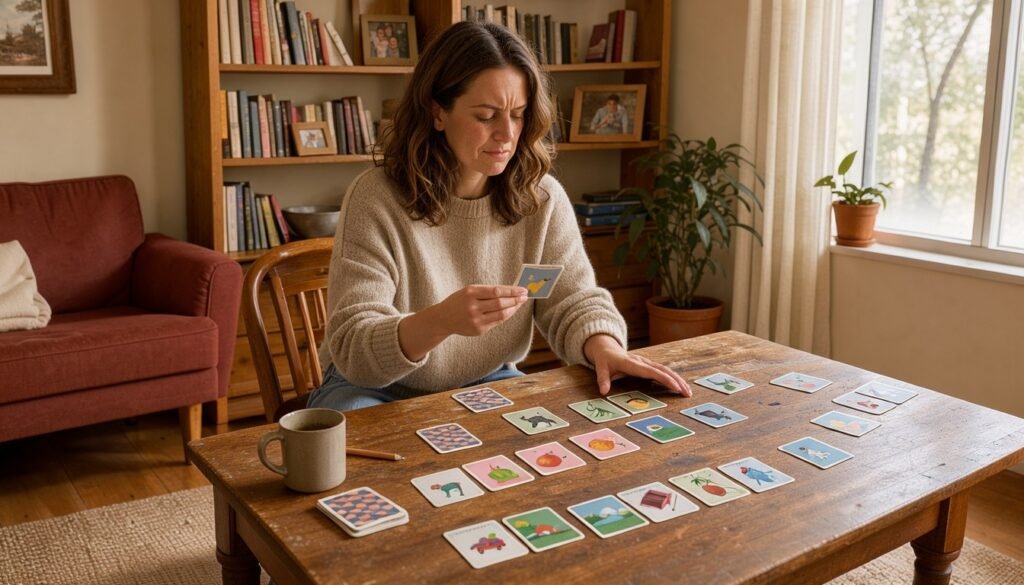
A woman in her 30s sits at a wooden table, matching colorful memory cards with different pictures. Bookshelves, a large window, and a leafy houseplant fill the living room behind her.

Resistance training also has evidence for specific outcomes in older adults. A meta-analysis of 17 randomized controlled trials involving 739 adults aged 60 or older found improved overall cognition (SMD = 0.40, P < 0.05), working memory (SMD = 0.44, P < 0.001), verbal learning and memory (MD = 3.01, P < 0.001), and spatial memory span (SMD = 0.63, P < 0.001). It did not significantly affect processing speed, executive function, or attention (P > 0.05).

Approach Evidence base Reported cognitive outcomes Useful nuance
Brain-training games Meta-analysis of 16 randomized trials Cognitive function, processing speed, working memory Transfer to everyday skills can differ
Resistance training in older adults 17 randomized trials, 739 adults age 60 or older Overall cognition, working memory, verbal learning, spatial memory span No significant effects on processing speed, executive function, or attention
Real-world planning or functional cognitive practice Applied tasks such as gardening or route planning Planning and organization demands Useful practice, not a measured trial effect

Real-world planning connects cognition to everyday function: planning a garden involves ordering tasks, while route planning requires choices and adaptation. Increase the challenge when an exercise becomes easy by adding a new rule, context, or recall demand.

Focus Hacks for Complex Work

When a demanding task keeps losing its place to alerts, choose one target and protect a short work block. Single-tasking can help protect cognitive stability, the ability to keep attention on a task despite distraction. A 25-minute work interval followed by a 5-minute break is a useful timer, adjustable to your task and pace.

Repeated task switching carries a time cost, especially when tasks are complex or unfamiliar. Experiments found that people took longer when switching between tasks, and repeated back-and-forth changes can add up.
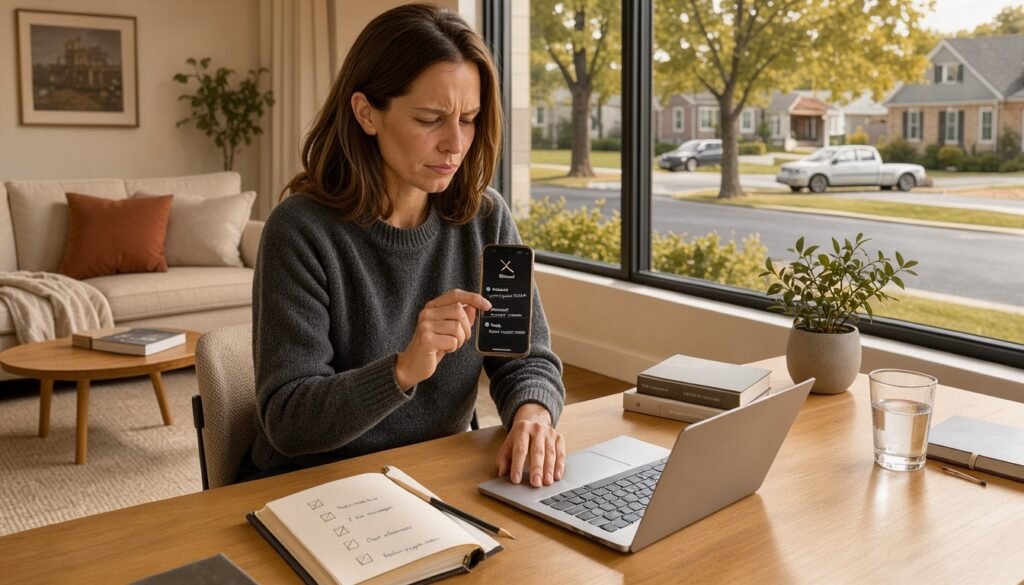
A woman at a stylish desk in her modern home gently silences a smartphone showing notifications. Books, a laptop, and a small plant fill the organized workspace; large windows overlook a quiet suburban street beside a cozy living area.

Single-tasking and task switching

A simple structure can keep your attention from scattering during work:

  • Choose one priority for each work block.
  • Silence notifications or check them in batches.
  • Try 25 minutes of work and 5 minutes of rest, adjusting the timer as needed.
  • Pause to name an emotion or reset attention before continuing.

Single-tasking is not a rule against changing direction. Cognitive flexibility means shifting focus when goals or circumstances change. Make that shift deliberate, rather than letting every alert decide what deserves your attention.

Neuroscientist Reacts to Productivity Hacks

This evidence-check segment needs no invented expert dialogue: the useful distinction is between protecting attention and shifting it on purpose. A 2024 perspective describes task focus as cognitive stability and task switching as cognitive flexibility. One protects a current goal; the other helps you adapt when the goal changes.

That distinction makes common productivity advice easier to judge. A timer may help you hold one task, but the interval should fit the work and the person. Switching can be useful when priorities change, yet frequent, automatic switching adds time costs, particularly for unfamiliar work. A brief movement break can also serve as a practical reset without promising a specific cognitive result.

Change tasks deliberately when priorities or circumstances shift, rather than switching by default.

Nootropics Reviewed: Ingredients, Evidence, and Safety

A nootropic is worth reviewing ingredient by ingredient, with its intended use and safety details checked alongside the label’s marketing. Nootropics are substances marketed to support cognitive functions such as attention, memory, or alertness, including dietary supplements and some prescription drugs. Marketing does not establish that a product improves cognition.

Check the exact ingredient, amount, and serving directions before considering a supplement. Caffeine is commonly marketed for alertness; note milligrams per serving and other caffeine sources. Creatine monohydrate is often marketed for exercise performance or mental energy; check that the label names the form and amount. Bacopa is often marketed for memory; check the extract amount and serving details.
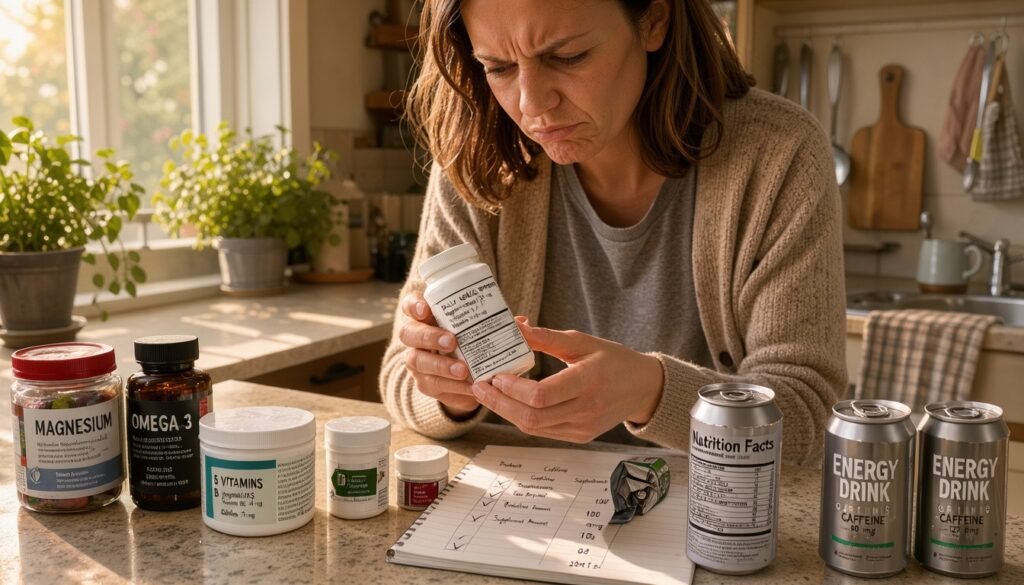
A woman with shoulder-length brown hair checks nutrition labels on supplement bottles and energy drinks spread across her kitchen counter. Potted plants sit on the windowsill, with kitchen utensils hanging on the wall behind her.

Compare familiar nootropic ingredients

Ingredient example Common marketed goal Practical label check
Caffeine Alertness Milligrams per serving and other caffeine sources
Creatine monohydrate Exercise performance or mental energy Ingredient form, amount, and serving directions
Bacopa Memory Extract amount and serving details

These examples have different marketed goals, so compare like with like rather than relying on a broad “brain support” claim. The label should make its ingredients and serving information clear. Avoid treating a product’s name or a large promise as proof of benefit.

Read the label and check the safeguards

Under FDA dietary-supplement rules, manufacturers and distributors are responsible for evaluating product safety and labelling before marketing. FDA oversight covers current good manufacturing practices, new dietary ingredients, labelling and claims, and adverse-event reporting. The agency can act against adulterated or misbranded supplements after they reach the market.

A middle-aged Black woman in jeans and a T-shirt holds a dietary supplement bottle and reads its directions and safety information in a grocery store aisle. Shelves of health products line the foreground, with shoppers and store signs behind her.

Dietary supplements are not reviewed like prescription drugs before sale, so label care matters. People who are pregnant, taking medication, or managing a health condition should consult a qualified clinician before starting a supplement. Keep a written list of supplements and medicines to discuss at a clinical visit.

Guided Meditation for Mental Clarity

A guided meditation for mental clarity can be simple: notice the breath, notice distraction, and return attention without judging it. Gentle repetition gives your mind a clear place to come back to. Settle into a comfortable position, with your feet supported or your hands resting easily.

Let the breath stay natural; there is no need to make it deeper or slower. Notice where you feel it most clearly, such as your nose, chest, or abdomen. When thoughts pull you away, name them quietly as “planning,” “remembering,” or “worry,” then return to the next breath.

A middle-aged woman sits with her eyes closed in a cushioned armchair, noticing her natural breathing. A throw blanket and pillows surround her; a nearby wooden table holds herbal tea and a potted plant, with a garden visible through the windows.

A guided practice for mental clarity

Move your attention through your body, noticing the jaw, shoulders, hands, and stomach. If you find tension, recognise it without forcing it to disappear. Let your attention rest on one area for a moment, then return to breathing. A distraction is not a failure; noticing it is part of the practice.

Take a final breath and ask what would make the next few minutes useful. Choose one intention, such as listening carefully or finishing one task. Keep the practice brief enough to repeat, especially on days when your mood or energy feels low.

Use meditation-app evidence to set expectations

Meditation apps can support a repeatable practice, but reported mood effects are modest. Across 45 randomized controlled trials, meditation apps produced modest reductions in depression (Hedges’ g = 0.24) and anxiety (Hedges’ g = 0.28) compared with control conditions. These results describe average effects, not a promise about any one person’s experience.
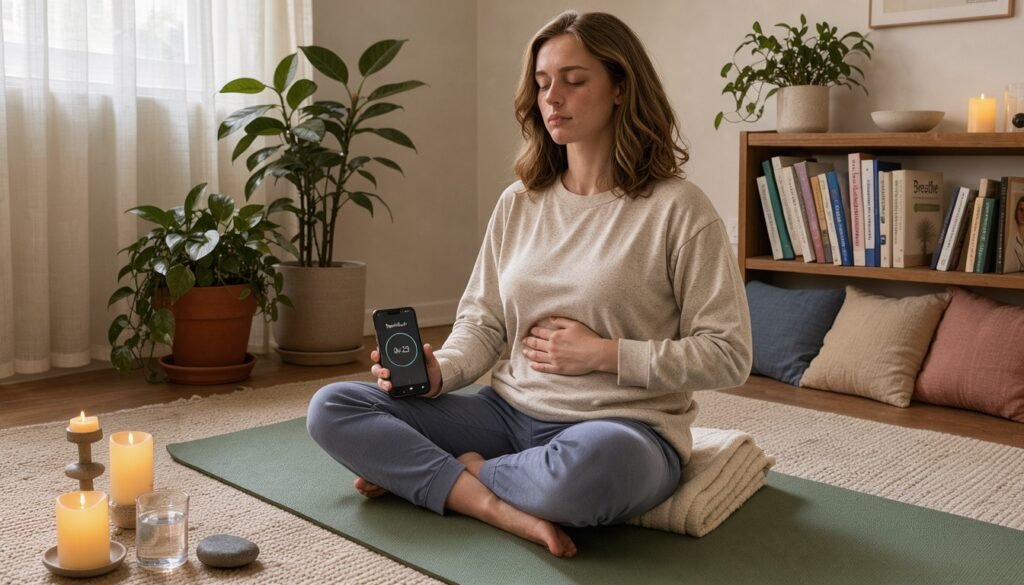
A young woman sits cross-legged on a plush yoga mat, eyes closed, holding a smartphone with a meditation app open. Potted plants, a bookshelf of wellness books, sheer curtains, and candles fill her living room.

Among active meditation-app users, average use was 10-21 minutes per session, 3 days per week. One review found that 4.7% of people who initially used digital meditation apps continued after 30 days. The 10 most-used meditation apps had collectively reached more than 300 million downloads by 2024. A pause or a change in routine is not a personal failing; choose a format that suits your life.

Let a meditation app support your practice, not set a standard you must meet. A missed session is simply a chance to begin again.

End by choosing one next action from the session and writing it down before returning to work.

Conclusion

Choose one practice that feels achievable and give it a place in your schedule this week. A short walk, a steadier sleep routine, a focus block, or a breathing practice can be a sensible starting point. The best starting point is the one that fits your current needs and leaves room for recovery.

If stress or cognitive symptoms persist, worsen, or interfere with daily life, qualified care can help you decide what support fits. Therapy and medical assessment are valid parts of a wellness plan, not signs that you have failed to manage things alone. Schedule one short practice you are ready to repeat. Make the first session easy to begin, then repeat it at a time that fits your life.


FAQ

How often should I use brain-training games?

Try short, repeatable sessions a few times per week as a practical starting point. Choose a game that asks you to recall or work with information, then increase the challenge as the task gets easier. You can add a new rule or vary the type of information. Keep the routine manageable so it can fit into ordinary weeks.

Do brain-training apps improve everyday memory?

Brain-training apps can improve tested functions such as working memory, but that does not guarantee better everyday memory in every situation. Transfer to daily tasks can differ from gains on a practiced game. Some studies in a meta-analysis found aerobic or other exercise more effective than brain training, so apps are one option among several ways to challenge cognition.

Are nootropics safe to combine with medication?

Some supplements can interact with medication, so discuss the specific ingredient and product label with a qualified clinician before combining them. Share the dose, serving directions, and any other supplements you use. This is especially important if you are pregnant or managing a health condition. Do not assume that a product is safe because it is sold as a supplement.

What should a guided meditation for focus include?

A guided meditation for focus can include a breathing anchor, a brief body scan, and a gentle return to the breath after distraction. Notice natural breathing without forcing a pattern. Scan for areas of tension, label a distracting thought without judgment, and bring attention back to breathing. A simple practice can end with one clear intention for your next activity.

Can short movement breaks help me focus?

Yes, a brief walk or stretch can be a practical reset when you feel stuck or restless. Use the movement to change posture and give your attention a pause before returning to the task. The useful choice depends on your setting and what feels comfortable. Treat it as a personal strategy, not a guaranteed fix for concentration.

When should I seek professional help for stress or cognitive symptoms?

Seek qualified care when stress or cognitive symptoms persist, worsen, or interfere with daily life. A clinician can assess what may be contributing and discuss options such as therapy or medical care. You do not need to wait until symptoms become severe to ask for help. Describe how long they have lasted and how they affect your routine.
Tags: Focus trainingMental fitnessNeurowellness & mental fitness
50 Wellness Resources 50 Wellness Resources 50 Wellness Resources
Previous Post

Protein at Meals: Practical Ways to Build Satisfying Meals

wellnessandus.com

wellnessandus.com

Discussion about this post

Recommended

Intermittent Fasting Benefits

Intermittent Fasting Benefits: Transform Your Health Today

2 years ago

Alcohol: Link Between Liver and Brain May Control Consumption

3 years ago

Don't Miss

protein at meals

Protein at Meals: Practical Ways to Build Satisfying Meals

November 21, 2026
GLP-1 nutrition

GLP-1 Medications and Everyday Nutrition: Questions to Discuss With Your Clinician

November 19, 2026
women’s healthspan

Women’s Healthspan: What It Means and What It Doesn’t Promise

November 18, 2026
menopause symptoms

Menopause Symptoms: Prepare for a More Useful Appointment

November 17, 2026
50 Wellness Resources
Wellness and Us Magazine

At Wellness and Us, our mission is to empower our readers with accurate and up-to-date information supported by published medical and health articles. We believe that everyone deserves access to trustworthy resources for making informed decisions about their health and wellness.

Follow us

Recent News

protein at meals

Protein at Meals: Practical Ways to Build Satisfying Meals

November 21, 2026
GLP-1 nutrition

GLP-1 Medications and Everyday Nutrition: Questions to Discuss With Your Clinician

November 19, 2026

Categories

  • Blog
  • Disease
  • Eyes Health and Vision
  • Fitness
  • Health
  • History
  • Kids Health
  • Lifestyle
  • Longevity
  • Medical Innovations
  • Medications
  • News
  • Nutrition
  • Oral Health
  • Research
  • Weight Loss
  • Wellness
  • Women Health

Tags

Artificial Intelligence in Healthcare Blood Sugar Control Breathwork exercises Cancer Clean Eating Diabetes Diet Tips Exercise Fitness Future of Healthcare Gut health tips Gut microbiome Health and wellness Health Benefits Health Symptoms Healthy Aging Heart Attack Holistic Wellness Kidney health Kids oral health Men's Health Mental Health Advocacy Mental Well-being Mind-body balance Mindfulness Meditation Mindfulness Practices Natural remedies Nutrition oral health Prebiotic Foods Pregnancy Probiotics Relaxation exercises Relaxation Techniques Self-care practices Self-care Strategies Skin Care Sleep quality Stress Management Stress reduction techniques Sugar-free diet Sugar detox Wellness Women's Health Youthful Skin
  • About
  • Advertise
  • Privacy & Policy
  • Contact

© 2023 Wellness and Us - All Rights Reserved - Designed by Online Net1.

Welcome Back!

Login to your account below

Forgotten Password?

Retrieve your password

Please enter your username or email address to reset your password.

Log In

Add New Playlist

No Result
View All Result
  • Home
  • Health
  • Weight Loss
  • Our Channel
  • Disease
  • Fitness
  • Nutrition
  • Lifestyle

© 2023 Wellness and Us - All Rights Reserved - Designed by Online Net1.

This website uses cookies. By continuing to use this website you are giving consent to cookies being used. Visit our Privacy and Cookie Policy.
Go to mobile version