

Neurowellness & Mental Fitness means supporting attention, memory, emotional balance, and recovery through repeatable daily habits. In a randomized clinical trial of 2,111 older adults at risk of cognitive decline and dementia, the structured lifestyle group’s global cognition increased by 0.243 SD per year over 2 years, compared with 0.213 SD per year in the self-guided group; the between-group difference was 0.029 SD per year (P = .008). What if better focus begins not with a productivity trick, but with habits that help the brain and body recover?
Stress can drain attention at work and make ordinary life feel harder to manage. Yet focus and resilience are skills you can support, not traits you either have or lack. Small practices that fit your real schedule are more useful than plans you cannot sustain. The practical test is whether a habit fits into an ordinary week and can be repeated.
Key Takeaways
- Protect attention with routines you can repeat.
- Pair mental practice with movement and recovery.
- Expect training gains to vary across tasks.
- Check supplement labels and safety before use.
- Seek care when symptoms disrupt daily life.
What Supports Neurowellness & Mental Fitness in Daily Life?
A useful starting point is a routine that pairs regular movement, sleep, social connection, and a manageable cognitive challenge. Steady habits support brain health and cognitive function more reliably than a single hack. In the 2-year US POINTER trial, a structured program combined exercise, the MIND diet, cognitive challenge, social engagement, and cardiovascular health monitoring.
Sleep timing matters: turning off electronic devices at least 30 minutes before bed can help, and a steady bedtime and wake time can improve sleep. Enough sleep supports attention and memory in daily activities. Movement and exercise also give the body a regular outlet for energy and support recovery.

Build brain health through several connected habits, not one perfect routine. Choose a manageable step you can repeat.
Foundations for brain health and stress resilience
Nutrition and hydration help support the body and nervous system through the day. A cognitive challenge can be as simple as learning a new skill, while social connection gives people regular chances to listen and respond. Notice emotional signals without judging yourself, then try reframing a stressful moment into a specific next step.

Brief recovery moments can help interrupt a tense stretch: take a few slow breaths or step outside. Wearables can help you notice patterns in sleep or heart-rate variability, but a number is not a diagnosis. Use patterns to adjust routines or seek qualified care when needed.
Pair daily habits with the right support
Routine feelings of anxiety or depression deserve attention, not blame. In 2025, 12.5% of U.S. adults age 18 and older had regular feelings of worry, nervousness, or anxiety; 4.5% had regular feelings of depression. Available options include medication or clinician-assessed options such as transcranial magnetic stimulation when symptoms persist or disrupt life.

Support can be practical and personal: a clinician can assess symptoms and help match care to your needs. Keep a simple daily log of mood and focus for a week to spot patterns.
Brain Training Exercises for Cognitive Skills
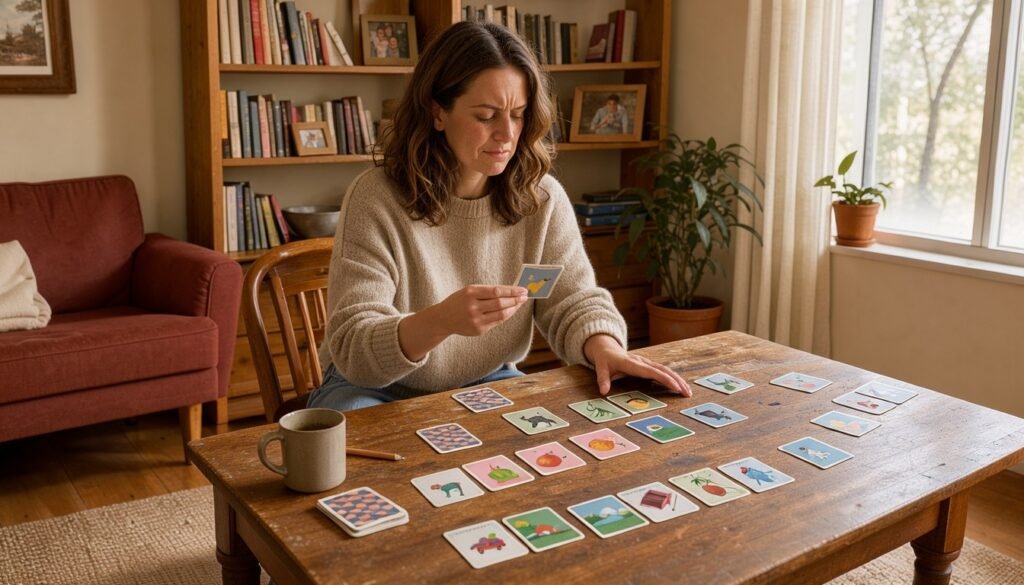
Brain training works best as a practice: mix digital games with real-world tasks that require recall, planning, and adaptation. Practice can sharpen a trained skill, though gains may not transfer equally to every daily function. A meta-analysis of 16 randomized controlled trials published from 2000 through 2024 found that brain-training games improved cognitive function, processing speed, and working memory.
Use varied challenges alongside movement rather than treating an app as a complete fitness plan. Some studies in that analysis found aerobic or other exercise more effective than brain training. Try these four exercises and track which ones keep your attention:
- Play a brain-training game that asks you to recall details.
- Use spaced recall to review information you recently learned.
- Plan a route or map out a small garden before starting.
- Build a progressively challenging coordination or strength routine.
Resistance training also has evidence for specific outcomes in older adults. A meta-analysis of 17 randomized controlled trials involving 739 adults aged 60 or older found improved overall cognition (SMD = 0.40, P < 0.05), working memory (SMD = 0.44, P < 0.001), verbal learning and memory (MD = 3.01, P < 0.001), and spatial memory span (SMD = 0.63, P < 0.001). It did not significantly affect processing speed, executive function, or attention (P > 0.05).
| Approach | Evidence base | Reported cognitive outcomes | Useful nuance |
|---|---|---|---|
| Brain-training games | Meta-analysis of 16 randomized trials | Cognitive function, processing speed, working memory | Transfer to everyday skills can differ |
| Resistance training in older adults | 17 randomized trials, 739 adults age 60 or older | Overall cognition, working memory, verbal learning, spatial memory span | No significant effects on processing speed, executive function, or attention |
| Real-world planning or functional cognitive practice | Applied tasks such as gardening or route planning | Planning and organization demands | Useful practice, not a measured trial effect |
Real-world planning connects cognition to everyday function: planning a garden involves ordering tasks, while route planning requires choices and adaptation. Increase the challenge when an exercise becomes easy by adding a new rule, context, or recall demand.
Focus Hacks for Complex Work
When a demanding task keeps losing its place to alerts, choose one target and protect a short work block. Single-tasking can help protect cognitive stability, the ability to keep attention on a task despite distraction. A 25-minute work interval followed by a 5-minute break is a useful timer, adjustable to your task and pace.
Repeated task switching carries a time cost, especially when tasks are complex or unfamiliar. Experiments found that people took longer when switching between tasks, and repeated back-and-forth changes can add up.

Single-tasking and task switching
A simple structure can keep your attention from scattering during work:
- Choose one priority for each work block.
- Silence notifications or check them in batches.
- Try 25 minutes of work and 5 minutes of rest, adjusting the timer as needed.
- Pause to name an emotion or reset attention before continuing.
Single-tasking is not a rule against changing direction. Cognitive flexibility means shifting focus when goals or circumstances change. Make that shift deliberate, rather than letting every alert decide what deserves your attention.
Neuroscientist Reacts to Productivity Hacks
This evidence-check segment needs no invented expert dialogue: the useful distinction is between protecting attention and shifting it on purpose. A 2024 perspective describes task focus as cognitive stability and task switching as cognitive flexibility. One protects a current goal; the other helps you adapt when the goal changes.
That distinction makes common productivity advice easier to judge. A timer may help you hold one task, but the interval should fit the work and the person. Switching can be useful when priorities change, yet frequent, automatic switching adds time costs, particularly for unfamiliar work. A brief movement break can also serve as a practical reset without promising a specific cognitive result.
Change tasks deliberately when priorities or circumstances shift, rather than switching by default.
Nootropics Reviewed: Ingredients, Evidence, and Safety
A nootropic is worth reviewing ingredient by ingredient, with its intended use and safety details checked alongside the label’s marketing. Nootropics are substances marketed to support cognitive functions such as attention, memory, or alertness, including dietary supplements and some prescription drugs. Marketing does not establish that a product improves cognition.
Check the exact ingredient, amount, and serving directions before considering a supplement. Caffeine is commonly marketed for alertness; note milligrams per serving and other caffeine sources. Creatine monohydrate is often marketed for exercise performance or mental energy; check that the label names the form and amount. Bacopa is often marketed for memory; check the extract amount and serving details.

Compare familiar nootropic ingredients
| Ingredient example | Common marketed goal | Practical label check |
|---|---|---|
| Caffeine | Alertness | Milligrams per serving and other caffeine sources |
| Creatine monohydrate | Exercise performance or mental energy | Ingredient form, amount, and serving directions |
| Bacopa | Memory | Extract amount and serving details |
These examples have different marketed goals, so compare like with like rather than relying on a broad “brain support” claim. The label should make its ingredients and serving information clear. Avoid treating a product’s name or a large promise as proof of benefit.
Read the label and check the safeguards
Under FDA dietary-supplement rules, manufacturers and distributors are responsible for evaluating product safety and labelling before marketing. FDA oversight covers current good manufacturing practices, new dietary ingredients, labelling and claims, and adverse-event reporting. The agency can act against adulterated or misbranded supplements after they reach the market.

Dietary supplements are not reviewed like prescription drugs before sale, so label care matters. People who are pregnant, taking medication, or managing a health condition should consult a qualified clinician before starting a supplement. Keep a written list of supplements and medicines to discuss at a clinical visit.
Guided Meditation for Mental Clarity
A guided meditation for mental clarity can be simple: notice the breath, notice distraction, and return attention without judging it. Gentle repetition gives your mind a clear place to come back to. Settle into a comfortable position, with your feet supported or your hands resting easily.
Let the breath stay natural; there is no need to make it deeper or slower. Notice where you feel it most clearly, such as your nose, chest, or abdomen. When thoughts pull you away, name them quietly as “planning,” “remembering,” or “worry,” then return to the next breath.

A guided practice for mental clarity
Move your attention through your body, noticing the jaw, shoulders, hands, and stomach. If you find tension, recognise it without forcing it to disappear. Let your attention rest on one area for a moment, then return to breathing. A distraction is not a failure; noticing it is part of the practice.
Take a final breath and ask what would make the next few minutes useful. Choose one intention, such as listening carefully or finishing one task. Keep the practice brief enough to repeat, especially on days when your mood or energy feels low.
Use meditation-app evidence to set expectations
Meditation apps can support a repeatable practice, but reported mood effects are modest. Across 45 randomized controlled trials, meditation apps produced modest reductions in depression (Hedges’ g = 0.24) and anxiety (Hedges’ g = 0.28) compared with control conditions. These results describe average effects, not a promise about any one person’s experience.

Among active meditation-app users, average use was 10-21 minutes per session, 3 days per week. One review found that 4.7% of people who initially used digital meditation apps continued after 30 days. The 10 most-used meditation apps had collectively reached more than 300 million downloads by 2024. A pause or a change in routine is not a personal failing; choose a format that suits your life.
Let a meditation app support your practice, not set a standard you must meet. A missed session is simply a chance to begin again.
End by choosing one next action from the session and writing it down before returning to work.
Conclusion
Choose one practice that feels achievable and give it a place in your schedule this week. A short walk, a steadier sleep routine, a focus block, or a breathing practice can be a sensible starting point. The best starting point is the one that fits your current needs and leaves room for recovery.
If stress or cognitive symptoms persist, worsen, or interfere with daily life, qualified care can help you decide what support fits. Therapy and medical assessment are valid parts of a wellness plan, not signs that you have failed to manage things alone. Schedule one short practice you are ready to repeat. Make the first session easy to begin, then repeat it at a time that fits your life.