

Imagine a way to improve your health without a complicated diet. Intermittent fasting is a powerful method for losing weight and feeling better. It’s not just a trend; it’s backed by science to help your body heal and work better.
Intermittent fasting does more than just cut calories. It helps you heal, think clearer, and lose weight for good. People in the U.S. are finding it boosts their energy and health.
This method is simple. Unlike strict diets, it focuses on when you eat, not what. It’s easy to fit into your life, making it easier to lose weight and feel better.
Key Takeaways
- Intermittent fasting is more than a diet – it’s a lifestyle approach
- Supports natural metabolic processes
- Promotes sustainable weight loss
- Improves mental clarity and focus
- Adaptable to various lifestyle needs
- Backed by scientific research
- Can enhance overall health and wellness
What is Intermittent Fasting?
Intermittent fasting is a new way to eat that’s different from old diet plans. It focuses on when you eat, not what. This can greatly improve your metabolic health.
At its heart, intermittent fasting is about eating in cycles. You eat for a while, then fast for a while. It’s flexible and fits many lifestyles.
Understanding the Basics
It’s not about eating less, but eating at the right times. The goal is to make your body healthier and more balanced.
- Allows the body to enter a metabolic state of repair
- Helps reset insulin sensitivity
- Supports natural weight management
Popular Intermittent Fasting Methods
There are many ways to do intermittent fasting, each fitting different lives. Here are some common ones:
| Method | Fasting Period | Eating Window |
|---|---|---|
| 16/8 Method | 16 hours | 8 hours |
| 5:2 Diet | 2 days of restricted calories | 5 days normal eating |
| Eat-Stop-Eat | 24-hour fast once or twice weekly | Normal eating on other days |
“Intermittent fasting is not a diet, it’s a pattern of eating that can unlock incredible health.” – Nutrition Expert
Choosing the right method depends on your health goals and lifestyle. Talking to a healthcare professional can help you find the best plan for you.
The Science Behind Intermittent Fasting
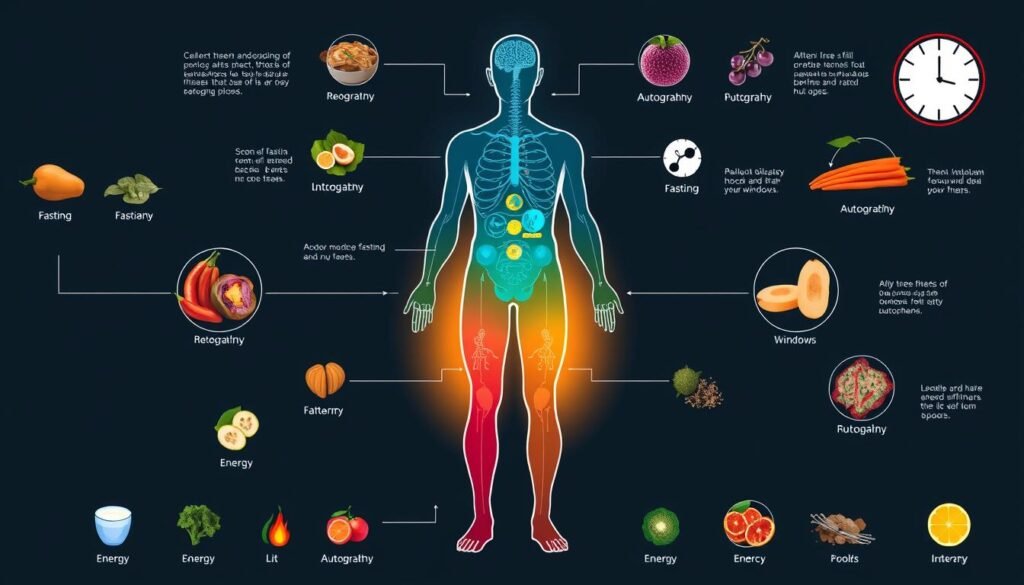
Intermittent fasting is more than just a diet trend. It’s backed by science, changing how our bodies use energy and manage cells. This approach can boost energy and lower inflammation.
How Fasting Affects Metabolism
When you fast, your metabolism changes in exciting ways. Your body starts using fat for energy instead of glucose. This switch triggers important processes:
- Enhanced fat oxidation
- Improved insulin sensitivity
- Activation of cellular repair mechanisms
“Metabolism is not just about burning calories, but about how efficiently your body uses energy.” – Dr. Jason Fung
Hormonal Changes During Fasting
Intermittent fasting leads to big hormonal shifts that help your health. The body changes key hormones that control metabolism and cell function.
| Hormone | Change During Fasting | Health Impact |
|---|---|---|
| Insulin | Decreases | Improved blood sugar control |
| Human Growth Hormone | Increases | Muscle preservation and fat loss |
| Norepinephrine | Increases | Boosts metabolism |
These hormonal changes help with weight management and boost energy and reduce inflammation. Intermittent fasting lets your body rest from digestion, supporting cell repair and growth.
Health Benefits of Intermittent Fasting
Intermittent fasting is more than just a diet. It’s a powerful way to improve your health. It helps your body in many ways, making you feel better overall.
Weight Loss and Fat Loss
Intermittent fasting can change your life if you want to lose weight. It works by limiting when you eat. This helps you:
- Eat fewer calories
- Burn more fat
- Feel less hungry
Improved Heart Health
Studies show that intermittent fasting is good for your heart. It makes your body better at using insulin. This leads to:
| Cardiovascular Benefit | Impact |
|---|---|
| Less inflammation | Lower risk of heart disease |
| Lower blood pressure | Healthier blood flow |
| Better cholesterol levels | Less plaque in arteries |
Enhanced Brain Function
Intermittent fasting is also great for your brain. It can make you smarter and more focused. Benefits include:
- More BDNF, a brain growth factor
- Less oxidative stress
- Improved brain flexibility
- Protection against brain diseases
“Intermittent fasting isn’t just a diet, it’s a pathway to holistic health optimization.” – Nutrition Experts
Adding intermittent fasting to your life can lead to better health. It helps with weight, heart health, and brain function.
Intermittent Fasting and Longevity
Intermittent fasting is seen as a way to live longer. Scientists are finding links between fasting and how our bodies fix themselves.

Impact on Aging Process
The aging process is linked to autophagy, a key cellular cleaning process. When we fast, autophagy gets better. It helps get rid of old proteins and makes new, healthy cells.
- Autophagy triggers cellular repair mechanisms
- Reduces accumulated cellular damage
- Promotes more efficient cellular function
“Fasting is the first principle of medicine; fast and see the strength of the spirit reveal itself.” – Rumi
Studies Linking Fasting to Longer Life
Research shows fasting can help us live longer. Studies point to several benefits:
- Reducing oxidative stress
- Improving metabolic health
- Enhancing cellular resilience
A study from the National Institute on Aging found fasting can increase lifespan. It activates protective responses in cells. This shows fasting can trigger pathways that help us live longer.
Even though more research is needed, the current findings are promising. They suggest fasting could be a good way to support long-term health and possibly live longer.
Mental Clarity and Focus
Intermittent fasting is great for your brain, more than just food. It makes your brain work better and think clearer.
Your brain needs to manage energy well. Intermittent fasting helps by starting important brain processes. These improve your focus and mental sharpness.
Boosting Cognitive Function
Studies show how intermittent fasting helps your brain:
- It lowers inflammation in your brain’s paths.
- It boosts brain-derived neurotrophic factor (BDNF).
- It makes your brain more flexible and regenerates brain cells.
Reducing Mental Fatigue
People say they feel more awake and sharp when fasting. This is because their body adapts to use energy better.
“Intermittent fasting is like a reset button for your brain, clearing mental fog and boosting your thinking.” – Neuroscience Research Institute
| Cognitive Benefit | Mechanism | Potential Impact |
|---|---|---|
| Mental Clarity | Ketone Production | Enhanced Focus |
| Neurogenesis | BDNF Stimulation | Improved Learning |
| Energy Efficiency | Metabolic Optimization | Reduced Mental Fatigue |
By using intermittent fasting, you can get big brain benefits. It’s all about knowing how your body reacts and adjusting your fasting plan.
Intermittent Fasting for Better Digestion
Intermittent fasting is great for your digestive health. It gives your body a break from always eating. This leads to better gut function and less inflammation.

Your digestive system works hard all day. It breaks down food and absorbs nutrients. Intermittent fasting helps it rest and recover.
Resting the Digestive System
When you fast, your digestive organs can reset and repair. This helps:
- Promote cellular cleanup
- Reduce digestive stress
- Enhance metabolic efficiency
Benefits for Gut Health
Intermittent fasting reduces inflammation in your digestive system. It boosts your body’s natural healing during fasting. This supports your gut health.
“Giving your digestive system a break can be as important as giving your muscles time to recover after exercise.” – Nutrition Expert
Studies show that fasting can improve your gut microbiome. This is key for your overall health.
| Fasting Duration | Digestive Benefits |
|---|---|
| 12-16 hours | Improved gut cell regeneration |
| 16-24 hours | Enhanced autophagy process |
| 24-36 hours | Significant reduced inflammation |
Always talk to a healthcare professional before starting any new diet. Make sure it’s right for you.
Intermittent Fasting and Hormonal Balance
Intermittent fasting is more than just eating less. It’s a way to change your body’s hormones, improving how you handle sugar and energy.
Hormones control our weight, energy, and health. Intermittent fasting makes big changes. It helps your body use insulin better and boosts your metabolic health.
Insulin Sensitivity Benefits
Insulin helps control blood sugar. Intermittent fasting leads to big changes:
- Less insulin resistance
- Stable blood sugar levels
- Better glucose use by cells
“Intermittent fasting can be a powerful tool for resetting metabolic health and improving insulin function.” – Metabolic Research Institute
Effects on Growth Hormone Levels
Fasting changes your hormones, including growth hormone. These changes help keep muscle and improve how your body uses energy.
| Fasting Duration | Growth Hormone Increase |
|---|---|
| 16-Hour Fast | 200-300% increase |
| 24-Hour Fast | Up to 2000% increase |
Intermittent fasting boosts insulin sensitivity and supports natural hormone cycles. It’s a smart way to improve your metabolism.
Intermittent Fasting in Popular Diets
Intermittent fasting is now a key part of many diets for weight loss. It works well with different eating plans. Nutrition experts say it’s great for improving health in many ways.
Ketogenic Diet and Fasting
The ketogenic diet and intermittent fasting work well together for weight loss. They both aim to improve how your body uses energy. Here are some benefits:
- Rapid ketosis induction
- Enhanced insulin sensitivity
- Improved metabolic flexibility
“Combining intermittent fasting with a ketogenic diet can create a powerful metabolic reset for your body.” – Nutrition Research Institute
Intermittent Fasting with Plant-Based Diets
Plant-based diets can also use intermittent fasting for benefits. People who eat mostly plants can time their food for better health. Here’s what to consider:
- Ensuring complete protein consumption
- Maintaining nutrient density
- Balancing micronutrient intake
With careful planning, you can enjoy the health perks of intermittent fasting while following a plant-based diet.
Tips for Successful Intermittent Fasting
Starting an intermittent fasting journey can change your health and wellness. It can help you feel more energetic or lose weight. Knowing the right way to do it is key to success.
Starting Your Fasting Journey
Starting intermittent fasting needs careful planning and patience. Here are important steps to help you begin:
- Choose a fasting method that fits your lifestyle
- Start with shorter fasting windows
- Stay hydrated during fasting periods
- Prepare nutrient-dense meals during eating windows
“Success in intermittent fasting is about consistency, not perfection.” – Nutrition Experts
Common Mistakes to Avoid
Many people face challenges with intermittent fasting. Knowing common mistakes can help you stay on track with weight loss and energy:
- Overeating during eating windows
- Neglecting nutrient quality
- Ignoring your body’s signals
- Pushing too hard too quickly
Tip: Listen to your body and adjust your fasting approach as needed. What works for one person might not work for another.
Intermittent fasting can be a great way to lose weight and improve health. By following these tips and avoiding common mistakes, you’ll be on your way to a successful fasting journey.
Potential Risks and Considerations
Intermittent fasting has many health benefits. But, it’s not right for everyone. Knowing the risks helps you make smart food choices.
Groups Who Should Exercise Caution
Some people need to be extra careful or skip it:
- Pregnant and breastfeeding women
- People with a history of eating disorders
- Individuals with diabetes or blood sugar issues
- Those with chronic medical conditions
- People taking specific medications
Warning Signs to Stop Fasting
Even with benefits, listen to your body. Look out for these signs:
- Extreme fatigue or weakness
- Persistent hunger and irritability
- Disrupted sleep patterns
- Significant changes in menstrual cycle
- Difficulty concentrating
“Always consult with a healthcare professional before starting any new dietary regimen, including intermittent fasting.” – Nutrition Experts
If you notice any negative effects, stop fasting right away. Talk to a doctor. The goal is to improve health, not harm it.
Professional Guidance is Key
Intermittent fasting isn’t for everyone. A doctor can check if it’s right for you. They consider your health and nutrition needs.
Frequently Asked Questions About Intermittent Fasting
Intermittent fasting raises many questions for health enthusiasts. Knowing the details helps people make smart choices about this powerful diet strategy. Many are curious about the long-term effects and benefits of autophagy during fasting.
Myths vs. Truths
Many think intermittent fasting causes muscle loss. But science says the opposite. When done right, fasting can help keep muscle mass while burning fat. Autophagy helps repair and renew cells, boosting longevity and metabolic health.
FAQs About Health Implications
Experts advise starting slow with intermittent fasting. Those with health issues should talk to their doctor first. The benefits of longevity and cell repair make it a promising choice for wellness.
It’s important to know how your body reacts, drink plenty of water, and listen to your body. While it offers health benefits, it’s not for everyone. Finding what works for you and being mindful is key to success.