




























• Latest
Heart attack in young adults

Heart Attack in Young Adults: Reproductive History and Risk

November 14, 2026
perimenopause sleep

Perimenopause Sleep: How to Sleep Through the Night

November 12, 2026
insulin resistance symptoms

Insulin Resistance Symptoms: Why Overworked Workers Can’t Lose Belly Fat?

August 4, 2026
Sugar Withdrawal Effects: What 14 Days Without Sugar Really Does to Your Organs

Sugar Withdrawal Effects: What 14 Days Without Sugar Really Does to Your Organs

August 1, 2026
Metabolic Health

Metabolic Health: Master Blood Sugar & Insulin Sensitivity Naturally

July 31, 2026
anti ageing supplements

Unlock Your Youth Code: The Truth About Anti Ageing Supplements & Biological Reversal

July 24, 2026
Nutrigenomics

Eat for Your Genes: The Nutrigenomics Revolution in Personalised Nutrition

July 17, 2026
Are You Following Someone Else’s PERSONALIZED DNA WELLNESS Plan?

Are You Following Someone Else’s PERSONALIZED DNA WELLNESS Plan?

June 13, 2026
Your Eyes at 45: What’s Actually Changing Inside Them — And How to Stay Ahead of It

Your Eyes at 45: What’s Actually Changing Inside Them — And How to Stay Ahead of It

May 21, 2026
Longevity and Fibres

The 2026 Longevity Secret: Why Eating More Fibre Could Add 10 Years to Your Life

April 13, 2026
7 Gut Health Hacks Doctors Swear By But Never Tell You (Fibermaxxing Edition)

7 Gut Health Hacks Doctors Swear By But Never Tell You (Fibermaxxing Edition)

April 10, 2026
How to Cure Chronic Inflammation in 30 Days: A Doctor-Approved Protocol

How to Cure Chronic Inflammation in 30 Days: A Doctor-Approved Protocol

April 13, 2026
7 Signs Your Body Is Secretly Deficient in Magnesium (And What to Do About It)

7 Signs Your Body Is Secretly Deficient in Magnesium (And What to Do About It)

April 2, 2026
Saturday, November 14, 2026
Subscribe to get Updates
  • Login
Wellness and Us Magazine
50 Wellness Resources
  • Home
  • Health
    • All
    • Blog
    • Disease
    • Eyes Health and Vision
    • Fitness
    • Health
    • History
    • Kids Health
    • Lifestyle
    • Longevity
    • Medical Innovations
    • Medications
    • News
    • Nutrition
    • Oral Health
    • Research
    • Weight Loss
    • Wellness
    • Women Health
    Heart attack in young adults

    Heart Attack in Young Adults: Reproductive History and Risk

    perimenopause sleep

    Perimenopause Sleep: How to Sleep Through the Night

    insulin resistance symptoms

    Insulin Resistance Symptoms: Why Overworked Workers Can’t Lose Belly Fat?

    Sugar Withdrawal Effects: What 14 Days Without Sugar Really Does to Your Organs

    Sugar Withdrawal Effects: What 14 Days Without Sugar Really Does to Your Organs

    Metabolic Health

    Metabolic Health: Master Blood Sugar & Insulin Sensitivity Naturally

    anti ageing supplements

    Unlock Your Youth Code: The Truth About Anti Ageing Supplements & Biological Reversal

    Nutrigenomics

    Eat for Your Genes: The Nutrigenomics Revolution in Personalised Nutrition

  • Weight Loss
    insulin resistance symptoms

    Insulin Resistance Symptoms: Why Overworked Workers Can’t Lose Belly Fat?

    Metabolic Health

    Metabolic Health: Master Blood Sugar & Insulin Sensitivity Naturally

    The Truth About Popular Diets: Keto vs. Intermittent Fasting

    The Truth About Popular Diets: Keto vs. Intermittent Fasting

    10 Surprising Benefits of Drinking Water First Thing in the Morning

    10 Surprising Benefits of Drinking Water First Thing in the Morning

    How to Lose Belly Fat Without Exercise: Simple Science-based Tips

    How to Lose Belly Fat Without Exercise: Simple Science-based Tips

    What Happens to Your Body When You Quit Sugar for 10 Days?

    What Happens to Your Body When You Quit Sugar for 10 Days?

    Schisandra

    Superfoods You Probably Never Heard About

  • Our Channel
  • Disease
    insulin resistance symptoms

    Insulin Resistance Symptoms: Why Overworked Workers Can’t Lose Belly Fat?

    Breast Thermography: Technology, Benefits, and Cancer Signs

    Breast Thermography: Technology, Benefits, and Cancer Signs

    selective focus of senior woman holding digital tablet with heartbeat rate on screen

    Exploring the Efficacy of Digital Health Interventions for Heart Health

    Legs injury, swimming and sports person massage calf problem from exercise, training or workout cri

    What Your Legs Could Be Telling You About Your Heart Health

    Uncovering the Causes of Psoriatic Arthritis: Identifying Triggers and Risk Contributors

    Uncovering the Causes of Psoriatic Arthritis: Identifying Triggers and Risk Contributors

    What is Salicylic acid and why should I use it on my skin?

    What is Salicylic acid and why should I use it on my skin?

    Roasted coffee beans and ground coffee in filter holder

    Coffee and Cancer: Separating Fact from Fiction

  • Fitness
    The Paleo Lifestyle: How to Get Fit Naturally and Reclaim Your Energy in 2026

    The Paleo Lifestyle: How to Get Fit Naturally and Reclaim Your Energy in 2026

    How to Lose Belly Fat Without Exercise: Simple Science-based Tips

    How to Lose Belly Fat Without Exercise: Simple Science-based Tips

    Unrecognizable female with manicure checking smartwatch on hand while sitting on yoga mat

    Fitness and Fun: Mastering Your Vitals for a Healthier You

    Thigh and butt exercises

    Bootylicious Gains: Unveiling the Best Exercises for a Toned Glutes

    Sportsman working out with kettlebell in gym

    A Trainer Answers: What’s the Best Workout For Losing Weight?

    Runners training in New York

    Mastering the Half Marathon: How This Simple Cardio Swap Boosts Your Training

    Man with weight training equipment exercising in sport gym club

    Loose Weight Fast: Ditch the Weight, Embrace Your Best Self with Expert Tips

  • Nutrition
    insulin resistance symptoms

    Insulin Resistance Symptoms: Why Overworked Workers Can’t Lose Belly Fat?

    Metabolic Health

    Metabolic Health: Master Blood Sugar & Insulin Sensitivity Naturally

    Nutrigenomics

    Eat for Your Genes: The Nutrigenomics Revolution in Personalised Nutrition

    7 Signs Your Body Is Secretly Deficient in Magnesium (And What to Do About It)

    7 Signs Your Body Is Secretly Deficient in Magnesium (And What to Do About It)

    10 Most Dangerous Foods: A Scientific Perspective

    10 Most Dangerous Foods: A Scientific Perspective

    young woman, meadow, lie, relax, sun, sunny, sunglasses, daisy, vacations, vacation, in the free, to the rest come, make break, sunshine, attitude to life, girl, female, spring, nature, happiness, skin, meditation, cosmetics, natural cosmetics, beauty, summer, naturally, vitamin d, light, healthy, health, prevent, vitamin d, vitamin d, vitamin d, vitamin d, vitamin d

    5 Signs You’re Low on Vitamin D and How to Fix It

    The Shocking Truth About 5 Everyday Foods You Should Avoid

    The Shocking Truth About 5 Everyday Foods You Should Avoid

  • Lifestyle
    Sugar Withdrawal Effects: What 14 Days Without Sugar Really Does to Your Organs

    Sugar Withdrawal Effects: What 14 Days Without Sugar Really Does to Your Organs

    Metabolic Health

    Metabolic Health: Master Blood Sugar & Insulin Sensitivity Naturally

    anti ageing supplements

    Unlock Your Youth Code: The Truth About Anti Ageing Supplements & Biological Reversal

    Are You Following Someone Else’s PERSONALIZED DNA WELLNESS Plan?

    Are You Following Someone Else’s PERSONALIZED DNA WELLNESS Plan?

    The Paleo Lifestyle: How to Get Fit Naturally and Reclaim Your Energy in 2026

    The Paleo Lifestyle: How to Get Fit Naturally and Reclaim Your Energy in 2026

    10 Surprising Benefits of Drinking Water First Thing in the Morning

    10 Surprising Benefits of Drinking Water First Thing in the Morning

    AI in healthcare

    AI in Healthcare: How Technology is Revolutionizing Medicine

No Result
View All Result
HealthNews
No Result
View All Result

Heart Attack in Young Adults: Reproductive History and Risk

wellnessandus.com by wellnessandus.com
November 14, 2026
in Health, Women Health
0
Home Health
50 Wellness Resources 50 Wellness Resources 50 Wellness Resources
0
SHARES
0
VIEWS
Share on FacebookShare on Twitter

Heart attack in young adults can happen, but age alone cannot tell you your personal risk. Your health history, family history, and other risk factors can help show what deserves attention. For women, reproductive history may add useful context, even years after pregnancy.

A heart attack in a younger person can feel unexpected, especially when they seem healthy. Yet a single risk factor does not predict what will happen to you. Your blood pressure, cholesterol, diabetes history, and family background all contribute to a fuller picture.

Reproductive events, including pregnancy complications and early menopause, can also be relevant to a woman’s long-term heart health. Their importance depends on the rest of her medical history, not on any one event alone. A clinician can consider your history as a whole rather than treating any one risk marker as a prediction.

Key Takeaways

  • Heart attacks can affect younger adults.
  • Age alone does not define personal risk.
  • Family and medical history add useful context.
  • Reproductive history can inform women’s prevention discussions.
  • A risk marker is not an individual prediction.

Heart Attack in Young Adults: What Studies Show About Rising Rates

About one in five heart attacks occur in people under 40, even though age alone cannot explain the trend. Yes, studies show a concerning pattern among younger adults, but heart attack rates and death rates measure different things. Among people under 40, the heart attack rate grew by nearly 2% each year from 2000 to 2016.

That figure describes the rate of heart attacks, not the number of deaths. From 2010 to 2019, U.S. heart-disease death rates fell 5.5%; in 2020, they rose 4.1%. Among adults ages 35-54, the death rate rose 12% in 2020, representing about 10 years of lost progress among younger adults.

Mortality research measures deaths, not every heart attack. Among adults ages 25-44, mortality from myocardial infarction and heart failure combined increased after 2010. A CDC WONDER mortality study found that overall age-adjusted acute myocardial infarction mortality rose in 2020 and 2021, after declining through 2019.

Heart attack rates count events; mortality rates count deaths, and the two measures answer different questions.

In 2022, growing evidence suggested COVID-19 may be associated with new or worsening cardiovascular disease. More investigation was needed, and the 2020 increase in heart-disease deaths does not prove that COVID-19 caused more heart attacks.

Rates and mortality can move differently, so population trends do not tell you why one person had an event. Treat a change in death rates as a warning about population health, not proof of what caused an individual heart attack.

Which Risk Factors and Tests Matter Most in Your 20s and 30s?

Your personal risk depends on more than your age, and a blood pressure check, cholesterol test, and family history are practical places to start. Those basics matter because risk factors can develop long before symptoms appear. For adults in their 20s, clinicians assess the individual risk factors directly; the PREVENT-ASCVD equations start at age 30.

PREVENT-ASCVD equations are risk equations that estimate 10-year and 30-year cardiovascular disease, ASCVD, and heart failure risk in adults ages 30-79 without known cardiovascular disease. They are recommended for primary prevention in adults ages 30-79 without known ASCVD or subclinical atherosclerosis and with LDL-C of 70-189 mg/dL. They do not provide a personal estimate for someone in their 20s.
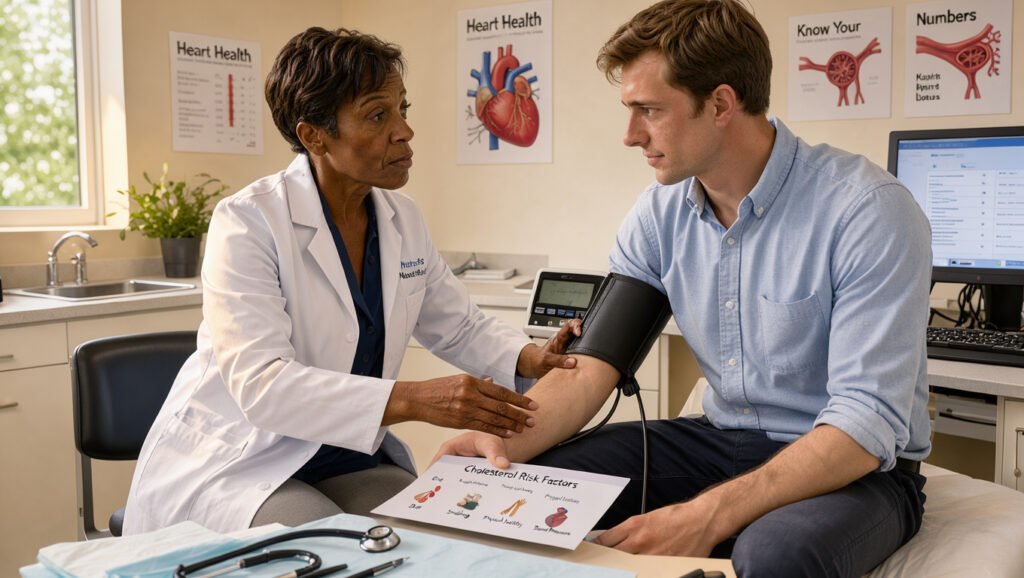
Clinician checking blood pressure and discussing cholesterol risk factors

Blood Pressure, Diabetes, and Family History

High blood pressure, diabetes, obesity, and family history can shape risk at a young age. A study of 13,000 young adults found diabetes prevalence rose from 3% in 2009 to 4.1% in 2020. Obesity rose from 32.7% to 40.9% over the same period. Reported hypertension incidence increased from 9% in 2009-2010 to 12% in 2011-2022.

Increased-risk adults can begin blood pressure and cholesterol screening at age 20. Under the 2017 ACC/AHA guideline criteria, hypertension affects 1 in 2 U.S. adults. By a different measure, age-standardised hypertension prevalence was 34.5% in 2009-2010 and 34.3% in 2021-2023, with no overall change reported. These figures use different measures and periods, so they are not contradictory. Hypertension was a primary or contributing cause of approximately 664,000 U.S. deaths in 2023, and hypertension-related cardiovascular death rates have nearly doubled over two decades.

Discuss these five clues with a clinician:

  • High blood pressure
  • Diabetes
  • LDL-C of at least 160 mg/dL in a young adult
  • A strong family history of premature ASCVD
  • High triglycerides or cardiovascular-kidney-metabolic syndrome

Cholesterol Tests and PREVENT-ASCVD Estimates

About 1 in 4 U.S. adults has high LDL cholesterol. A 10-year ASCVD estimate is low below 3%, borderline from 3% to less than 5%, intermediate from 5% to less than 10%, and high at 10% or more. At borderline risk, LDL-lowering medication can be considered; at intermediate risk, it should be considered after a clinician-patient discussion.

LDL-C goals are below 100 mg/dL for primary prevention at borderline or intermediate risk, below 70 mg/dL for high-risk primary prevention, and below 55 mg/dL for secondary prevention in people with ASCVD at very high risk. Earlier lipid-lowering medication may be considered for young adults with LDL-C of at least 160 mg/dL or a strong family history of premature ASCVD. The American College of Cardiology’s CVD Risk Estimator Plus describes the PREVENT equations, developed using data from more than 6 million people. Its optional HbA1c predictor issue was corrected on October 14, 2026.

Test or tool Who or when it applies Key number or criterion What it helps assess
PREVENT-ASCVD Adults ages 30-79 without known ASCVD or subclinical atherosclerosis; LDL-C 70-189 mg/dL 10-year and 30-year estimates Cardiovascular disease, ASCVD, and heart failure risk
Lp(a) Measure at least once in adulthood 125 nmol/L or 50 mg/dL; 250 nmol/L Long-term heart attack or stroke risk; first level is about 1.4-fold higher, second at least two-fold higher
Selective CAC scan Men age 40 or older, and women age 45 or older with borderline or intermediate risk Selective use Guides statin decisions
Apolipoprotein B Cardiovascular-kidney-metabolic syndrome, Type 2 diabetes, high triglycerides, or known cardiovascular disease Consider after LDL-C and non-HDL-C goals are reached Residual risk

Myocarditis Is Different From a Heart Attack

Heart disease is a broad category, not another name for a heart attack. Myocarditis is inflammation of the heart muscle, while a heart attack involves a blocked blood supply to heart muscle. A risk assessment helps guide prevention; it is not itself a diagnosis.

If you are younger than 30, ask a clinician to assess your risk factors directly rather than applying PREVENT outside its age range.

How Does Reproductive History Shape Women’s Heart Disease Risk?

A history of gestational diabetes, preeclampsia, or early menopause can matter to a woman’s cardiovascular risk assessment years later. These details stay relevant even when the pregnancy or menopause transition is long past. The 2026 ACC/AHA dyslipidemia guideline identifies all three as reproductive risk markers for cardiovascular disease.

Reproductive history adds context to risk assessment, but it does not prove cause or predict an individual outcome. A clinician can consider it alongside blood pressure, cholesterol, diabetes, family history, and other health details.

Woman sharing pregnancy history during a cardiovascular risk appointment

Pregnancy Complications as Cardiovascular Risk Markers

Gestational diabetes and preeclampsia are important to mention at preventive care visits. Mothers with prior gestational diabetes had approximately 40% higher risk of cardiovascular outcomes such as heart attack and stroke than mothers without it.

That association describes a difference between groups, not a personal forecast. It also does not establish that gestational diabetes caused a later heart attack or stroke. A pregnancy complication can be a useful clue when you and your clinician review your health over time.

Early Menopause and Long-Term Risk

Early menopause is another reproductive risk marker recognised in the 2026 guideline. Mentioning when menopause began can help complete the risk picture, especially when other risk factors are present. You do not need to wait for a heart problem before sharing this part of your medical history.

Include pregnancy complications and menopause timing in the history shared at a preventive-care appointment.

What Are the Warning Signs of a Heart Attack, and When Is It an Emergency?

A heart attack can cause chest discomfort, shortness of breath, or symptoms that are easy to mistake for something less serious. Symptoms can vary, and they may not begin with obvious chest pain. Chest discomfort remains the most common symptom for women and men.

It may feel like pressure, squeezing, fullness, or pain in the centre of the chest. The feeling can last more than a few minutes or go away and return. A heart attack occurs about every 40 seconds in the United States.

Young adult calling for help after unusual heart attack symptoms

Chest Discomfort and Breathing Changes

Possible heart attack symptoms include:

  • Chest pressure or discomfort
  • Shortness of breath
  • Discomfort in the arm, back, neck, jaw, or stomach
  • Cold sweats, nausea, or lightheadedness
  • Unusual tiredness or weakness

These signs can appear together or separately. Younger adults may dismiss them as stress, indigestion, or fatigue, but age does not rule out an emergency. A sudden change from your usual health deserves attention, particularly when symptoms feel severe or keep returning.

Symptoms Beyond the Chest in Women

Women may have symptoms beyond chest discomfort, though chest discomfort is still the most common symptom for women and men. Nausea, stomach discomfort, or unusual fatigue may be easier to dismiss as a routine illness or a busy day.

Do not wait for every possible sign to appear before acting. The American Heart Association advises calling 911 immediately for signs of a heart attack. Emergency responders can begin care on the way to the hospital, which is why driving yourself is not the safer choice.

Call 911 immediately for possible heart attack symptoms instead of driving yourself or waiting to see if they pass.

How Can Younger Adults Lower Risk and Support Recovery?

Prevention is built from repeatable habits, while recovery after a heart attack can include both cardiac rehabilitation and emotional support. Small choices add up when practised over time. Health-behaviour counselling should start in youth to support healthy habits and reduce lifelong exposure to atherogenic lipoproteins.

Life’s Essential 8 groups heart-health measures into five practical areas:

  • Nutritious eating and regular activity
  • Tobacco avoidance and healthy sleep
  • Weight management
  • Cholesterol and blood sugar
  • Blood pressure

Young adult building heart health through exercise and recovery support

Daily Habits That Support Heart Health

The American Heart Association recommends at least 150 minutes of moderate-intensity aerobic activity each week, or 75 minutes of vigorous activity, or a combination. Muscle-strengthening activity at moderate to high intensity is recommended at least twice weekly.

Activity Intensity Weekly target
Aerobic activity Moderate intensity At least 150 minutes
Aerobic activity Vigorous intensity At least 75 minutes
Muscle-strengthening activity Moderate to high intensity At least twice weekly

Recovery Includes Cardiac Rehabilitation

Cardiac rehabilitation can support physical recovery after a heart attack. Emotional health also deserves attention: an estimated 33%-50% of survivors may experience psychological distress. Persistent distress lasting up to 12 months is associated with nearly 1.5 times the likelihood of a future cardiac event, though more research is needed to establish cause and effect.

Emotional distress after a heart attack deserves care, even though an association with future events does not prove that distress causes them.

An estimated 1 in 3 heart attack survivors develops depression annually, compared with 8.4% of U.S. adults in the general population. Anxiety and stress may affect up to 50% of survivors during hospitalisation and persist in 20%-30% for several months or longer. Post-heart-attack anxiety is associated with 1.3 times the likelihood of another heart attack or death; depression and PTSD are each associated with twice the risk of recurrent cardiovascular events or mortality.

Evidence-based options include cognitive behavioural therapy, medication, mindfulness-based stress reduction, regular exercise, and improved sleep. Selective serotonin reuptake inhibitors are considered safe and effective for depression in people with cardiovascular disease.

Heart Failure in Your 20s and Long-Term Outlook

Heart failure life expectancy in your 20s cannot be estimated from age alone. Cause, heart function, other health conditions, and treatment affect outlook, so an individualised discussion with a clinician is needed. The diagnosis does not by itself determine how long you will live.

Ask your care team to include emotional health and rehabilitation goals in the recovery plan, as well as physical ones.

Conclusion

You do not have to wait for symptoms to take your heart health seriously. Being young does not rule out cardiovascular risk, and family history can help you and your clinician understand what deserves attention.

For women, reproductive history can add useful context to prevention, even years after pregnancy or menopause. A risk marker is not a prediction, but sharing it can help make a preventive-care discussion more complete.

Schedule a preventive-care appointment to discuss blood pressure, cholesterol, family history, and pregnancy history. Bring your blood pressure and cholesterol questions, family history, and reproductive history to your next appointment.

FAQ

What are some support groups for people with coronary heart disease?

A cardiac rehabilitation team or hospital social worker can help you find local peer-support options. Ask about groups suited to your diagnosis and stage of recovery, since someone newly discharged may need different support from someone managing a long-term condition. You can also ask whether the group meets in person or online and whether family members can attend.

What are the symptoms of cardiac anxiety?

Cardiac anxiety can include a racing heart, breathlessness, chest tightness, or dizziness. Anxiety can feel physical, but new, severe, or unusual symptoms should not automatically be assumed to come from anxiety. If you have possible heart attack symptoms, call 911. A clinician can help assess recurring symptoms and discuss support for anxiety.

What are some ways to prevent cardiovascular disease?

Regular activity, avoiding tobacco, nutritious eating, and healthy sleep all support cardiovascular health. Monitoring blood pressure, cholesterol, and blood sugar can also help you spot changes early. Your clinician can tailor medical treatment to your health history and risk factors, so prevention does not rely on lifestyle habits alone.

What is the #1 worst habit for your heart?

No single habit ranks first for everyone, but tobacco use is a major modifiable risk. Avoiding tobacco or quitting is a strong practical step for heart health. If quitting feels difficult, ask a clinician about support options, including counselling and treatments that can help you stop using tobacco.

What three foods do cardiologists say to avoid?

There is no universal list of three foods that everyone must avoid. It is more useful to limit foods high in sodium, saturated fat, or trans fat, while considering your overall eating pattern and health needs. Your clinician can help you make food choices that fit conditions such as high blood pressure or high cholesterol.
Tags: Cardiovascular health in womenEarly menopause and cardiovascular riskGestational diabetes and heart healthHeart attack in young adultsHeart attack risk factorsPreeclampsia and heart diseasePregnancy complications and heart diseaseReproductive history and heart disease
50 Wellness Resources 50 Wellness Resources 50 Wellness Resources
Previous Post

Perimenopause Sleep: How to Sleep Through the Night

wellnessandus.com

wellnessandus.com

Discussion about this post

Recommended

woman in purple and pink floral long sleeve shirt sitting on chair

Discover the Secrets to Anti-Aging Nutrition

1 year ago
Many different weight loss pills and supplements as food on round white plate with fork and knife

Decoding Weight Loss Pills: What You Need to Know

3 years ago

Don't Miss

Heart attack in young adults

Heart Attack in Young Adults: Reproductive History and Risk

November 14, 2026
perimenopause sleep

Perimenopause Sleep: How to Sleep Through the Night

November 12, 2026
insulin resistance symptoms

Insulin Resistance Symptoms: Why Overworked Workers Can’t Lose Belly Fat?

August 4, 2026
Sugar Withdrawal Effects: What 14 Days Without Sugar Really Does to Your Organs

Sugar Withdrawal Effects: What 14 Days Without Sugar Really Does to Your Organs

August 1, 2026
50 Wellness Resources
Wellness and Us Magazine

At Wellness and Us, our mission is to empower our readers with accurate and up-to-date information supported by published medical and health articles. We believe that everyone deserves access to trustworthy resources for making informed decisions about their health and wellness.

Follow us

Recent News

Heart attack in young adults

Heart Attack in Young Adults: Reproductive History and Risk

November 14, 2026
perimenopause sleep

Perimenopause Sleep: How to Sleep Through the Night

November 12, 2026

Categories

  • Blog
  • Disease
  • Eyes Health and Vision
  • Fitness
  • Health
  • History
  • Kids Health
  • Lifestyle
  • Longevity
  • Medical Innovations
  • Medications
  • News
  • Nutrition
  • Oral Health
  • Research
  • Weight Loss
  • Wellness
  • Women Health

Tags

AI-Powered Medical Care Artificial Intelligence in Healthcare Blood Sugar Control Bone health Breathwork exercises Cancer Clean Eating Coping Strategies Diabetes Diet Tips Digital Wellness Future of Healthcare Gut health tips Health Benefits Healthcare Transformation Health Symptoms Healthy Aging Heart Attack Holistic Wellness Kidney health Kids oral health Machine Learning in Medicine Men's Health Mental Health Advocacy Mental Well-being Mind-body balance Mindfulness Meditation Mindfulness Practices Nutrition oral health Prebiotic Foods Pregnancy Probiotics Relaxation exercises Relaxation Techniques Self-care practices Self-care Strategies Skin Care Stress Management Stress reduction techniques Sugar-free diet Sugar detox Wellness Women's Health Youthful Skin
  • About
  • Advertise
  • Privacy & Policy
  • Contact

© 2023 Wellness and Us - All Rights Reserved - Designed by Online Net1.

Welcome Back!

Login to your account below

Forgotten Password?

Retrieve your password

Please enter your username or email address to reset your password.

Log In

Add New Playlist

No Result
View All Result
  • Home
  • Health
  • Weight Loss
  • Our Channel
  • Disease
  • Fitness
  • Nutrition
  • Lifestyle

© 2023 Wellness and Us - All Rights Reserved - Designed by Online Net1.

This website uses cookies. By continuing to use this website you are giving consent to cookies being used. Visit our Privacy and Cookie Policy.
Go to mobile version