


































Here’s a question that might genuinely change how you eat for the rest of your life:
What if the single most powerful longevity tool ever discovered isn’t a medication, a supplement, a biohacking device, or a $400-a-month wellness protocol — but something so ordinary it’s sitting in your kitchen right now, largely ignored?
A comprehensive 2024 meta-analysis of 64 prospective cohort studies found that individuals with the highest dietary fibre consumption had a 23% lower risk of all-cause mortality compared to those with the lowest intake. A separate analysis found that high-fibre eaters also carried a 26% lower risk of dying from cardiovascular disease and a 22% lower risk of dying from cancer.
Let that sink in for a second.
Not a marginal benefit. Not a footnote in a small pilot study. A 23% reduction in dying from anything — tracked across millions of real people, over decades, in study after rigorous study.
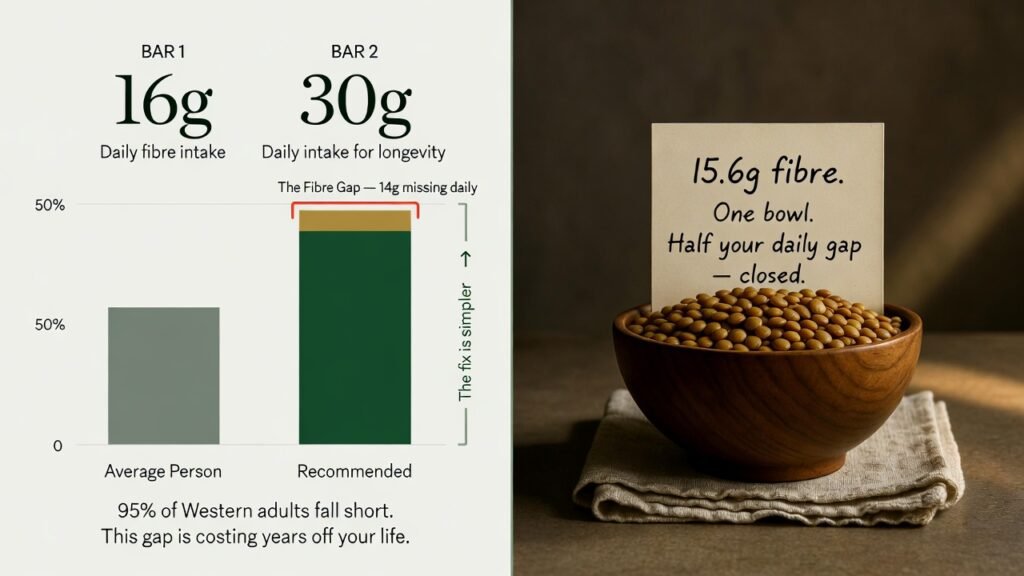
And yet, according to Cleveland Clinic data, only about 5% of adults in the Western world are eating enough fibre. Most people consume just 16 grams per day — roughly half the recommended amount.
Which means the vast majority of people are walking around with a gaping hole in their longevity strategy — one that’s astonishingly easy, affordable, and delicious to fill.
By the end of this article, you’ll know exactly why fibre is the 2026 longevity secret that researchers are genuinely excited about, what it does inside your body at a cellular level, the specific amounts and sources that research says matter most, and a practical step-by-step plan you can begin today.
Let’s start with something that will completely reframe how you think about ageing.
The Longevity Equation Nobody Taught You in School
Most of us were taught a simple — and deeply incomplete — version of health.
Eat your vegetables. Get some exercise. Don’t smoke. Fine advice. But it skips over the biological mechanism that quietly determines whether you age fast or slow, get sick often or rarely, feel sharp and energised at 70 or exhausted and inflamed at 50.
That mechanism? Chronic low-grade inflammation — and your gut microbiome’s ability to control it.
Here’s the longevity equation doctors and researchers are increasingly rallying around in 2026:
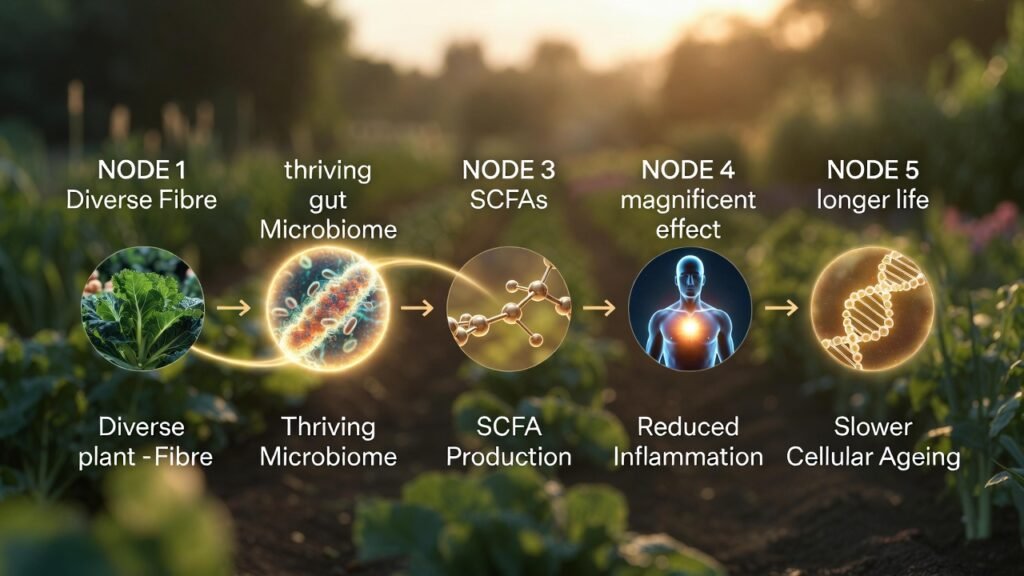
Diverse fibre → thriving gut microbiome → short-chain fatty acid production → reduced systemic inflammation → slower cellular ageing → longer, healthier life.
Every link in that chain is backed by peer-reviewed research. And the chain begins — and can break — at the very first step.
When you eat fibre, your gut bacteria ferment it and produce short-chain fatty acids (SCFAs) — primarily butyrate, propionate, and acetate. These SCFAs don’t just stay in your gut. They enter your bloodstream, travel throughout your body, and act as powerful anti-inflammatory signals at a cellular level.
A 2025 review published in Frontiers in Nutrition described this process as one of the most significant pathways by which diet influences systemic disease risk and lifespan.
But here’s what most people never hear about this process — and it’s the part that changes everything.
What Fibre Does to Your Cells That Scientists Are Calling “Remarkable”
You know how scientists study ageing at the cellular level using something called telomere length?
Telomeres are the protective caps at the ends of your chromosomes — think of them like the plastic tips on shoelaces. Every time your cells divide, telomeres shorten a little. When they become too short, cells stop dividing properly. This is one of the fundamental biological mechanisms of ageing.
And here’s where fibre enters the picture in a way that genuinely startled researchers.
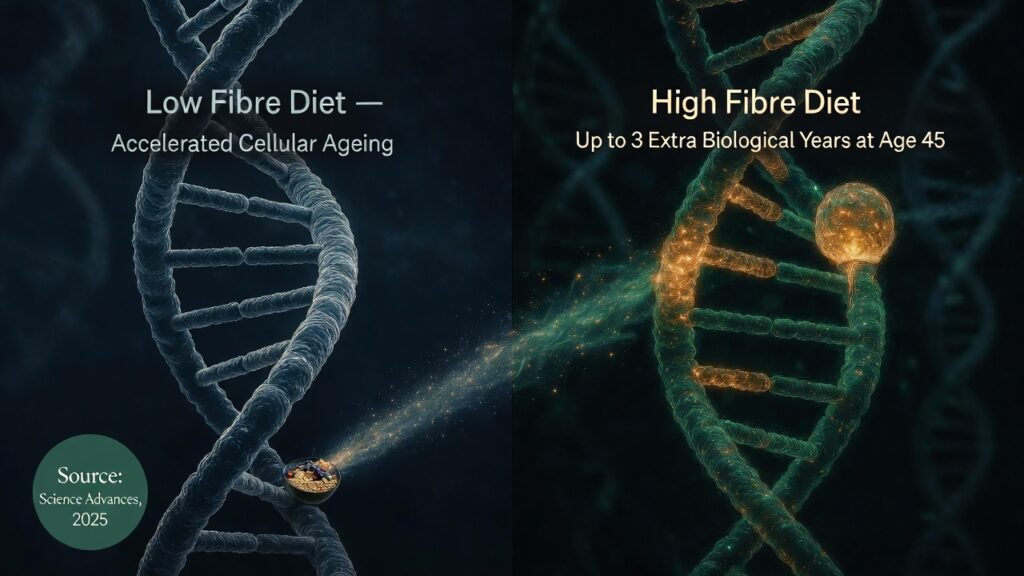
A groundbreaking study published in Science Advances in 2025 found that healthy dietary patterns — particularly those high in dietary fibre — were associated with longer telomere length and up to 3 additional years of biological life expectancy compared to poor dietary patterns at age 45.
But there’s more.
A 2024 animal study published by the NIH found that a high-fibre diet mimics the anti-ageing signatures of caloric restriction — one of the most rigorously studied longevity interventions in scientific history — improving metabolism, cognition, and biological ageing markers without requiring any reduction in food intake.
You read that correctly. Eating more of the right food — fibre-rich food — can produce anti-ageing effects similar to eating less food overall.
And we’re only just getting started.
The 5 Diseases Fibre Directly Fights (And How Each One Steals Years From Your Life)
Here’s where the science becomes viscerally personal — because fibre isn’t just fighting abstract “mortality risk.” It’s fighting the specific diseases that are most likely to cut your life short and reduce your quality of life in the years you do have.
1. Heart Disease: The #1 Killer Fibre Is Quietly Defeating
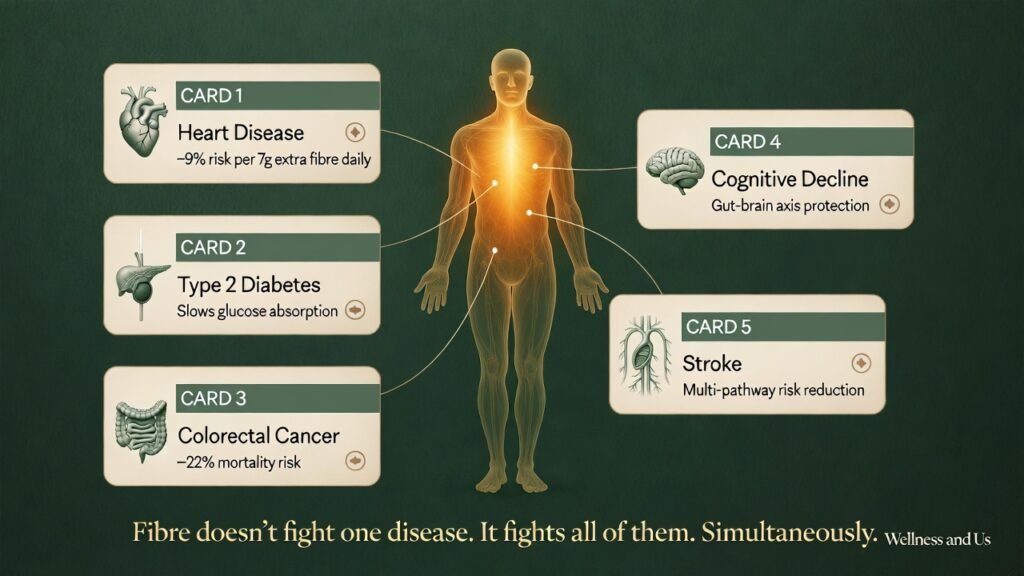
A landmark BMJ review of 22 studies found that for every 7 grams of additional daily fibre, heart disease risk drops by 9%.
Think about that as a cumulative effect. If you’re currently eating 16g of fibre daily and increase to 30g — a 14g jump — that’s roughly an 18% reduction in heart disease risk. From food.
The mechanism is beautifully direct: soluble fibre (from oats, apples, legumes) binds to cholesterol particles in your digestive tract and physically removes them from your body before they can enter your bloodstream and clog your arteries.
2. Type 2 Diabetes: Fibre Is Rewriting the Risk Profile
A 2025 Frontiers in Nutrition meta-analysis confirmed that high dietary fibre intake is significantly associated with reduced mortality risk in people already living with type 2 diabetes or prediabetes — not just those trying to prevent it.
The mechanism here involves fibre slowing glucose absorption after meals, preventing the blood sugar spikes that drive insulin resistance and long-term diabetic complications.
3. Colorectal Cancer: The Protection Most People Don’t Know About
The World Health Organisation classifies high-fibre diets as a protective factor against colorectal cancer — one of the most common and preventable cancers worldwide. A 2024 meta-analysis found a 22% reduction in cancer mortality among high-fibre consumers.
Butyrate — produced when gut bacteria ferment fibre — directly feeds the cells lining your colon and has been shown in research to induce apoptosis in colorectal cancer cells while leaving healthy cells untouched.
4. Stroke: A Risk Almost Nobody Connects to Fibre
Most people associate stroke prevention with blood pressure medication, not breakfast. But a 2025 analysis specifically tracking stroke patients found that higher dietary fibre intake was associated with significantly reduced all-cause and cardiovascular mortality even after a stroke had occurred.
Fibre reduces stroke risk through multiple pathways: lowering blood pressure, reducing arterial inflammation, and improving lipid profiles simultaneously.
5. Dementia and Cognitive Decline: The Brain Connection Nobody Expected
Wait until you see what researchers discovered when they looked at fibre’s relationship with brain ageing.
The gut-brain axis — the communication superhighway between your microbiome and your brain — is heavily influenced by SCFA production from fibre fermentation. The NIH-published 2024 study showing fibre’s caloric restriction-mimicking effects found improvements not just in metabolism but in cognitive function and brain ageing markers in animal models.
Human observational data published in JAMA Network Open in 2024 found that higher quality carbohydrate intake — specifically from fibre-rich sources — was significantly associated with healthier ageing outcomes, including maintained cognitive function.
Your gut bacteria, fed by fibre, are literally communicating with your brain cells. And when that conversation is healthy, your brain ages more slowly.
The Fibre Gap: Why 95% of People Are Ageing Faster Than They Need To
Here’s the uncomfortable truth hiding inside all of this extraordinary research.
The recommended daily fibre intake is 25–28 grams for women and 31–34 grams for men, according to the latest dietary guidelines. The NHS recommends 30 grams daily for all adults.
The average person in the Western world eats approximately 16 grams per day.
That’s a shortfall of roughly 50%. Half the fibre your body needs to run its optimal anti-ageing, anti-inflammatory, disease-fighting machinery is simply missing from the average diet.
The 2025–2030 US Dietary Guidelines, reviewed by the American College of Cardiology, specifically highlighted this fibre gap as one of the most urgent and addressable nutritional public health issues.
And the researchers who study this aren’t gentle about the implications.
“Decades of evidence linking high fibre intakes to reduced risk of cardiovascular disease, type 2 diabetes, and colorectal cancer are compelling — yet average intake continues to lag dramatically behind recommendations,” noted a 2025 review in Trends in Food Science & Technology.
But here’s the genuinely exciting flip side of that grim statistic.
If the average person is eating 16 grams and the sweet spot appears to be 25–35 grams, you are potentially closer to a significant longevity upgrade than you ever realised. The gap is bridgeable. Completely, practically, deliciously bridgeable. Starting with your next meal.
The Blue Zone Connection: What the World’s Longest-Lived People Actually Eat
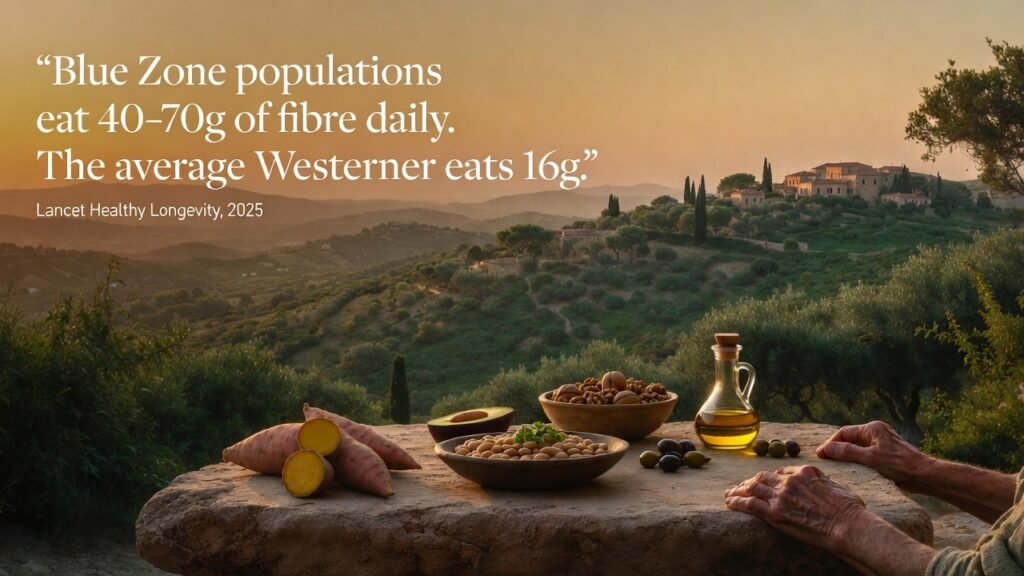
You’ve probably heard of the Blue Zones — the five geographic regions where people routinely live to 100 and beyond in extraordinary health: Okinawa, Japan; Sardinia, Italy; Nicoya, Costa Rica; Ikaria, Greece; and Loma Linda, California.
Researchers and longevity experts have studied these populations for decades, looking for the common threads. And regardless of the differences in culture, climate, and specific foods, every single Blue Zone diet shares one non-negotiable characteristic:
Extraordinarily high fibre intake from diverse, whole plant foods.
Okinawans eat significant amounts of sweet potato, bitter melon, and seaweed. Sardinians eat whole-grain bread, legumes, and seasonal vegetables. Nicoyans build their diet around beans, maize, and tropical fruits. Ikarians consume legumes, wild greens, and olive oil daily.
Blue Zone populations routinely consume 40–70 grams of fibre per day — two to four times the amount consumed by the average Westerner.
A 2025 Lancet Healthy Longevity study examining plant-based dietary patterns and age-specific health outcomes found that adherence to diverse, plant-rich, high-fibre diets was significantly associated with reduced risk of multimorbidity — the co-occurrence of two or more chronic diseases — one of the primary drivers of accelerated ageing and early death.
The Blue Zones aren’t an accident. They’re a preview of what the human body can do when it gets the fibre it was designed to run on.
The 10-Year Question: Where Does That Number Actually Come From?
By now you’re probably wondering: is the “10 extra years” claim actually supported by science — or is it headline hyperbole?
The honest answer is nuanced, exciting, and still being refined.
A modelling study published in the American Journal of Clinical Nutrition in 2024 used dose-response data from multiple large meta-analyses across 15 food groups to estimate the life expectancy gains from specific dietary modifications.
The findings? Transitioning from a typical Western diet to an optimised whole-food, high-fibre dietary pattern from age 40 was associated with life expectancy gains of up to 10 years for women and approximately 13 years for men.
The Science Advances 2025 study found that comparing top-quintile dietary patterns (high fibre, diverse plants) against bottom-quintile patterns was associated with 1.9 to 3.0 additional biological years of life gained at age 45 — just from telomere preservation alone.
And a meta-analysis tracking over 900,000 people across seven long-term studies found that individuals eating the most fibre had significantly lower all-cause mortality over the follow-up period.
The 10-year figure isn’t a single study’s conclusion plucked for a clickable headline. It’s the convergent signal from multiple streams of research pointing in the same direction, using different methodologies and different populations, all arriving at the same place:
More fibre, meaningfully longer life.
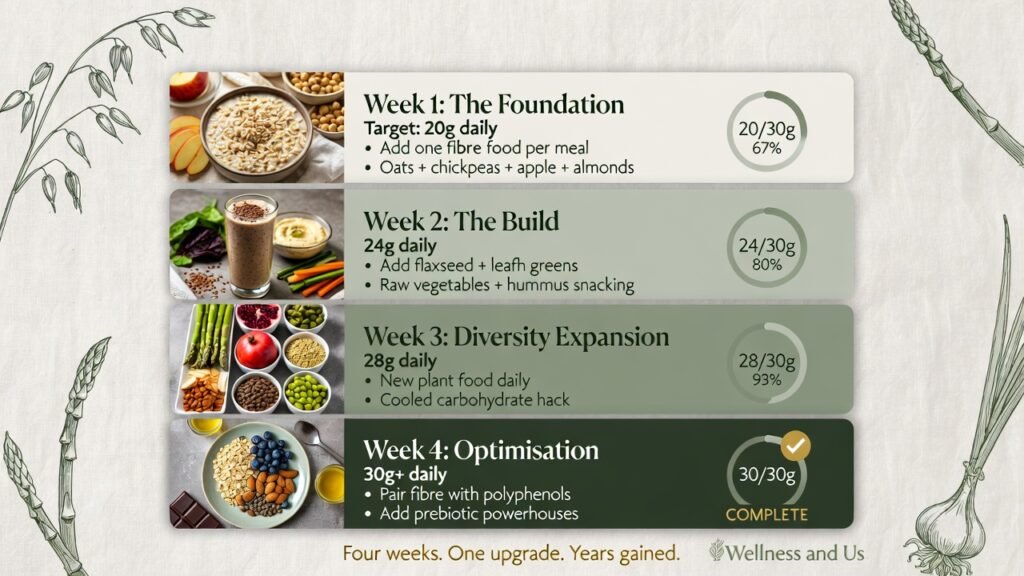
Your Practical Longevity Fibre Plan: From 16g to 30g in 4 Weeks
Knowing the science is powerful. Having an actionable plan is transformational.
Here’s the four-week progressive protocol for bridging the fibre gap — without the bloating disaster that sends most people sprinting back to their old habits.
(For the full sequencing protocol and how to avoid digestive discomfort, read our complete guide on gut health fibermaxxing at Wellness and Us.)
Week 1: The Foundation (Target: 20g daily)
The goal this week is simple: add one high-fibre food to every meal. Don’t overhaul everything. Just add.
- Breakfast: Switch to oats — one cup of cooked oats delivers 4g of beta-glucan fibre
- Lunch: Add half a can of chickpeas or white beans to your salad or soup (+6g)
- Dinner: Swap white rice for brown rice or add a side of roasted vegetables (+3–4g)
- Snack: A medium apple with skin (+4.5g) or a small handful of almonds (+3.5g)
Drink an extra glass of water with every fibre addition. This is non-negotiable.
Week 2: The Build (Target: 24g daily)
- Introduce ground flaxseed — one tablespoon into smoothies, yoghurt, or oats adds 2.8g of fibre and powerful lignans.
- Add leafy greens to two meals daily — spinach, kale, rocket (+2–3g per cup)
- Swap one snack per day for raw vegetables with hummus — carrot sticks, cucumber, celery.
Week 3: The Diversity Expansion (Target: 28g daily)
This week is about plant variety, not just quantity. Different fibre types feed different bacterial species.
- Add one completely new plant food you haven’t eaten recently each day
- Try: asparagus, Jerusalem artichoke, leeks, barley, lentils, edamame, pomegranate seeds
- Implement the cooled carbohydrate hack — cook and refrigerate rice, potatoes, or pasta overnight before eating to create resistant starch
Week 4: The Optimisation (Target: 30g+ daily)
- Pair every fibre source with a polyphenol — blueberries with oats, dark chocolate with almonds, olive oil with lentils (fibre and polyphenols multiply each other’s gut health benefits)
- Add prebiotic powerhouses — garlic, onions, and chicory root contain inulin, the most potent bacterial fuel available
- Track your intake for three days using a simple food journal — most people discover they’ve crossed 30g without it feeling like effort
The 5 Highest-Impact Fibre Foods for Longevity (According to 2025 Research)

Not all fibre is created equal when it comes to longevity, specifically. Here are the five sources that appear most consistently in longevity research:
- Legumes (lentils, black beans, chickpeas) — the single most consistent dietary predictor of longevity across Blue Zone research; 1 cup of cooked lentils delivers 15.6g of fibre
- Whole oats — beta-glucan fibre uniquely lowers LDL cholesterol and feeds highly beneficial Lactobacillus and Bifidobacterium species, one of the most studied fibre sources in cardiovascular mortality research.
- Garlic and onions — inulin-type fructans that fuel rapid SCFA production; also deliver powerful polyphenol synergy with fibre fermentation.
- Berries — particularly blueberries and blackberries, combining fibre with the highest-concentration anthocyanin polyphenols that gut bacteria transform into anti-inflammatory metabolites.
- Resistant starch foods (cooled cooked potatoes, cooled rice, green bananas) — produce the highest butyrate concentrations of any fibre type, directly healing your gut lining and reducing systemic inflammation.
Myths vs. Facts: The Fibre Misconceptions Keeping People Stuck
Myth #1: “I eat healthy, so I’m probably getting enough fibre.”
Fact: 95% of adults don’t meet the recommended intake. Most “healthy” eaters are still significantly under-consuming fibre because they’re not eating enough diverse plant foods. Track your intake for three days — the results will likely surprise you.
Myth #2: “Fibre supplements are just as good as food fibre.”
Fact: A 2024 review in Advances in Nutrition found that isolated fibre supplements produced significantly weaker microbiome diversity effects than equivalent fibre from whole food sources. Supplements can support your protocol, but they cannot replace the synergistic complexity of whole plant foods.
Myth #3: “High-fibre diets cause bloating — it’s not worth it.”
Fact: Bloating from fibre is almost universally caused by incorrect sequencing, insufficient water intake, or too-rapid introduction. When done correctly — gradually, with proper hydration — a high-fibre diet resolves bloating rather than causing it. Most people who believe they “can’t tolerate fibre” simply weren’t introduced to it correctly.
Myth #4: “You need to be young for dietary changes to make a difference.”
Fact: The life expectancy modelling research showing maximum gains at age 40 also showed significant benefits for people starting the dietary shift at 60, 70, and even 80. The gut microbiome remains remarkably plastic and responsive to dietary change at any age, according to 2024 microbiome research from the NIH.
Myth #5: “Fibre is just about constipation.”
Fact: As this entire article has demonstrated, fibre influences your cardiovascular system, cancer risk, blood sugar regulation, brain ageing, telomere length, immune function, serotonin production, and systemic inflammation simultaneously. Calling fibre a constipation remedy is like calling the ocean a swimming pool.
The Longevity Mindset Shift: From “Dieting” to “Feeding Your Future Self”
Here’s the reframe that might matter most — the one that makes everything else stick.
Most health advice is framed around restriction. Eat less of this. Cut out that. Eliminate this entire food group. The entire mental model is subtractive, punishing, and ultimately unsustainable for most people.
Fibre-focused longevity is the opposite.
It is an additive strategy. It is an act of abundance. It is the practice of feeding your future self — the 75-year-old version of you who still thinks clearly, moves freely, feels genuinely alive — by simply adding more of the foods your body was designed to thrive on.
You are not dieting. You are investing in biological time.
Every bowl of lentil soup, every handful of berries stirred into morning oats, every cooled potato you eat for lunch is a deposit into a longevity account that compounds over years and decades into something the research is increasingly willing to quantify:
More years. Better years. Years that feel like years worth having.
That is not a small thing. That is everything.
FAQ: Your Longevity and Fibre Questions Answered
Q1: How quickly will I notice health benefits after increasing my fibre intake?
Many people notice improved digestion, energy stability, and reduced bloating within 1–2 weeks. Measurable changes in microbiome composition can occur within 3–7 days of increasing dietary fibre, according to microbiome research. Improvements in cholesterol markers typically appear within 4–8 weeks. The deeper longevity benefits — reduced inflammation, telomere preservation, reduced disease risk — accumulate over months and years of consistent high-fibre eating.
Q2: Is there a maximum amount of fibre that becomes harmful?
For most healthy adults, up to 70g of fibre daily — the intake typical of Blue Zone populations — appears safe and beneficial. However, extremely high intake introduced too rapidly can cause digestive discomfort, and people with certain conditions (Crohn’s disease, intestinal strictures, active IBS flares) should consult a gastroenterologist before significantly increasing fibre intake. As always, consult your doctor for personalised guidance.
Q3: Does cooking destroy the fibre content in vegetables?
Cooking partially breaks down some types of fibre, making vegetables easier to digest. However, cooking does not eliminate fibre — it changes its fermentability profile. Lightly steamed or roasted vegetables retain most of their fibre content. Interestingly, cooking and then cooling starchy foods (potatoes, rice) increases their resistant starch content significantly — one of the most gut-health-beneficial fibre types.
Q4: Can children and teenagers benefit from a high-fibre diet for longevity?
Absolutely — and the earlier, the better. A child’s gut microbiome is particularly plastic and responsive to dietary input. A 2025 review confirmed that establishing diverse, high-fibre dietary patterns in childhood creates a more resilient microbiome that maintains its protective characteristics into adulthood. Recommended intakes for children vary by age; consult your paediatrician for personalised guidance.
Q5: Which type of fibre is most important for longevity — soluble or insoluble?
Both matter, and the research suggests diversity of fibre types is the most important predictor of microbiome health and longevity outcomes — more so than large amounts of any single type. Soluble fibre (oats, apples, legumes) feeds bacteria and removes cholesterol. Insoluble fibre (whole grains, vegetables) promotes bowel regularity. Resistant starch (cooled cooked starches) produces the most butyrate. Prebiotic fibre (garlic, onions, asparagus) specifically fuels high-value bacterial species. Eating all four types regularly appears to be the optimal strategy.
Q6: I have IBS. Can I still benefit from a high-fibre, longevity-focused diet?
IBS is highly individual, and responses to different fibre types vary significantly between people. Many IBS sufferers find that soluble fibre (oats, psyllium husk) is well-tolerated, while some fermentable fibres (FODMAPs like inulin) trigger symptoms. The 3-phase fibre sequencing protocol — beginning with gentle soluble fibre and introducing fermentable types gradually — is particularly important for people with IBS. Working with a registered dietitian who specialises in gut health is strongly recommended before making significant changes.
Q7: Does the timing of fibre intake during the day matter for longevity benefits?
Emerging research suggests timing does influence outcomes. A 2025 study in the Gut journal found that consuming prebiotic-rich foods within 30 minutes of moderate exercise significantly increased short-chain fatty acid production. Spreading fibre intake across multiple meals appears more effective than consuming it all at once for stable blood sugar regulation and sustained bacterial fermentation. Starting the day with a fibre-rich breakfast (oats, seeds, fruit) appears particularly associated with all-day energy stability and appetite regulation.
Q8: Are whole grains truly better than refined grains for longevity purposes?
The evidence is unambiguous: yes. A 2024 JAMA Network Open cohort study found that higher quality carbohydrate intake — specifically from whole, fibre-rich grain sources — was significantly associated with healthy ageing and maintained cognitive function. Refined grains have had their fibre — and most of their nutrients — stripped away during processing. Switching from white to whole-grain versions of bread, pasta, and rice is one of the simplest and most impactful single dietary changes you can make for longevity.
Q9: How does fibre intake compare to other longevity interventions like exercise?
They are powerfully complementary rather than competitive. Exercise and dietary fibre influence overlapping biological pathways — both reduce systemic inflammation, both improve cardiovascular function, and both support metabolic health. The life expectancy modelling research suggests that dietary pattern improvements (including high fibre) may actually produce larger life expectancy gains than exercise alone for sedentary individuals starting from a poor dietary baseline. The ideal longevity strategy combines both — but if you had to choose a starting point, fixing your fibre intake is arguably the highest-leverage single intervention available.
Q10: What is the best single food to add for longevity if I can only choose one?
If the research had to nominate one food — and this is borne out by Blue Zone data, epidemiological studies, and microbiome research — the answer would almost certainly be legumes. Lentils, black beans, chickpeas, and other legumes deliver the highest fibre density of any food category, are associated with longevity in every Blue Zone population, are affordable, versatile, and available year-round, and deliver a unique combination of soluble fibre, resistant starch, plant protein, and prebiotic inulin in a single ingredient. One cup of cooked lentils gives you 15.6g of fibre — nearly half the daily recommendation in a single serving.
✅ Key Takeaways: Your Longevity and Fibre Action Plan
Here’s everything you need to remember — and act on — distilled into the most important points:
- 🔬 The science is overwhelming: A 2024 meta-analysis of 64 studies found high-fibre eaters have a 23% lower risk of all-cause mortality, a 26% lower cardiovascular mortality risk, and a 22% lower cancer mortality risk
- 🧬 Fibre fights ageing at the cellular level — preserving telomere length, mimicking caloric restriction’s anti-ageing effects, and reducing systemic inflammation throughout your entire body
- 🫀 Fibre directly fights the 5 biggest life-shortening diseases: heart disease, type 2 diabetes, colorectal cancer, stroke, and cognitive decline
- 📊 The fibre gap is real and urgent: 95% of adults eat only 16g daily against a recommendation of 25–34g — a 50% shortfall with measurable longevity consequences
- 🌍 Blue Zone populations eat 40–70g of fibre daily from diverse whole plant foods — and live to 100 in better health than most people experience at 60
- ⏱️ Life expectancy modelling suggests dietary fibre improvements can add years — and in some studies, up to a decade — of biological life expectancy when maintained consistently from midlife
- 🥣 The 5 highest-impact fibre foods: legumes, whole oats, garlic/onions, berries, and resistant starch foods (cooled cooked potatoes, rice, green bananas)
- 🚫 The myths are keeping people stuck: fibre doesn’t cause bloating when introduced correctly; supplements don’t replace whole food fibre; it’s never too late to start
- 💧 Hydration is non-negotiable: add 8–16 oz of water per 10g of additional fibre to prevent discomfort and maximise fermentation benefits
- 🌱 The mindset shift matters most: this isn’t a diet — it’s an investment in biological time, compounding year after year into the vibrant, healthy future self you’re worth fighting for
Your next step is simple. Not a complete diet overhaul. Not a 30-day challenge. Just one thing:
Add one extra fibre-rich food to your next meal. A handful of berries. A spoonful of flaxseed in your breakfast. A cup of lentils in your lunch.
That one decision — repeated consistently — is how the science says you begin reclaiming years.
Your future self is already grateful. 💚
Want to go deeper? Read the complete Wellness and Us guide: 7 Gut Health Hacks Doctors Swear By — the strategic fibermaxxing protocol that turns these longevity principles into a step-by-step daily system.
Follow Wellness and Us for weekly science-backed health content that actually changes how you live.
References:
- ScienceDirect (2024): Meta-analysis of 64 prospective cohort studies — dietary fibre and all-cause mortality
- Science Advances (2025): Healthy dietary patterns, longevity genes, and life expectancy
- Frontiers in Nutrition (2025): Association of dietary fibre intake with all-cause and cardiovascular mortality
- NIH/PMC (2024): High-fibre diet mimics ageing-related signatures of caloric restriction
- American Journal of Clinical Nutrition (2024): Life expectancy gains from dietary modifications
- JAMA Network Open (2024): Dietary carbohydrate intake, carbohydrate quality, and healthy ageing
- The Lancet Healthy Longevity (2025): Plant-based dietary patterns and age-specific risk of multimorbidity
- BMJ: Review of 22 studies — dietary fibre and cardiovascular disease risk
- Trends in Food Science & Technology (2025): The fibre trend — insights into drivers and future directions
- Cleveland Clinic / US Dietary Guidelines 2020–2025: Average fibre intake data
- NHS UK: Recommended daily fibre intake guidelines
Disclaimer: This article is for informational purposes only and does not constitute medical advice. Always consult your doctor or a board-certified healthcare provider before making significant changes to your diet, especially if you have a diagnosed health condition.









Discussion about this post