



































Your Gut Is Secretly Running Your Entire Life — And Most People Have No Idea
Here’s a number that should stop you mid-scroll: 70% of your immune system lives in your gut.
Not in your bloodstream. Not in your lymph nodes. In your gut.
And yet, most people are treating gut health like an afterthought — popping a random probiotic, eating “more salad,” and wondering why they still feel exhausted, bloated, foggy, and inexplicably moody by Wednesday afternoon.
Here’s the real gut health truth that board-certified gastroenterologists quietly live by themselves: the solution isn’t more probiotics. It isn’t another expensive supplement. It’s a misunderstood, underutilized, brilliantly simple strategy called strategic fibermaxxing — and it’s rewriting the rules of gut health optimization in 2026.
But — and this is important — not the version you’ve seen trending on social media.
The viral fibermaxxing trend got something fundamentally wrong. And that mistake is the reason so many people tried eating more fiber, bloated up like a balloon, gave up after five days, and swore fiber “doesn’t work for me.”
It does work. You were just missing the 7 gut health hacks that make it work correctly.
By the end of this article, you’ll know exactly what those hacks are — and more importantly, you’ll know why doctors quietly use them in their own lives while rarely spelling them out for their patients. Let’s get into it.
Disclaimer: This article is for informational purposes only and is not medical advice. Always consult your doctor or a board-certified healthcare provider before making significant dietary changes, especially if you have a diagnosed digestive condition.
Why Your Gut Health Affects Literally Everything (Yes, Everything)
Before we reveal the hacks, let’s make sure you truly understand what’s at stake here — because this goes far beyond digestion.
Your gut isn’t just a food-processing tube. It’s a living, breathing ecosystem of approximately 38 trillion microorganisms — bacteria, fungi, viruses — collectively called your gut microbiome. According to a landmark 2024 review published in Cell Host & Microbe, this ecosystem communicates directly with your brain via the gut-brain axis, regulates up to 90% of your body’s serotonin production, controls inflammation, influences your metabolism, and even shapes your emotional responses to stress.
Read that again: 90% of your serotonin — your primary happiness hormone — is produced in your gut.
So when your gut is struggling, it’s not just your digestion that suffers. Your mood crashes. Your brain fogs. Your skin flares. Your energy flatlines. Your sleep degrades.
And the single most powerful lever for your gut microbiome health? Not probiotics. Not fermented foods. Fiber — specifically, the right fiber, delivered in the right way, at the right time.
Which brings us to the hacks doctors aren’t broadcasting — but absolutely know.
The Fibermaxing Myth That’s Sabotaging Your Gut Health
The 2025–2026 fibermaxxing trend took one piece of real science — “eat more fiber” — and turned it into a blunt instrument.
The trend said: maximize your fiber intake as fast as possible. More is more. Go big.
The science says: diversity, sequence, timing, and personalization are everything. More without a strategy is a disaster.
According to a 2025 analysis published in Nutrition Reviews, participants who abruptly increased daily fiber intake from under 15g to over 40g without strategic sequencing experienced significant gastrointestinal distress — bloating, cramping, irregular bowel movements — within the first week, causing most to abandon the protocol entirely.
This is the fibermaxxing failure loop:
- A person hears “eat more fiber”
- Person doubles fiber overnight
- Person bloats painfully for 5 days
- Person concludes “fiber doesn’t work for me”
- Person returns to a low-fiber diet
- The gut microbiome suffers
Doctors who understand gut health at a clinical level never fall into this trap. They know the 7 specific hacks that turn fiber from a painful experiment into a transformative tool. And now, so do you.
Hack #1: Prioritize Fiber Diversity Over Fiber Quantity
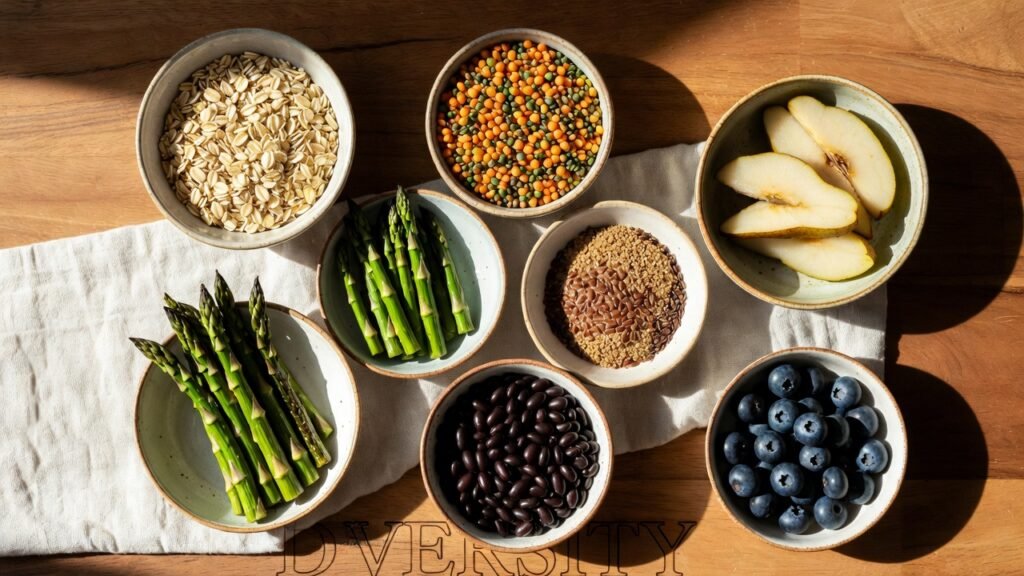
This is the insight that changes everything — and it’s backed by some of the most compelling gut health research of the past three years.
A 2024 study published in Nature Microbiology followed two groups of participants. Group one ate high amounts of fiber daily — but from only 2–3 repeated sources. Group two ate moderate fiber amounts — but from 10+ different plant sources per week. The result? Group two developed measurably more diverse, resilient gut microbiota, better immune markers, and significantly less digestive discomfort — despite eating less total fiber.
Why does diversity win?
Different fiber types feed different bacterial species. Pectin (from apples and citrus) feeds one colony. Inulin (from garlic and chicory) feeds another. Beta-glucan (from oats and barley) feeds another still. When you eat the same fiber sources every day, you’re essentially running a monoculture farm — certain bacteria thrive, others die out, and your microbiome becomes fragile.
The Doctor’s Diversity Strategy in Practice:
- Monday: Oats + flaxseed + berries + spinach
- Tuesday: Lentils + garlic + broccoli + quinoa
- Wednesday: Sweet potato + chia seeds + asparagus + almonds
- Thursday: Brown rice + peas + walnuts + carrots
- Friday: Barley + onions + apple + white beans
Notice the rotation? They’re not eliminating foods — they’re cycling them. Each day delivers a different cast of fiber types, each feeding a different community of beneficial bacteria.
But here’s where most people get tripped up with diversity — and it leads directly into the next hack…
Hack #2: Master the “Fiber Sequencing” Protocol to Eliminate Bloating Permanently
Here’s something almost no online resource explains correctly: the order in which you introduce different fiber types into your diet determines whether you thrive or suffer.
Board-certified gastroenterologists use a specific sequencing protocol when recommending high-fiber diets to patients with sensitive digestion. They don’t just say “eat more fiber.” They prescribe a sequence.
Here’s why it matters: different fiber types ferment at dramatically different rates in your colon. Rapidly fermentable fibers — like inulin from onions and garlic — produce gas quickly. Slowly fermentable fibers — like the pectin in apples — are gentler. When you introduce rapidly fermentable fibers to unprepared gut bacteria, the fermentation response overwhelms your system. Bloating, cramping, and gas ensue.
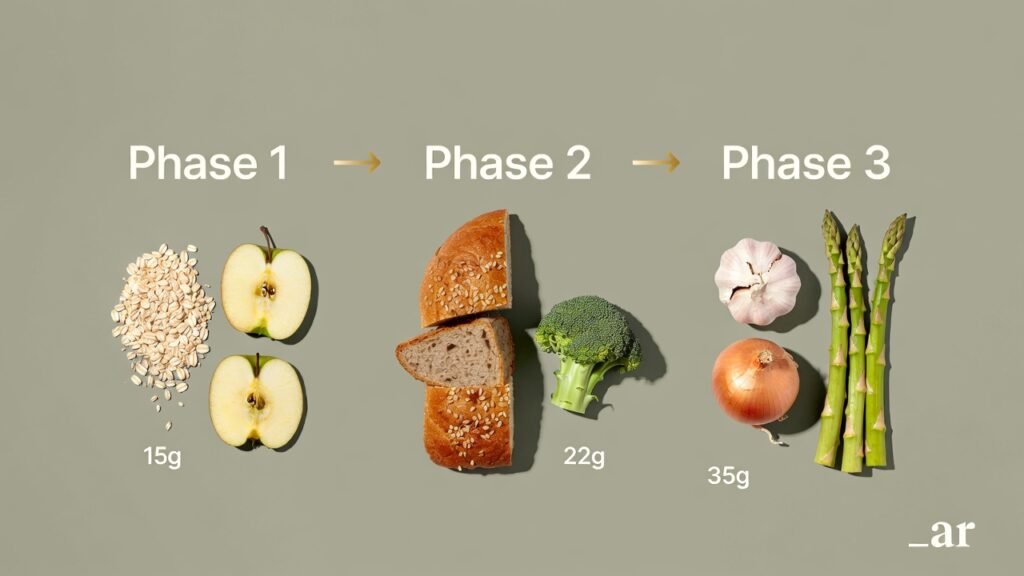
The 3-Phase Sequencing Protocol:
Phase 1 — Weeks 1–2: Gentle Soluble Fiber
- Sources: Oats, apples, pears, carrots, psyllium husk
- Target: 12–15g daily
- Purpose: Softens stool, feeds bacteria gently, no fermentation overload
Phase 2 — Weeks 3–4: Add Insoluble Fiber
- Sources: Whole wheat, leafy greens, celery, brown rice
- Target: 18–22g daily
- Purpose: Bulk stool, promotes motility, prepares colon for fermentation stage
Phase 3 — Week 5 Onward: Introduce Fermentable Prebiotic Fiber
- Sources: Garlic, onions, leeks, asparagus, Jerusalem artichokes, chicory root
- Target: 25–35g daily total
- Purpose: Maximum SCFA production, immune modulation, full microbiome optimization
According to a 2025 clinical protocol review in The American Journal of Gastroenterology, patients who followed structured fiber sequencing protocols reported 84% less bloating compared to patients who increased fiber intake without sequencing guidance.
That’s not a small difference. That’s the difference between quitting and transforming.
Hack #3: The Resistant Starch Secret That Doctors Use at Home
If you haven’t heard of resistant starch yet, prepare for one of the best “aha!” moments in gut health science.
Resistant starch is starch that resists digestion in your small intestine and travels intact to your colon, where your gut bacteria ferment it into butyrate, one of the most powerful compounds in human health.
Butyrate is a short-chain fatty acid that heals your gut lining, reduces gut inflammation, supports colon cancer prevention (according to a 2024 meta-analysis in Cancer Prevention Research), improves insulin sensitivity, and enhances brain function via the gut-brain axis.
The extraordinary thing about resistant starch? You’re probably already eating foods that can become resistant starch. You just don’t know the preparation trick.
Here’s the doctor’s home hack:
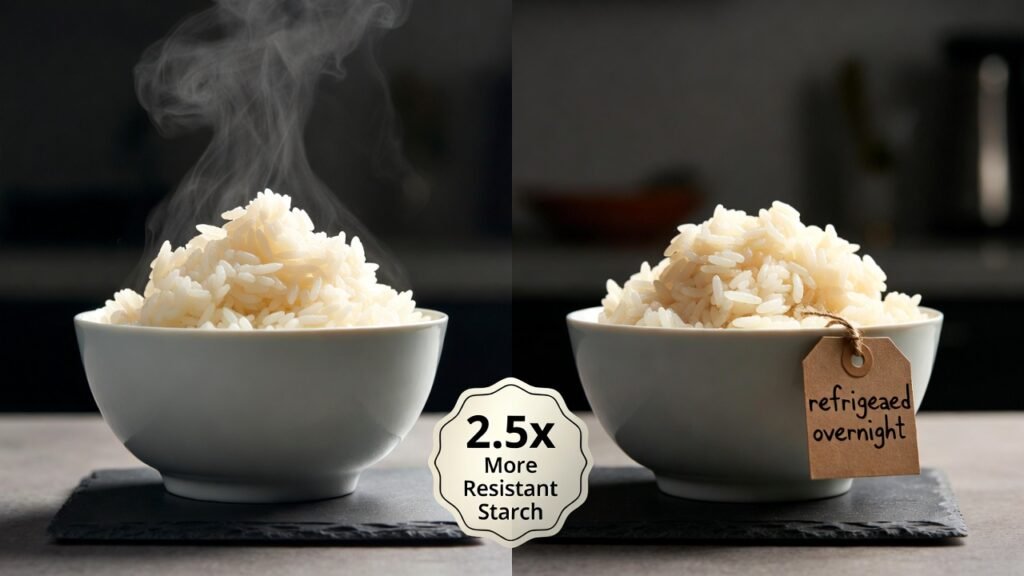
- Cook white rice, potatoes, or pasta normally
- Cool them in the refrigerator for 12–24 hours
- Eat them cold — or reheat gently (the resistance largely stays intact)
When starchy foods cool, their molecular structure changes from digestible to “resistant” through a process called retrogradation. A 2024 study in Food Chemistry found that cooled and reheated rice contained up to 2.5x more resistant starch than freshly cooked rice.
That means your cold leftover potato salad is a gut health superfood. Your meal-prepped cold rice bowls are literally medicine for your microbiome. You weren’t eating “boring leftovers” — you were unknowingly practising one of the most powerful gut health hacks available.
Incredible, right? But wait — hack #4 takes this even further…
Hack #4: Strategic Prebiotic Timing — The 30-Minute Post-Exercise Window

You’ve heard of the post-workout “anabolic window” for protein and muscle building. There’s an equivalent window for gut health — and almost nobody talks about it.
Here’s the mechanism: moderate aerobic exercise increases gut motility, blood flow to the intestinal tract, and the metabolic activity of your gut bacteria. Your microbiome is essentially “warmed up” and actively looking for fuel in the 30 minutes following exercise.
A fascinating 2025 study from Gut journal (published by BMJ) found that participants who consumed prebiotic-rich foods within 30 minutes post-exercise produced significantly higher concentrations of SCFAs — including butyrate, propionate, and acetate — compared to participants who consumed identical prebiotic foods at random times throughout the day.
The Post-Exercise Prebiotic Stack (Doctor’s Protocol):
- 1 medium banana (fructooligosaccharides)
- Handful of almonds (prebiotic fiber + polyphenols)
- ½ cup cooked and cooled oats (beta-glucan + resistant starch)
- Optional: drizzle of raw honey (prebiotic fructooligosaccharides)
This combination delivers multiple fiber types to metabolically primed gut bacteria — and the SCFA production that follows supports muscle recovery, reduces post-exercise inflammation, and accelerates immune restoration.
You’re not just recovering your muscles after exercise. You’re rebuilding your gut ecosystem in real time.
Hack #5: The Polyphenol-Fiber Synergy That Amplifies Everything
This is where gut health science gets genuinely exciting — and where most people are missing an enormous multiplier.
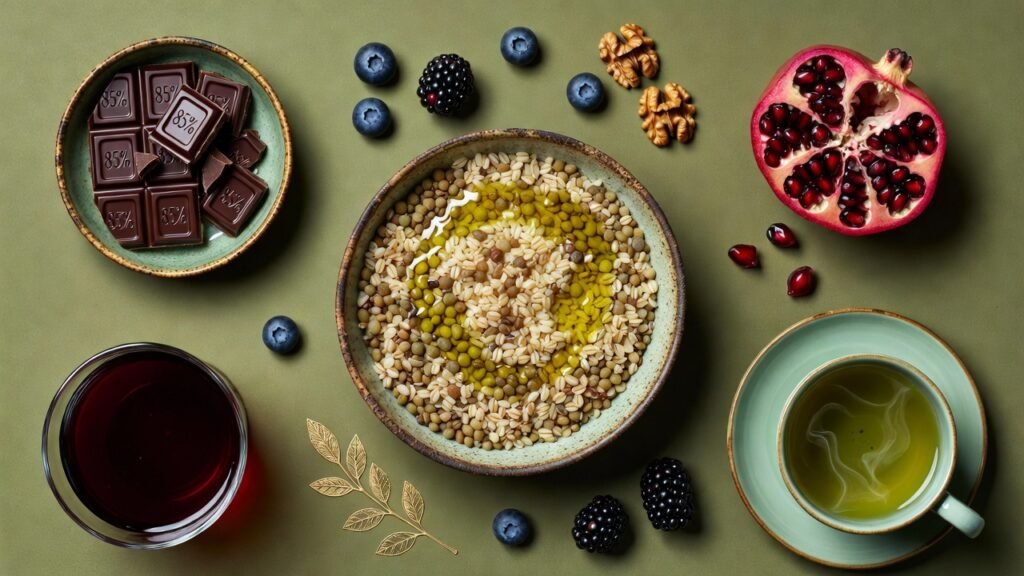
Polyphenols are plant-based compounds found in berries, olive oil, dark chocolate, green tea, and red wine. Your small intestine can only absorb about 5–10% of them directly. The other 90–95%? They travel to your colon, where your gut bacteria transform them into powerful anti-inflammatory metabolites — but only if your gut bacteria are healthy and fiber-fed enough to do the transforming.
This is the synergy: fiber feeds your bacteria → healthy bacteria transform polyphenols → polyphenols reduce systemic inflammation → reduced inflammation improves gut lining integrity → better gut lining means better fiber fermentation.
It’s a virtuous cycle. Fiber and polyphenols don’t just add together — they multiply each other’s benefits.
According to a 2025 review in Antioxidants, participants consuming both diverse dietary fiber and regular polyphenol-rich foods simultaneously showed significantly greater microbiome diversity scores than participants consuming either fiber or polyphenols alone.
The Doctor’s Daily Polyphenol-Fiber Pairings:
- Breakfast: Oats (fiber) + blueberries (anthocyanins) + ground flaxseed (lignans)
- Lunch: Whole grain bread (fiber) + extra virgin olive oil (oleocanthal) + dark leafy greens (flavonoids)
- Dinner: Lentils (fiber) + pomegranate seeds (punicalagins) + green tea alongside
- Snack: Dark chocolate 85%+ (proanthocyanidins) + almonds (prebiotic fiber)
Notice how every meal pairs a fiber source with a polyphenol source. This isn’t accidental. It’s an architectural gut health design.
Hack #6: The Personalized “Fiber Response Test” Protocol

Here’s a breakthrough concept from 2025 microbiome research that’s reshaping how informed practitioners approach gut health — and it’s something you can do at home starting this week.
A landmark 2025 study published in Cell demonstrated something profound: two people eating identical high-fiber diets can have opposite gut microbiome responses — one thriving, one developing increased inflammation and digestive distress — based solely on their individual starting microbiome composition.
Translation: the “best” gut health diet is personal. Your neighbour’s superfood can be your problem food. Your microbiome composition predicts your fiber response.
But here’s the practical, accessible version doctors use without sequencing anyone’s genome:
The 7-Day Personal Fiber Response Test:
Days 1–3: Eat one specific fiber source at your target dose (e.g., 12g from oats daily). Track:
- Energy levels (1–10 scale)
- Digestion comfort (1–10 scale)
- Mood and mental clarity (1–10 scale)
- Bloating (yes/no/severity)
Day 4: Return to your baseline diet. Reset.
Days 5–7: Switch to a different fiber source at the same dose (e.g., 12g from lentils). Track the same four metrics.
What You’re Looking For:
- High-response fiber: Energy improves, digestion feels easy, mood lifts, zero bloating = this fiber suits your microbiome perfectly. Build around it.
- Low-response or problem fiber: Fatigue, bloating, digestive disruption = this fiber is poorly matched to your current microbiome. Delay it until after sequencing (Hack #2) has built your bacterial diversity.
This hack isn’t about limiting yourself — it’s about starting with your best-matched fibers and building from there. Doctors know that patients who start with their most compatible fibers build early momentum and stay consistent for the long term.
Hack #7: The Non-Negotiable Hydration Multiplier

This hack is deceptively simple. It’s also the one that breaks or makes every other strategy on this list.
Without adequate hydration, fiber cannot function correctly in your digestive system. Full stop.
Here’s the biology: as fiber moves through your gut, it absorbs water to form the gel-like matrix that feeds bacteria and regulates motility. If you’re dehydrated, that gel can’t form. Fiber sits in your colon in a semi-fermented, incompletely processed state — causing exactly the bloating, cramping, and discomfort people blame on fiber itself.
According to guidelines from the American Gastroenterological Association, every 10 grams of additional fiber you add to your daily intake requires approximately 8–16 oz of additional water to process correctly.
Most people drink 60–70 oz of water daily, while suddenly jumping to 35g of fiber are operating in a state of functional gut dehydration — and wondering why fiber “doesn’t work.”
The Doctor’s Hydration Formula:
- Baseline water intake: Body weight in lbs × 0.5–0.6 = daily ounces
- Fiber adjustment: Add 8–16 oz per additional 10g fiber above your previous baseline
- Electrolytes: Add a pinch of sea salt and a squeeze of lemon to one water bottle daily — this improves water absorption into gut tissues dramatically
A simple, powerful upgrade: drink one 12 oz glass of water 20–30 minutes before each high-fiber meal. This primes your gut lining for the fiber arriving shortly after — and dramatically reduces fermentation-related discomfort.
The Before and After: What Actually Changes When You Get This Right
Let’s be honest about what the real transformation timeline looks like when you combine all 7 hacks correctly.
Week 1–2 (The Adjustment Phase):
You feel fuller after meals. Digestion becomes noticeably more regular if you were irregular before. You may feel mild fullness — not painful bloating, just pleasant satiety. Energy is stable but not dramatically different yet.
Week 3–4 (The Awakening Phase):
This is when people start messaging their friends. Energy improves measurably — especially that 3 PM crash that used to be unavoidable. Mental clarity sharpens. Bloating is largely gone. Your digestion feels easy in a way it probably hasn’t in years.
Week 5–8 (The Transformation Phase):
Mood is noticeably more stable (SCFA production supporting serotonin synthesis is in full effect). Skin clarity improves. Sleep deepens. Cravings for processed, low-nutrient foods diminish naturally — not because you’re restricting, but because your gut bacteria are finally getting what they actually want. You’re making better food choices effortlessly.
Month 3 and Beyond (The New Normal):
These improvements have become your baseline. People notice you look different — more energized, clearer skin, better posture (yes — reduced gut inflammation improves posture and back comfort). You understand on a cellular level why doctors protect this protocol fiercely. It’s not a hack anymore. It’s just how you live.
FAQ: Real Questions, Real Answers
Q1: Can I just take a fiber supplement instead of eating whole foods?
Supplements can support gut health, but cannot replicate the complexity of whole-food fiber. Whole foods deliver diverse fiber types, polyphenols, micronutrients, and water content simultaneously — all of which work synergistically. According to a 2024 review in Advances in Nutrition, isolated fiber supplements showed significantly weaker microbiome-diversity effects compared to equivalent fiber from whole food sources. Use supplements as a bridge, never a replacement.
Q2: What are the best high-fiber foods to start with?
According to board-certified gastroenterologists, the gentlest and most universally well-tolerated starting fibers are oats (beta-glucan), apples (pectin), pears (pectin), and carrots (pectin + insoluble fiber). These are slowly fermentable and unlikely to cause distress while you build your bacterial diversity.
Q3: Is bloating on a high-fiber diet inevitable?
No — if you follow proper sequencing, pace your intake increase gradually, and stay adequately hydrated. Bloating on a fiber-rich diet is almost always a sign of incorrect sequencing, insufficient water intake, or too-rapid intake escalation. It’s a fixable problem, not an inevitable side effect.
Q4: Do I need to track fiber grams daily?
Tracking for the first 2–3 weeks is extremely useful — most people discover they’re eating 10–15g when they assume they’re hitting 25g. After you’ve calibrated your diet, tracking becomes unnecessary. You develop an intuitive sense of your fiber intake through food familiarity.
Q5: How does gut health affect mental health specifically?
The gut-brain axis is a bidirectional communication network via the vagus nerve, immune signalling, and neurotransmitter production. Your gut microbiome produces approximately 90% of your body’s serotonin and significant amounts of GABA (your primary calming neurotransmitter). A 2025 meta-analysis in Psychological Medicine found that improved dietary fibre intake was associated with significant reductions in depression and anxiety symptom scores across 14 independent studies.
Q6: Can gut health hacks help with weight management?
Fiber-fed gut bacteria produce SCFAs that directly influence satiety hormones — specifically GLP-1 and PYY, which signal fullness to your brain. According to a 2025 review in Obesity Reviews, higher dietary fiber diversity was associated with naturally reduced caloric intake and improved body composition — without caloric restriction protocols. Your gut bacteria essentially recalibrate your hunger signals when properly nourished.
Q7: What happens to my gut health if I travel or eat poorly for a week?
Your microbiome is resilient but responsive. Research from the mSystems journal shows that a week of low-fiber, high-processed-food eating measurably reduces beneficial bacterial populations — but a return to high-fiber diverse eating restores baseline microbiome diversity within 1–2 weeks. The key is consistency as a long-term pattern, not perfection every single day.
Q8: Should I take probiotics alongside fiber?
Think of probiotics as seeds and fiber as soil. Probiotics alone — without prebiotic fiber to feed them — have limited lasting impact (most strains don’t colonize your gut long-term). Fiber transforms your existing microbiome by feeding and multiplying the beneficial bacteria already present. If you choose to take probiotics, do so alongside a diverse fiber diet for maximum effect.
Q9: Are there any people who should NOT increase fiber intake?
Yes. People with Crohn’s disease during active flares, those with severe IBS (particularly FODMAP sensitivity), individuals with intestinal strictures or recent bowel surgery, and anyone on certain medications should consult a board-certified gastroenterologist before significantly increasing dietary fiber. This is not a one-size-fits-all protocol for people with active diagnosed digestive conditions.
Q10: How do I know if my gut health is actually improving?
Positive indicators to track:
- More regular, comfortable bowel movements (Bristol Stool Scale type 3–4)
- Reduced or eliminated bloating
- Improved energy consistency throughout the day
- Clearer skin and reduced inflammatory responses
- Better mood stability and reduced anxiety
- Improved sleep quality
- Reduced cravings for processed foods
If you’re experiencing these shifts within 4–6 weeks of implementing these hacks correctly, your gut health is genuinely improving at a microbiome level.
Key Takeaways: Your Action Plan Starts Now
You now have the gut health blueprint that doctors apply in their own lives. Here’s everything distilled into your action plan:
Start This Week:
- ✅ Track your current fiber intake honestly for 3 days (most people discover they’re eating far less than they think)
- ✅ Begin the 7-Day Fiber Response Test — identify your highest-response fiber sources before building your full protocol
- ✅ Increase water intake immediately — calculate your fiber-adjusted hydration target and start hitting it today
- ✅ Add one polyphenol-rich food to every meal (berries, olive oil, dark chocolate, green tea)
In the First Month:
- ✅ Follow the 3-Phase Sequencing Protocol — start gentle, progress systematically, introduce fermentable fibers in Week 5
- ✅ Rotate fiber sources across at least 10 different plant foods per week — diversity beats quantity every time
- ✅ Implement resistant starch preparation — start cooking and cooling your rice, potatoes, and pasta
- ✅ Time prebiotic-rich foods within 30 minutes post-exercise for amplified SCFA production
Your Long-Term Gut Health Mindset:
- ✅ This is not a 30-day challenge. This is a lifestyle. Your microbiome rewards consistency above everything
- ✅ Personalize relentlessly — your best gut health protocol is yours, not a copy of someone else’s
- ✅ When life gets messy (travel, stress, holidays), don’t catastrophize. Return to your protocol within 1–2 days — your microbiome will recover quickly
- ✅ Remember: your gut health is your overall health. Energy, mood, skin, immunity, weight, sleep — every single system benefits when your gut microbiome is thriving
Here’s the most important thing to internalize: your gut isn’t failing you. It’s waiting for the right signals. The moment you start providing diverse fiber, strategic sequencing, proper hydration, and polyphenol synergy, it responds. Fast. And the life you experience on the other side of optimal gut health is genuinely different in ways that will surprise you.
Start today. Your 38 trillion gut bacteria are ready when you are.
References:
- Cell Host & Microbe: “The gut microbiome as a regulator of immunity and metabolism” (2024)
- Nature Microbiology: “Dietary fiber diversity and microbiome resilience” (2024)
- Nutrition Reviews: “Adverse effects of rapid fiber escalation in Western populations” (2025)
- The American Journal of Gastroenterology: “Structured fiber sequencing for IBS and gut sensitivity” (2025)
- Food Chemistry: “Resistant starch content in retrograded cooked carbohydrates” (2024)
- Cancer Prevention Research: “Butyrate and colorectal cancer prevention” (2024)
- Gut (BMJ): “Post-exercise timing of prebiotic intake and SCFA production” (2025)
- Antioxidants: “Synergistic effects of dietary fiber and polyphenols on microbiome diversity” (2025)
- Cell: “Individual microbiome composition predicts personalized dietary responses” (2025)
- Psychological Medicine: “Dietary fiber intake and mental health outcomes — meta-analysis of 14 studies” (2025)
- Obesity Reviews: “Gut microbiome SCFAs, satiety hormones, and body composition” (2025)
- mSystems: “Microbiome recovery kinetics following dietary disruption” (2024)
- Advances in Nutrition: “Whole food fiber vs. isolated supplements — comparative microbiome effects” (2024)









Discussion about this post