
Your blood pressure is key to your heart health. Knowing your numbers can help you take care of yourself. This guide will explain why your blood pressure matters and how to understand it.
Key Takeaways
- Blood pressure is a vital sign that measures the force of blood flow through your arteries.
- Systolic pressure represents the pressure in your arteries when your heart beats, while diastolic pressure measures the pressure between beats.
- Understanding both your systolic and diastolic numbers is crucial for monitoring your cardiovascular health.
- Maintaining healthy blood pressure levels can reduce the risk of serious health conditions, such as heart disease and stroke.
- Regular monitoring and lifestyle adjustments can help you maintain optimal blood pressure and improve your overall well-being.
Medical Disclaimer: Important Information Before We Begin
Before we dive into blood pressure numbers, it’s key to know this info is for learning only. It’s not a replacement for expert medical advice. We aim to give you knowledge, but for health concerns, talk to a doctor.
It’s vital to see your doctor or a medical expert for advice on blood pressure and heart health. They can give you a plan that fits your needs. They know how to help you best.
This article is based on trusted sources and checked by medical pros. But, it’s meant to be a general guide, not a final answer. Your health matters most, so always seek professional medical advice over health information from articles.
“Your health is your most valuable asset, so it’s essential to consult with qualified medical professionals when it comes to blood pressure and other medical concerns.”

Knowing your blood pressure numbers is just the start to a healthy heart. By working with your doctor, you can make a plan to keep your blood pressure in check. This will help protect your health and well-being for the long run.
Understanding Your Blood Pressure Numbers: Basic Concepts
Figuring out your blood pressure readings can seem like solving a puzzle. But knowing the basics is key to keeping your heart healthy. Let’s look at the two main numbers: systolic and diastolic pressure.
What Systolic Pressure Tells Us
Systolic pressure is the first number and is higher. It shows the force on your artery walls when your heart pumps blood. This tells us about your heart’s health and how well your blood flows.
What Diastolic Pressure Reveals
Diastolic pressure is the second number and is lower. It shows the pressure in your arteries when your heart rests. This tells us about your blood vessels’ health and how hard your heart works.
The Significance of Both Numbers Together
While each number gives us different info, together they paint a full picture of your heart health. They help spot problems and guide how to stay healthy or treat issues.
Getting to know your blood pressure numbers is the first step to taking care of yourself. We’ll soon talk about what healthy blood pressure looks like and when you might need to worry.
Normal Blood Pressure Ranges: What’s Healthy?
Knowing your blood pressure numbers is key to staying healthy. The healthy blood pressure range helps figure out if your numbers are normal, high, or low. Let’s dive into these ranges.
A normal blood pressure is less than 120/80 mmHg. This means your top number is under 120 and your bottom number is under 80. This range lowers the risk of hypertension and heart problems.
Hypertension is when your top number is 130 or higher, or your bottom number is 80 or higher. People with high blood pressure might feel headaches, dizziness, and chest pain. They’re at a higher risk of heart disease and stroke.
Hypotension (low blood pressure) is when your top number is under 90 or your bottom number is under 60. Low blood pressure is less dangerous but can mean you have a health issue. It might cause you to feel lightheaded, tired, and nauseous.
| Blood Pressure Category | Systolic (top number) | Diastolic (bottom number) |
|---|---|---|
| Normal | Less than 120 mmHg | Less than 80 mmHg |
| Elevated | 120-129 mmHg | Less than 80 mmHg |
| Hypertension Stage 1 | 130-139 mmHg | 80-89 mmHg |
| Hypertension Stage 2 | 140 mmHg or higher | 90 mmHg or higher |
| Hypertensive Crisis | Higher than 180 mmHg | Higher than 120 mmHg |
These are general guidelines. Your healthy blood pressure range can change based on your age, health, and medical conditions. Always talk to your doctor to find your best blood pressure range and keep it healthy.
Signs and Symptoms of Blood Pressure Issues
It’s important to keep an eye on your blood pressure for your heart’s health. Both high and low blood pressure can show different signs. Knowing these can help you spot problems early and get help fast.
Common Symptoms of High Blood Pressure
People with high blood pressure might feel:
- Headaches, often in the back of the head or at the base of the skull
- Shortness of breath, especially during physical activity
- Dizziness or lightheadedness
- Chest pain or tightness
- Nosebleeds
- Flushed face
Warning Signs of Low Blood Pressure
Low blood pressure can also cause symptoms that need attention:
- Dizziness or lightheadedness, especially when standing up or changing positions
- Fatigue, weakness, or lack of energy
- Blurred vision or feeling of tunnel vision
- Nausea or vomiting
- Rapid, shallow breathing
- Cold, clammy skin
When to Seek Medical Help
If you notice any lasting or worrying symptoms, see a doctor. Ignoring blood pressure issues can lead to serious heart problems. Don’t wait to talk to your healthcare provider. Early action can greatly help manage your symptoms.
| Symptom | High Blood Pressure | Low Blood Pressure |
|---|---|---|
| Headaches | ✓ | |
| Shortness of breath | ✓ | |
| Dizziness/lightheadedness | ✓ | ✓ |
| Chest pain/tightness | ✓ | |
| Nosebleeds | ✓ | |
| Flushed face | ✓ | |
| Fatigue/weakness | ✓ | |
| Blurred vision | ✓ | |
| Nausea/vomiting | ✓ | |
| Rapid, shallow breathing | ✓ | |
| Cold, clammy skin | ✓ |
Risk Factors for Blood Pressure Problems
It’s important to know what can lead to blood pressure issues. Some factors we can’t control, but we can change our lifestyle to lower the risk of high blood pressure and heart disease.
Family history and genetics play a big role. If your family has a history of high blood pressure, you might be at higher risk. Age also matters, as blood pressure often goes up as we get older.
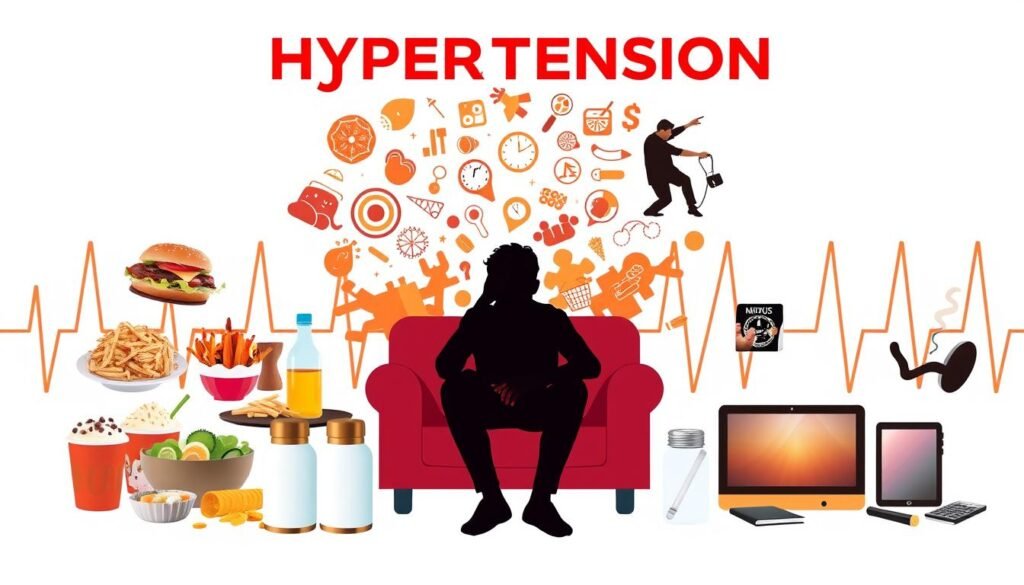
Poor diet and lack of exercise are big contributors to high blood pressure. Eating too much sodium, saturated fats, and processed foods can harm your heart. Not moving enough also affects your blood flow.
Stress, excessive alcohol consumption, and smoking can also raise blood pressure and heart disease risk. Reducing stress, drinking less, and quitting smoking can help keep your heart healthy.
Knowing these risk factors and taking steps to manage them can help control blood pressure. This can lower the risk of serious health problems later on.
| Risk Factor | Description | Modifiable? |
|---|---|---|
| Family History | Genetic predisposition to high blood pressure | No |
| Age | Blood pressure tends to rise with increasing age | No |
| Diet | High intake of sodium, saturated fats, and processed foods | Yes |
| Lack of Exercise | Sedentary lifestyle with insufficient physical activity | Yes |
| Stress | Chronic stress and its impact on the cardiovascular system | Yes |
| Alcohol Consumption | Excessive alcohol intake and its link to high blood pressure | Yes |
| Smoking | Smoking and its detrimental effects on the cardiovascular system | Yes |
By focusing on the risk factors we can change, we can take steps to keep our blood pressure healthy. This can help prevent high blood pressure and heart disease.
How to Monitor Your Blood Pressure at Home
Checking your blood pressure regularly is key to staying healthy. While doctor visits are important, monitoring at home is convenient and accessible. We’ll show you how to pick the right monitor, get accurate readings, and track your progress.
Choosing the Right Blood Pressure Monitor
Choosing a good blood pressure monitor is vital for home use. Look for ones validated by groups like the British Hypertension Society or the European Society of Hypertension. These devices give you reliable readings, helping you track your blood pressure monitoring and health tracking effectively.
Best Practices for Accurate Readings
- Sit quietly for 5 minutes before taking a measurement, and avoid caffeine, exercise, or smoking for 30 minutes prior.
- Ensure the cuff fits properly around your bare upper arm, and position your arm at heart level.
- Take multiple readings, at least 1 minute apart, and record the results.
Recording and Tracking Your Results
Keeping a detailed record of your home blood pressure measurement is crucial. Use a notebook, spreadsheet, or app to log your readings. Include the date, time, and any notes. This helps your healthcare provider understand your blood pressure trends.
By following these tips and making home blood pressure monitoring a part of your routine, you can manage your health better. This way, you can work closely with your healthcare provider for the best results.
Lifestyle Changes for Better Blood Pressure
Keeping a healthy lifestyle is key to managing your blood pressure. Making a few simple changes in your daily life can help lower and stabilize your blood pressure.
Exercise Recommendations
Regular exercise is a powerful way to support healthy blood pressure. Try to do at least 30 minutes of moderate activity, like brisk walking, swimming, or cycling, most days. This strengthens your heart and boosts your overall health.
- Include various aerobic exercises in your routine.
- Strength training is also good, so add it a few times a week.
- Always talk to your doctor before starting a new exercise plan, especially if you have health issues.
Stress Management Techniques
Too much stress can harm your body, including raising your blood pressure. Adding stress-reducing activities to your life can improve your heart health.
- Try relaxation techniques like deep breathing, meditation, or yoga.
- Do things you enjoy and find calming.
- Make sure to get enough sleep and live a healthy lifestyle.
Remember, small, lasting changes can greatly support your healthy lifestyle and blood pressure management. Talk to your healthcare provider to create a plan that fits your needs.
“Taking proactive steps towards a healthier lifestyle can have a significant impact on your blood pressure and overall cardiovascular well-being.”
Dietary Approaches to Managing Blood Pressure
Choosing the right foods can help keep your blood pressure healthy. The DASH diet and watching your salt intake are two effective ways to do this.
The DASH Diet Explained
The DASH diet focuses on eating fruits, veggies, whole grains, lean proteins, and low-fat dairy. It’s been proven to lower blood pressure. This makes it a great choice for heart health.
Foods to Embrace and Avoid
Eat foods rich in nutrients like leafy greens, berries, and whole grains. Also, include fatty fish in your diet. Avoid processed foods, red meat, and high-sodium items to keep your blood pressure in check.
Salt Intake Guidelines
It’s important to watch your salt intake. The American Heart Association suggests no more than 2,300 milligrams of sodium a day. Aim for 1,500 milligrams or less for better heart health. Reading food labels can help you make better choices.