
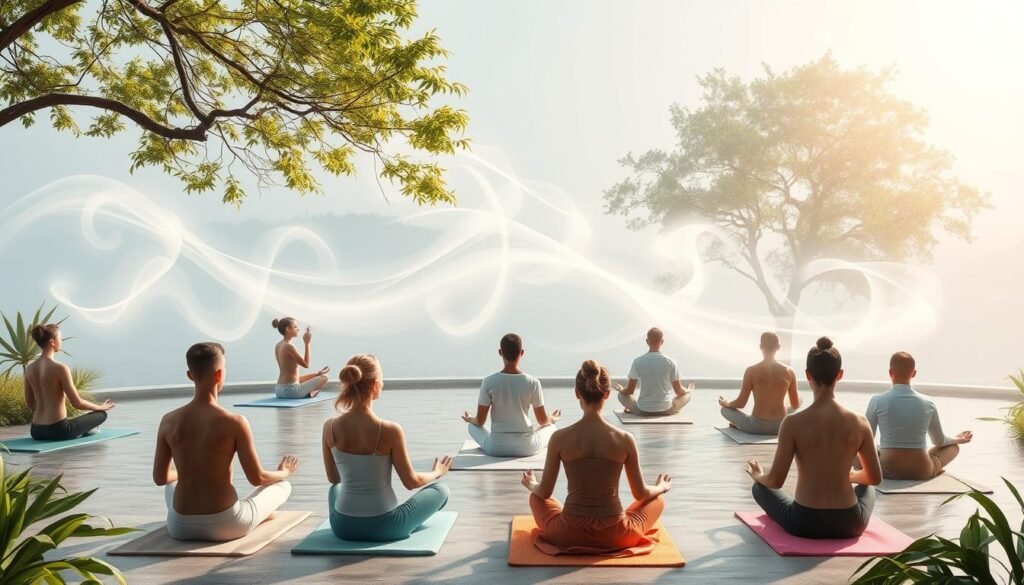
In today’s fast world, managing stress is key. Breathwork techniques are a powerful way to improve your mental and physical health. They’re not just a trend but a deep way to heal and care for yourself.
This guide will show you different breathwork techniques. They can help you feel less stressed, clearer in your mind, and healthier overall. You’ll learn simple exercises and more advanced methods to make conscious breathing a part of your day.
Whether you’re busy at work, an athlete, or dealing with anxiety, breathwork can help. It offers simple ways to calm your nervous system and enhance your life. We’ll dive into the science, techniques, and how they work in real life.
Key Takeaways
- Discover multiple breathwork techniques for stress reduction
- Learn how conscious breathing impacts mental and physical health
- Understand the scientific basis of breathwork practices
- Explore practical ways to integrate breathwork into daily life
- Gain tools for managing stress and improving overall wellness
What is Breathwork and Its Benefits?
Breathwork is a powerful way to improve overall wellness by changing how we breathe. It’s more than just breathing; it’s a way to better our health and mind.
Breathwork uses special breathing methods to boost well-being. For thousands of years, people have used mindful breathing in meditation and therapy.
Understanding Breathwork Fundamentals
Breathwork teaches us to control our breathing. It helps us:
- Reduce stress and anxiety
- Improve breathing
- Manage emotions better
- Think more clearly
Physical Benefits of Breathwork
Doing breathing exercises can change our body in amazing ways. Studies show they can:
| Physical Benefit | Potential Impact |
|---|---|
| Lung Capacity | More oxygen in the body |
| Blood Pressure | Stable blood pressure |
| Immune Function | Stronger immune system |
Mental Benefits of Breathwork
Mindful breathing does more than just help our body. Research shows it can greatly improve our mental health by:
- Lessening anxiety
- Helping with emotions
- Improving focus
- Making us feel more relaxed
“Breath is the bridge which connects life to consciousness.” – Thich Nhat Hanh
Breathwork is great for reducing stress, getting better at things, or understanding ourselves better. It’s a simple yet powerful tool for change.
Popular Breathwork Techniques Explained
Breathwork is a powerful tool for managing stress and improving well-being. It offers various techniques to help you control your breath better. These methods can enhance your mental and physical health. Let’s look at four transformative breathing methods that can change your wellness routine.
Diaphragmatic Breathing: The Foundation of Breath Control
Diaphragmatic breathing is key to controlling your breath. It focuses on using the diaphragm, the main muscle for breathing. By practicing this, you can:
- Reduce stress and anxiety
- Improve oxygen circulation
- Enhance core muscle stability
- Promote relaxation
“Breathing is the first act of life and the last. Our entire life is composed of breaths.” – Elizabeth Brown
Box Breathing: Precision and Calm
Box breathing offers a structured way to control your breath. It helps you achieve mental clarity and emotional balance. The method involves inhaling, holding, and exhaling for equal lengths.
| Step | Duration | Action |
|---|---|---|
| 1 | 4 seconds | Inhale deeply |
| 2 | 4 seconds | Hold breath |
| 3 | 4 seconds | Exhale completely |
| 4 | 4 seconds | Hold empty lungs |
Alternate Nostril Breathing: Balancing Energy
This ancient yogic technique balances the body’s energy. It involves alternating breath between nostrils. This can improve mental focus and reduce stress.
4-7-8 Breathing: Natural Relaxation Technique
Dr. Andrew Weil developed the 4-7-8 breathing method. It acts as a natural tranquilizer for the nervous system. This technique can help individuals fall asleep faster and manage anxiety effectively.
Each breathwork technique has its own benefits. Try out these methods to find the one that fits your wellness goals best.
How to Integrate Breathwork into Daily Life
Adding breathwork to your daily routine is easy. It can help reduce stress and improve your mental clarity. By using paced breathing, you can see big improvements in your well-being.
Breathwork is more than a practice; it’s a lifestyle. It helps you manage stress and boost your mental performance. Small, consistent efforts can lead to big changes in your daily life.
Morning Breathwork Routines
Begin your day with intentional breathing. A 5-minute breathwork meditation can:
- Boost energy levels
- Increase mental focus
- Reduce morning anxiety
- Improve overall mood
Midday Mindfulness Breaks
Use quick paced breathing exercises to fight afternoon fatigue and stress. These short breaks can help you:
- Reset your mental state
- Reduce workplace tension
- Regain concentration
- Prevent burnout
Evening Relaxation Techniques
End your day with gentle breathwork meditation. It helps your body relax and prepares you for sleep. Calming breathing tells your nervous system it’s time to unwind.
“Breath is the bridge between mind and body, connecting our inner world with external experiences.” – Breath Wellness Expert
Pro tip: Consistency is key. Even 10 minutes of daily breathwork can create profound changes in your mental and physical health.
The Science Behind Breathwork
Breathwork is more than just a way to relax. It’s a powerful practice based on science that can change our health. It shows why ancient practices like yogic breathing and pranayama are key in today’s wellness.

The human body changes a lot with different breathing patterns. Pranayama techniques cause specific changes in our body. These changes affect our nervous system, hormone levels, and overall health.
Physiological Effects on the Body
Scientific studies show amazing changes during breathwork:
- Reduces cortisol stress hormone levels
- Lowers blood pressure
- Enhances immune system function
- Improves oxygen circulation
Psychological Impact of Breathwork
Yogic breathing leads to big changes in our mind:
| Psychological Benefit | Neurological Change |
|---|---|
| Stress Reduction | Decreased amygdala activation |
| Emotional Regulation | Enhanced prefrontal cortex connectivity |
| Mood Improvement | Increased serotonin production |
“Breath is the bridge between mind and body, connecting our physical and mental experiences.” – Dr. Andrew Weil
By knowing the science behind breathwork, we can use pranayama more deeply. We see that each breath has great healing power.
Using Breathwork for Stress Relief
Stress is a big problem in today’s world. It affects our body and mind. Breathing exercises are a simple yet powerful way to handle stress. They help us deal with tough times and build strength for the future.
Recognizing Stress Symptoms
Knowing when you’re stressed is key. Your body shows signs like:
- Muscle tension, mainly in your neck and shoulders
- Rapid, shallow breathing
- Increased heart rate
- Feeling overwhelmed or anxious
- Difficulty concentrating
“Breath is the bridge between mind and body, leading to calm.” – Dr. Andrew Weil
Breathwork Practices for Immediate Relief
When stress hits, these breathing exercises can help right away:
- Box Breathing: Take four seconds to inhale, hold, exhale, and pause
- 4-7-8 Technique: Breathe in for 4 seconds, hold for 7, then exhale for 8
- Diaphragmatic Breathing: Deep belly breaths to relax
| Breathing Technique | Time Required | Stress Reduction Impact |
|---|---|---|
| Box Breathing | 2-5 minutes | High |
| 4-7-8 Breathing | 3-4 minutes | Moderate to High |
| Diaphragmatic Breathing | 5-10 minutes | Moderate |
Doing these breathing exercises often can really cut down stress. It also boosts your mental focus and emotional balance. Remember, controlling stress is in your breath.
Breathwork and Meditation: A Synergistic Approach
Breathwork meditation is a powerful mix of mindful breathing and mental clarity. It helps people reach deeper relaxation and self-awareness.
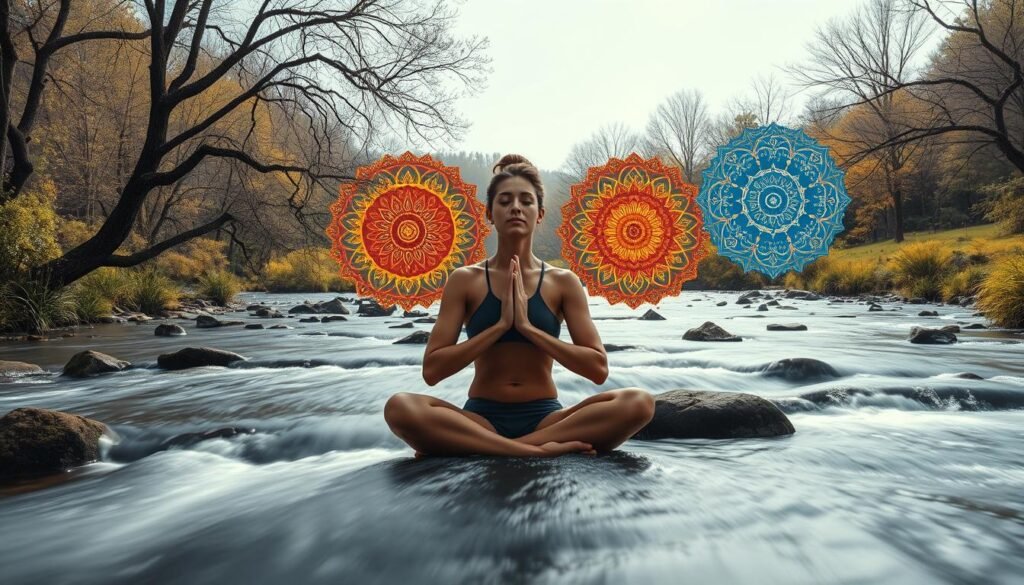
This blend of breathwork and meditation is a complete way to improve mental health. It shows that mindful breathing connects our physical and mental states. This allows for deep inner experiences.
Combining Techniques for Deep Relaxation
To mix breathwork with meditation, follow these steps:
- Focus on rhythmic breathing patterns
- Use breath as a central point of meditation
- Practice conscious awareness during inhale and exhale
- Develop a consistent breathwork meditation routine
“Breath is the anchor that connects mind and body, creating a pathway to inner peace.” – Meditation Expert
Guided Breathwork Meditations
Guided breathwork meditations are great for both newbies and pros. They help people get better at mindful breathing and explore deeper states of consciousness.
Regular breathwork meditation can:
- Reduce stress and anxiety
- Enhance mental clarity
- Improve emotional regulation
- Deepen spiritual awareness
The mix of breathwork and meditation is a journey to complete well-being. It invites us to explore the deep links between breath, mind, and spirit.
Breathwork in Yoga Practices
Yoga is a journey of self-discovery. Pranayama breathwork is key in linking physical movement with mental awareness. It turns yoga into a transformative experience.
Pranayama techniques are at the heart of advanced yoga. These breathing methods help control and expand breath. They create strong mind-body connections.
Essential Pranayama Techniques
- Ujjayi Breath: Creates internal heat and focus
- Kapalabhati: Energizing cleansing breath
- Nadi Shodhana: Balances nervous system
Benefits of Yogic Breathing in Practice
| Technique | Physical Benefits | Mental Benefits |
|---|---|---|
| Ujjayi | Increases lung capacity | Reduces stress |
| Kapalabhati | Strengthens abdominal muscles | Improves mental clarity |
| Nadi Shodhana | Enhances respiratory efficiency | Calms mind |
Adding pranayama to yoga practice boosts awareness and energy flow. It balances physical movement and breath.
“Breath is the bridge between body and mind” – Unknown Yoga Master
Learning yogic breathing unlocks deep wellness. It changes yoga from exercise to a healing practice.
Breathwork for Specific Populations
Breathwork techniques are great for different groups. They help with physical and mental health needs. Paced breathing is a flexible tool that supports those facing unique challenges.

Breathwork for Athletes
Athletes can use special breathwork to boost their game. They can:
- Get better oxygen use during training
- Deal with pre-competition nerves
- Recover faster after workouts
- Stay focused and strong mentally
“Breath control is the secret weapon of elite athletes” – Sports Performance Expert
Breathwork for Anxiety and Depression
Paced breathing is also good for mental health. It helps manage feelings and stress.
| Breathing Technique | Mental Health Benefit |
|---|---|
| 4-7-8 Breathing | Reduces anxiety symptoms |
| Diaphragmatic Breathing | Lowers stress hormone levels |
| Box Breathing | Improves emotional regulation |
Note: Always talk to healthcare pros about mental health.
Resources for Further Exploration
Exploring breathwork meditation is a journey that never ends. It’s a personal and transformative path. There are many resources to help you grow and understand more.
Books, digital platforms, and professional training can greatly improve your practice. Experts like Dr. Andrew Weil and Wim Hof have written detailed guides. They share scientific insights and practical tips on breathing exercises.
Recommended Books and Apps
Digital technology has made it easy to find breathwork meditation resources. Apps like Calm, Headspace, and Breathwrk offer guided sessions and tracking features. They also have customized breathing exercises for different wellness goals.
These platforms let you learn and practice breathwork from anywhere. It’s convenient and accessible.
Online Breathwork Classes and Workshops
Virtual learning platforms like Udemy, Skillshare, and breathwork training websites offer online courses. These programs connect you with experienced instructors. They provide personalized guidance in breathing techniques.
This ensures a safe and effective learning experience. It’s a great way to learn from experts.