
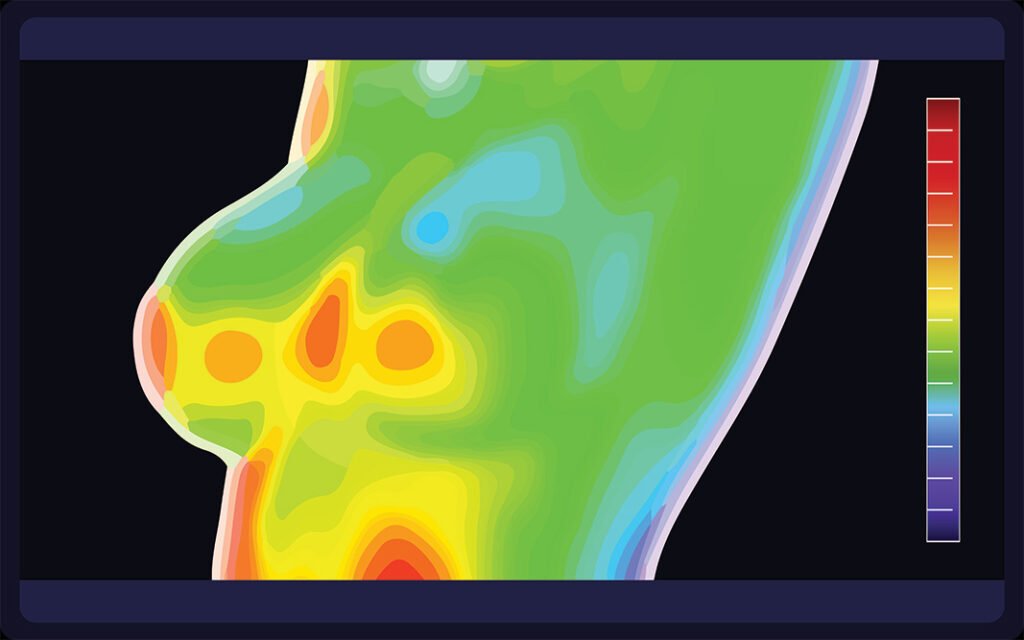
Breast cancer awareness and early detection are crucial components in the fight against this prevalent disease. Mammography has long been the gold standard for breast cancer screening, but there’s another tool gaining recognition in the realm of breast health – breast thermography. In this article, we’ll explore the technology behind breast thermography, its potential benefits, and how it can help detect early signs of breast cancer.
Understanding Breast Thermography
Breast thermography, also known as thermal imaging or thermology, is a non-invasive imaging technique that uses a special camera to measure the temperature and blood flow patterns in the breast tissue. It’s based on the principle that cancer cells typically have an increased metabolic rate, leading to higher blood flow and temperature compared to healthy cells. This difference can be detected through thermal imaging.
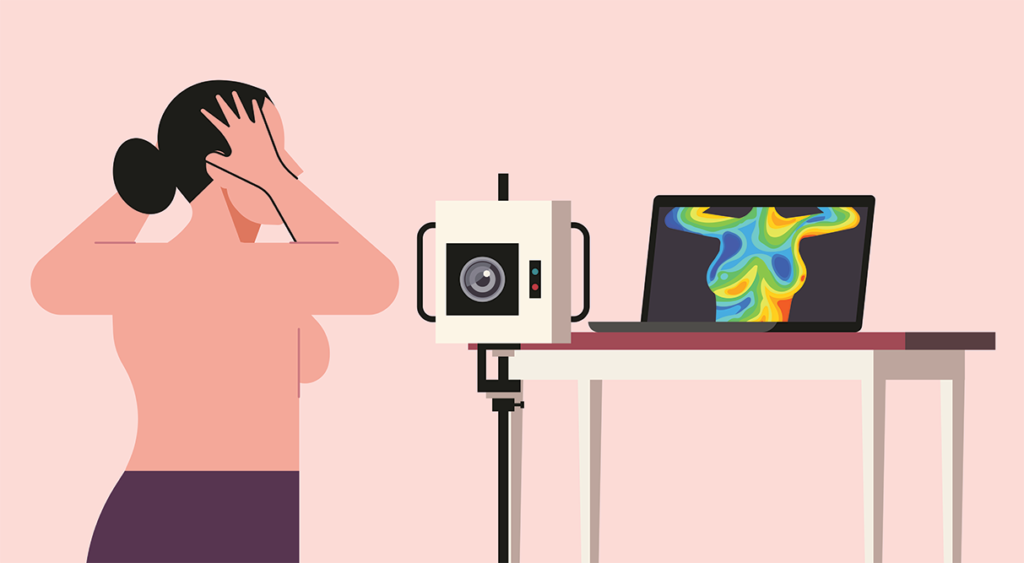
The process of breast thermography is relatively simple and painless. During the procedure:
Preparation: You’ll be asked to disrobe from the waist up and acclimate to the room’s temperature for about 15 minutes to ensure accurate results.
Imaging: A thermography technician will use an infrared camera to capture images of your breasts. You’ll stand in front of the camera, and a series of pictures will be taken.
Analysis: The collected images are then analyzed by a trained thermologist who looks for temperature variations and patterns that may indicate abnormalities.
Report: You’ll receive a detailed report of the findings, which can help you and your healthcare provider assess your breast health.

The Benefits of Breast Thermography
Breast thermography offers several potential benefits as a breast health assessment tool:
1. Early Detection
One of the primary advantages of breast thermography is its ability to detect physiological changes in breast tissue years before anatomical changes that may be detected by mammography. This early detection can be a game-changer in the fight against breast cancer, as catching it at an earlier stage often results in better treatment outcomes.
2. Non-Invasive and Pain-Free
Unlike mammograms, which involve breast compression and potential discomfort, breast thermography is entirely non-invasive and pain-free. There’s no need for radiation exposure or physical contact with the breast tissue.
3. Suitable for All Ages
Breast thermography is safe and suitable for women of all ages, including younger women who may have denser breast tissue that can be challenging to assess with mammography.
4. No Radiation
Since breast thermography doesn’t use ionizing radiation, there’s no associated radiation risk. This makes it an excellent option for women who need frequent breast screenings, such as those with a family history of breast cancer or certain genetic predispositions.
5. Monitoring Breast Health
Breast thermography can also be used as part of a regular breast health monitoring program. By tracking changes in temperature patterns over time, healthcare providers can identify any significant deviations that may warrant further investigation.
What Breast Thermography Can Reveal
Breast thermography can provide valuable information that may indicate the presence of breast cancer or other breast-related issues. Some of the findings that may be revealed through thermography include:
1. Temperature Asymmetry
Thermography can detect differences in temperature between the two breasts, which may suggest a developing issue in one breast.
2. Angiogenesis
Increased blood vessel formation (angiogenesis) in the breast tissue can be indicative of cancer growth, as cancer cells require a greater blood supply to sustain their rapid growth.
3. Inflammatory Patterns
Inflammation can be a sign of various breast conditions, including cancer. Thermography can identify abnormal inflammatory patterns.
4. Vascular Changes
Vascular changes, such as dilated blood vessels, can be a sign of breast abnormalities. These changes are often associated with an increased risk of developing cancer.
The Role of Breast Thermography in Early Detection
It’s important to note that while breast thermography is a valuable tool for early detection and monitoring, it should not replace mammography or other established breast screening methods. Instead, it can complement these methods and provide additional information for a comprehensive breast health assessment.
If breast thermography reveals any concerning findings, further diagnostic tests, such as mammography, ultrasound, or biopsy, may be recommended to confirm or rule out the presence of breast cancer.
Breast thermography empowers us with an early window into breast health, illuminating the path to prevention and early detection like never before.
The Bottom Line
Breast thermography is a promising technology that offers a non-invasive, radiation-free approach to breast health assessment. Its ability to detect physiological changes in breast tissue early on can be a valuable asset in the fight against breast cancer. However, it’s essential to use breast thermography as part of a broader breast health screening strategy, in consultation with your healthcare provider. Regular breast self-examinations, clinical breast exams, and mammograms should remain essential components of your breast health routine. By combining these approaches, you can take proactive steps to ensure the early detection and successful treatment of breast-related issues, ultimately contributing to better breast health and peace of mind.