
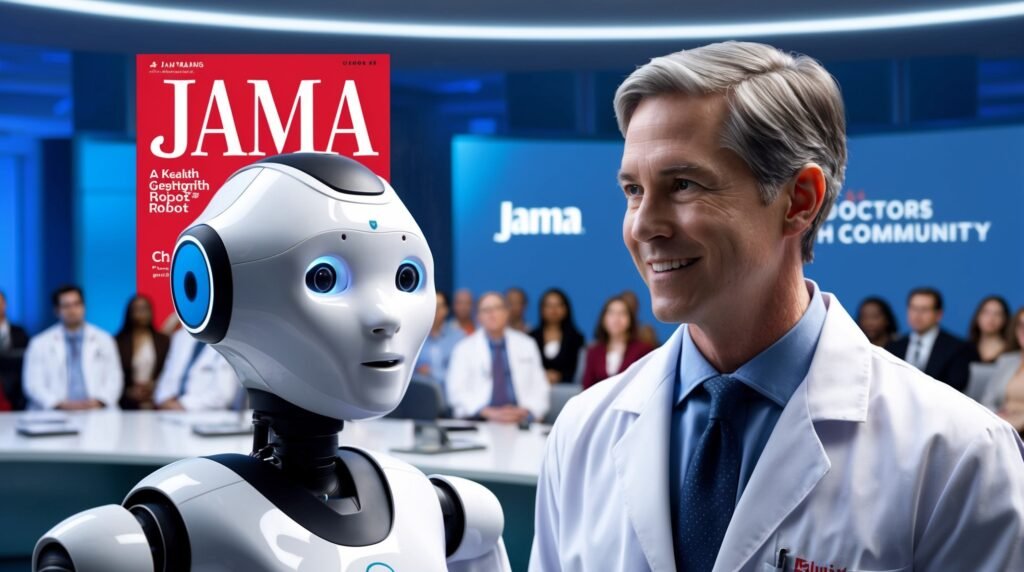
In an era where artificial intelligence is rapidly transforming various sectors, healthcare stands at a fascinating crossroads. A groundbreaking study published in JAMA Network Open has sparked intense discussion in the medical community by comparing diagnostic accuracies between human doctors and AI, specifically ChatGPT. This comprehensive analysis delves into the study’s methodology, findings, implications, and what it means for the future of healthcare.
The Study Overview
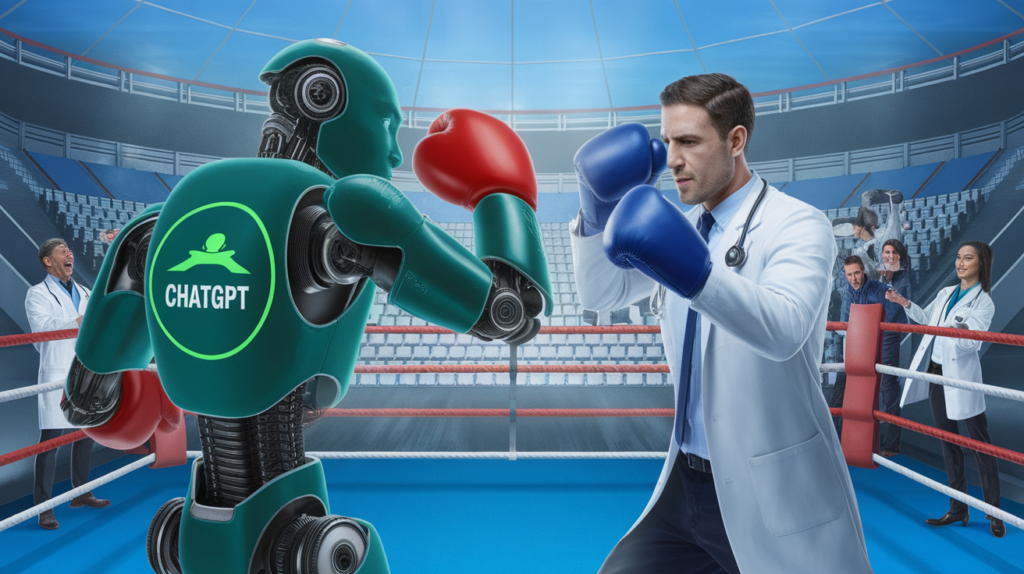
The research, published in JAMA Network Open, conducted a randomized clinical trial to evaluate diagnostic reasoning performance between physicians working alone and those assisted by ChatGPT. The study’s primary objective was to assess whether AI could enhance diagnostic accuracy and efficiency in clinical settings.
Methodology
The study employed a rigorous methodology:
- Participants: A carefully selected group of licensed physicians
- Test Cases: Complex medical scenarios based on real patient cases
- Comparison Groups:
- Physicians working independently
- Physicians working with ChatGPT assistance
- ChatGPT working independently
- Metrics: Diagnostic accuracy, time taken, and confidence levels


Key Findings
The results revealed several surprising insights:
- Diagnostic Accuracy:
- Doctors working alone: 74% accuracy
- Doctors with ChatGPT: 76% accuracy
- ChatGPT alone: 92% accuracy
- Time Efficiency:
- Doctors without AI: 9.4 minutes per diagnosis
- Doctors with AI: 8.6 minutes per diagnosis
- Confidence Levels:
- Physicians reported higher confidence levels when working with AI assistance
- The combination showed reduced diagnostic uncertainty
Analysis of Results
Several factors contribute to these intriguing results:
- AI’s Systematic Approach
ChatGPT’s high performance can be attributed to its ability to:
- Process vast amounts of medical literature instantaneously
- Apply consistent diagnostic criteria
- Avoid cognitive biases that might affect human judgment
- Consider rare conditions that doctors might not immediately recall
- Human-AI Collaboration
The modest improvement in physician performance with AI assistance suggests:
- Integration challenges in clinical workflows
- Potential skepticism toward AI recommendations
- Learning curve in effectively utilizing AI tools
- Need for better human-AI interaction interfaces
- Time Efficiency
The reduction in diagnostic time with AI assistance indicates:
- Potential for improved healthcare delivery
- Enhanced workflow optimization
- Reduced cognitive load on physicians
- More time for patient interaction

Limitations and Considerations
Despite the impressive results, several limitations should be noted:
- Clinical Context
- The study used controlled scenarios
- Real-world medical practice involves complex patient interactions
- Emotional and intuitive aspects of medical care weren’t measured
- Physical examination findings and patient rapport weren’t factored in
- Technical Limitations
- AI’s knowledge cutoff date
- Dependency on training data quality
- Inability to perform physical examinations
- Limited access to real-time medical information
- Practical Implementation Challenges
- Integration with existing healthcare systems
- Legal and ethical considerations
- Training requirements for medical professionals
- Cost implications
The Broader Implications
This study’s findings have significant implications for various stakeholders:
- Healthcare Providers
- Need for AI literacy in medical education
- Opportunity for enhanced diagnostic support
- Potential for reduced medical errors
- Improved efficiency in clinical practice
- Patients
- Potential for more accurate diagnoses
- Faster medical decisions
- Enhanced confidence in medical opinions
- Access to cutting-edge diagnostic tools
- Healthcare Systems
- Investment considerations in AI technology
- Training requirements for staff
- Protocol updates to incorporate AI
- Quality improvement opportunities
Wellness and Us Input
From our perspective at Wellness and Us, this study represents a pivotal moment in healthcare evolution. Our analysis suggests several key considerations:
- Integration Approach
We recommend a phased implementation:
- Initial use as a secondary opinion tool
- Gradual integration into routine clinical practice
- Continuous monitoring and adjustment
- Regular feedback collection from practitioners
- Educational Initiative
To maximize benefits, we propose:
- Comprehensive AI literacy programs for healthcare providers
- Patient education about AI in healthcare
- Regular updates on AI capabilities and limitations
- Best practice guidelines for AI-assisted diagnosis
- Quality Assurance
We emphasize the importance of:
- Regular accuracy assessments
- Patient outcome monitoring
- Feedback collection and analysis
- Continuous system improvement
Future Directions
The study points to several areas for future development:
- Research Priorities
- Long-term impact studies
- Cost-effectiveness analysis
- Patient satisfaction metrics
- Clinical outcome measurements
- Technology Development
- Enhanced AI-human interfaces
- Real-time learning capabilities
- Integration with electronic health records
- Improved explanation capabilities
- Policy Considerations
- Regulatory framework development
- Liability guidelines
- Privacy protection measures
- Quality control standards
Conclusion
The JAMA study represents a significant milestone in understanding AI’s role in medical diagnosis. While ChatGPT’s impressive performance suggests enormous potential, the optimal approach appears to be a collaborative model where AI augments rather than replaces human medical expertise.
The slight improvement in diagnostic accuracy when doctors used ChatGPT, combined with reduced diagnostic time, indicates that AI can be a valuable tool in clinical practice. However, the human element remains crucial for:
- Understanding patient context
- Providing empathetic care
- Making nuanced clinical decisions
- Maintaining the doctor-patient relationship
Moving forward, the focus should be on developing effective integration strategies that maximize the benefits of both human expertise and AI capabilities. This includes:
- Robust training programs
- Clear implementation guidelines
- Regular performance monitoring
- Continuous system optimization
The future of healthcare likely lies not in choosing between human doctors or AI, but in leveraging the strengths of both to provide optimal patient care. As we continue to navigate this technological revolution, maintaining a balance between innovation and traditional medical practice will be crucial for success.
For healthcare professionals and institutions looking to adapt to this changing landscape, we recommend a measured, evidence-based approach to AI integration, always keeping patient care quality as the primary focus. The journey toward AI-enhanced healthcare has begun, and the results are promising, but the path forward requires careful consideration, continuous evaluation, and adaptive implementation strategies.