
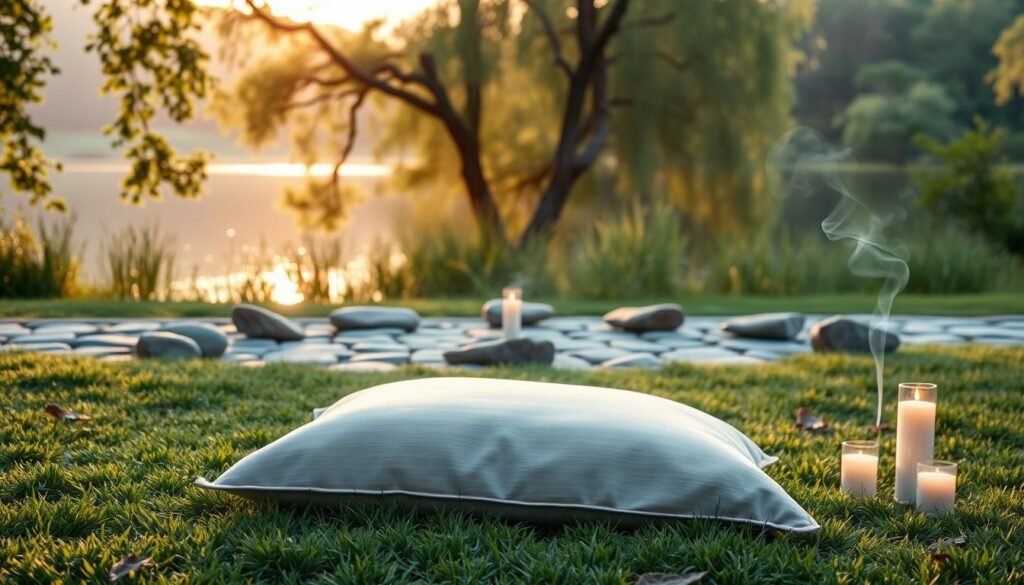
Finding inner peace is not just a dream—it’s a skill you can learn. Mindfulness meditation is a powerful tool against stress and anxiety in our fast-paced world.
Mindfulness meditation offers a simple yet powerful way to calm your mind. It helps you reconnect with your inner self. This guide is for both beginners and those who have tried meditation before.
We make meditation easy to understand for everyone. You’ll learn to quiet your mind, reduce stress, and find peace. This peace will shine through every part of your life.
Key Takeaways
- Mindfulness meditation is a learnable skill for everyone
- Reduce stress and anxiety through simple techniques
- Improve mental clarity and emotional resilience
- No special equipment or extensive training required
- Adaptable practices for different lifestyle needs
What is Mindfulness Meditation?
Mindfulness meditation is a powerful practice that connects you with your inner world. It helps you stay in the present moment and find emotional balance. At its core, it’s about understanding your thoughts, feelings, and body without judgment.
Mindfulness meditation comes from ancient Buddhist traditions. It has become a popular way to improve mental and emotional health. People learn to watch their inner experiences with curiosity and kindness. This helps them create space from their automatic reactions.
Understanding the Basics
Mindfulness exercises are simple yet powerful. Anyone can learn them. The practice includes several key parts:
- Focused attention on the present moment
- Non-judgmental observation of thoughts
- Acceptance of current experiences
- Gentle redirection of wandering thoughts
“Mindfulness is not about perfection, but about paying attention to the present moment with kindness.” – Unknown
The Benefits of Practicing Mindfulness
Regular mindful breathing and meditation can change your mental and physical health. Studies show many benefits that make it very valuable:
| Mental Benefits | Physical Benefits |
|---|---|
| Reduced stress | Lower blood pressure |
| Improved emotional regulation | Enhanced immune function |
| Increased focus and concentration | Better sleep quality |
By adding mindfulness exercises to your daily life, you can become more self-aware and resilient. You’ll find inner peace. Mindfulness is a personal journey. It helps you understand yourself better and deal with life’s challenges more easily.
The Science Behind Mindfulness Meditation
Mindfulness meditation has caught the eye of scientists in recent years. They are studying how these practices change our brain and improve our well-being.
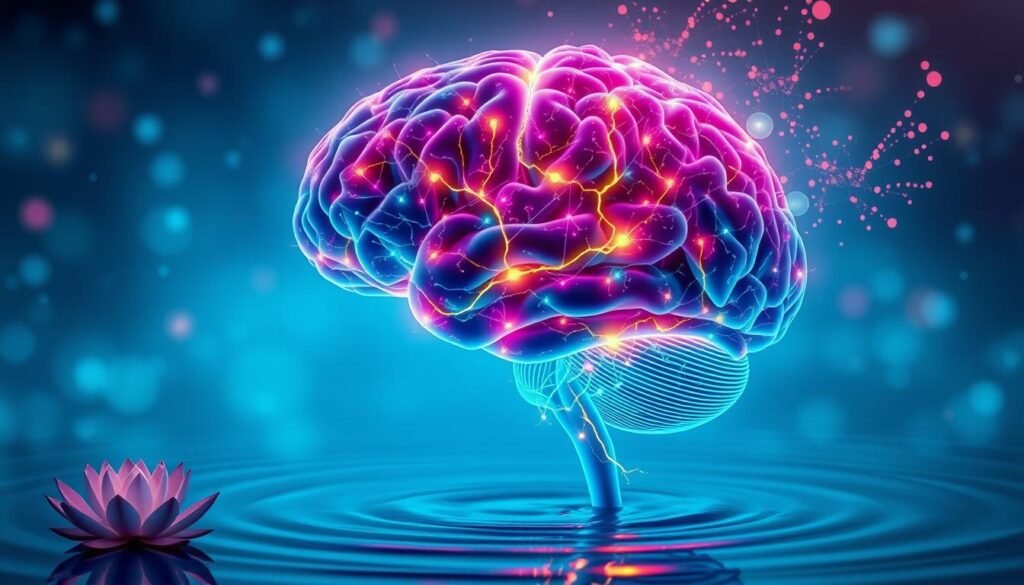
Modern neuroscience has found amazing things about mindfulness meditation. It changes how our brain works and looks. Studies show big changes in parts of the brain linked to focus, feelings, and knowing ourselves.
Research Supporting Mindfulness
Many studies show the real benefits of mindfulness meditation:
- It lowers stress and anxiety
- It makes our thinking more flexible
- It helps us control our emotions
- It grows brain tissue in key areas
“The brain is plastic, and mindfulness meditation can reshape its neural pathways,” says Dr. Sara Lazar, Harvard neuroscientist.
How Mindfulness Changes the Brain
Neuroplasticity is key to understanding mindfulness meditation. Regular meditation can change our brain’s structure. It affects areas important for:
- Handling emotions
- Creating memories
- Knowing ourselves
- Keeping focus
Research from labs around the world keeps showing the deep brain benefits of mindfulness meditation.
Getting Started with Mindfulness Meditation
Starting your mindfulness meditation journey can seem daunting. The first step to finding peace is setting up the right foundation. It takes patience, focus, and an open mind to begin.
To begin successful mindfulness exercises, know what you want to achieve. Your meditation area should be a place of calm and peace.
Creating a Suitable Environment
Creating the perfect meditation space involves a few important steps:
- Find a quiet, cozy spot in your home
- Remove distractions
- Use soft lights or natural light
- Add plants or calming decor
- Keep it tidy and simple
Setting the Right Intentions
“Meditation is not about stopping thoughts, but recognizing that we are more than our thoughts and our feelings.” – Arianna Huffington
When starting mindfulness exercises, keep these intentions in mind:
- Practice kindness to yourself
- Be non-judgmental
- Start with short sessions
- Stick to a regular practice
- Let go of resistance
Remember, meditation is a personal journey. There’s no perfect way to meditate, only your unique path to inner peace.
Different Mindfulness Meditation Techniques
Meditation offers many paths to inner peace and self-awareness. Trying out different mindfulness meditation techniques can help you find what works best for you. This can lead to relaxation and mental clarity.
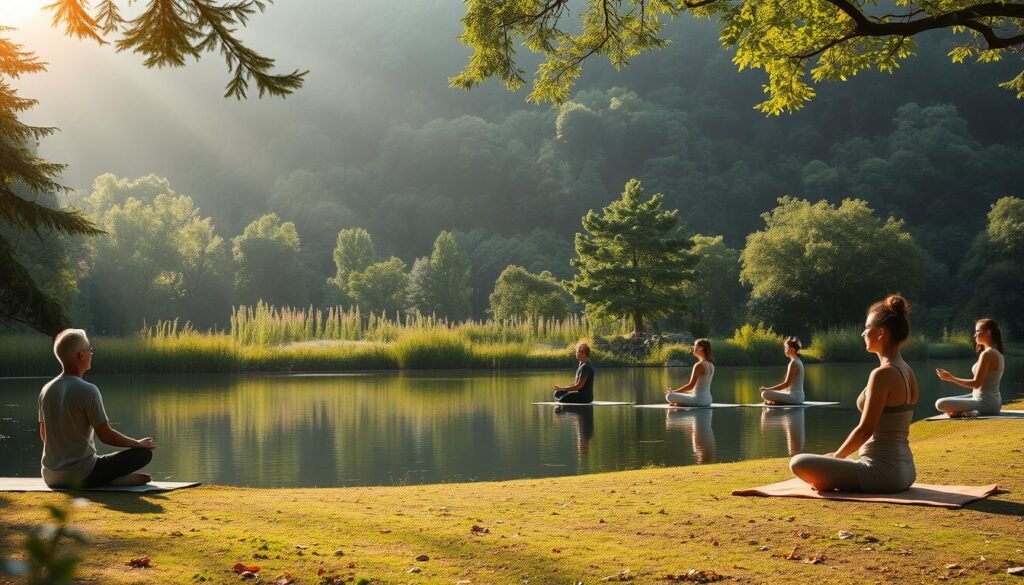
Each meditation technique has its own benefits for your mind and emotions. Learning these practices can change how you handle stress and grow personally.
Mindful Breathing Meditation
Mindful breathing is a basic meditation technique. It helps you stay in the present moment. This practice focuses on your breath, linking your mind and body.
- Find a comfortable seated position
- Close your eyes and focus on natural breathing rhythms
- Observe breath without attempting to change it
- Gently redirect wandering thoughts back to breathing
Body Scan Meditation Technique
Body scan meditation increases awareness of your body’s sensations. It helps release tension and promotes relaxation.
- Begin by lying down or sitting comfortably
- Start at your toes and slowly move attention upward
- Notice sensations without judgment
- Release any areas of physical tension
Loving-Kindness Meditation
Loving-kindness meditation builds compassion for yourself and others. This technique strengthens emotional resilience and empathy.
“Compassion for others begins with compassion for oneself.” – Buddhist Wisdom
| Meditation Technique | Primary Focus | Key Benefits |
|---|---|---|
| Mindful Breathing | Present moment awareness | Stress reduction, improved concentration |
| Body Scan | Physical sensation awareness | Tension release, body-mind connection |
| Loving-Kindness | Emotional compassion | Enhanced empathy, emotional healing |
Remember, meditation is a personal journey. Experiment with these techniques to find what resonates most with your inner landscape.
How to Establish a Consistent Practice
Building a steady mindfulness meditation practice takes dedication and planning. Many find it hard to keep up with regular meditation. But, with the right steps, you can make mindfulness a lasting habit that boosts your mental health.
To keep up with mindfulness meditation, know your own rhythms and set realistic goals. It’s not about being perfect, but about keeping at it.
Finding the Right Time
Finding the best time for mindfulness meditation is key to success. Here are some tips:
- Find your most peaceful time of day
- Begin with short 5-10 minute sessions
- Make meditation part of your daily routine
- Choose morning or evening for your meditation
“Consistency beats intensity in meditation. Small, regular practices create lasting transformation.” – Mindfulness Expert
Staying Committed and Motivated
To stay motivated in mindfulness meditation, use these strategies:
- Keep track of your progress in a meditation journal
- Set realistic weekly meditation goals
- Treat yourself for consistent practice
- Join online meditation communities
Remember, every meditation session brings you closer to inner peace and self-awareness. Your dedication will turn mindfulness into a powerful habit in your life.
Overcoming Common Challenges
Meditation can be tough, even for newbies. Many face mental hurdles that make it hard to keep going. It’s key to know these challenges and how to get past them for a lasting meditation practice.
Dealing with Distracting Thoughts
Distracting thoughts are normal in meditation. Most people deal with a lot of mental chatter. The trick is to watch these thoughts without getting caught up in them.
- Recognize thoughts without judgment
- Imagine thoughts as passing clouds
- Gently return focus to your breath
“The mind is like a wild elephant. Meditation helps you learn to guide it with patience and compassion.” – Meditation Expert
Managing Expectations
Many start meditation with high hopes. They think they’ll feel calm right away or stop thinking completely. But, meditation grows slowly over time.
- Accept that progress takes time
- Start with short meditation sessions
- Celebrate small improvements
Remember, meditation is a practice of self-discovery, not perfection. Each moment of awareness is a success in itself.
Incorporating Mindfulness into Daily Life
Mindfulness isn’t just for sitting in meditation. It’s a way to live life more fully by being aware in every moment. It turns everyday activities into chances for growth and self-discovery.
Adding mindfulness to your daily life can make it better. By focusing on the present, you can lower stress and feel better overall.
Mindful Eating Practices
Mindful eating helps you connect more with food and your body. It teaches you to eat more thoughtfully:
- Eat slowly and without distractions
- Pay attention to food textures and flavors
- Listen to your body’s hunger and fullness signals
- Choose nutritious foods with intention
“Eat with all your attention, as if each bite is a meditation.” – Zen Proverb
Mindfulness During Routine Activities
Walking meditation is a special way to practice mindfulness in daily movement. It makes walking a deep spiritual practice:
- Focus on each step’s sensation
- Breathe naturally and rhythmically
- Notice your surroundings without judgment
- Sync your breath with your walking pace
By adding mindful eating and walking meditation to your routine, you can live more mindfully and peacefully.
Mindfulness Meditation for Stress Relief
Stress is a big part of our lives today. But, mindfulness meditation can help us manage it. It teaches us to be aware of our feelings and thoughts. This way, we can handle stressful moments better.
Recognizing Stress Triggers
Knowing what stresses you out is key. Mindfulness helps spot these triggers. It teaches you to breathe mindfully, giving you time to think before reacting.
- Pay attention to physical sensations of stress
- Notice recurring thought patterns
- Track emotional responses in challenging situations
“Awareness is the first step toward transformation.” – Unknown
Techniques to Reduce Anxiety
Mindful breathing is a great way to calm down fast. These easy exercises can soothe your nerves and shift your focus:
- Deep Belly Breathing: Inhale deeply through your nose, expanding your belly, then exhale slowly through your mouth
- 4-7-8 Breathing Technique: Inhale for 4 seconds, hold for 7 seconds, exhale for 8 seconds
- Body Scan Meditation: Systematically relax each muscle group from head to toe
Doing these exercises often can lower stress and make you more emotionally strong.
Mindfulness and Emotional Well-being
Emotional intelligence is key to personal growth. Mindfulness meditation can greatly improve it. It helps us understand our emotions better, leading to self-discovery and healing.
Understanding Your Emotions
Mindfulness meditation lets us see and deal with emotions without judgment. Regular practice helps us:
- Observe emotions objectively
- Identify emotional triggers
- Prevent reactive responses
- Create space between feelings and reactions
“Emotions are like waves. Observe them, but don’t let them control you.”
Developing Self-Compassion
Loving-kindness meditation is great for self-compassion. It teaches us to be as kind to ourselves as we are to our friends.
| Meditation Technique | Emotional Benefit |
|---|---|
| Loving-Kindness Meditation | Increases self-acceptance |
| Body Scan Meditation | Reduces emotional tension |
| Breath Awareness | Stabilizes emotional reactivity |
Adding mindfulness meditation to our daily lives can make us more balanced and compassionate. This leads to better mental health and peace.
Mindfulness Resources and Tools
Expanding your mindfulness practice needs the right tools and guidance. Reliable resources can change your meditation and deepen your mindfulness exercises.
Finding your way in mindfulness can be tough. But, many apps, websites, and books can help you find peace and self-awareness.
Top Mindfulness Apps to Explore
- Headspace: Guided meditation for beginners
- Calm: Sleep stories and relaxation techniques
- Insight Timer: Free global meditation community
- Waking Up: Neuroscience-based meditation app
Recommended Websites for Meditation Techniques
| Website | Focus Area | Key Features |
|---|---|---|
| Mindful.org | Comprehensive Mindfulness | Articles, courses, practice guides |
| Greater Good Magazine | Scientific Mindfulness | Research-backed meditation insights |
| Tara Brach | Emotional Healing | Free meditation recordings |
Essential Books for Deepening Practice
- Mindfulness in Plain English by Bhante Gunaratana
- Full Catastrophe Living by Jon Kabat-Zinn
- The Mind Illuminated by Culadasa
“The present moment is filled with joy and happiness. If you are attentive, you will see it.” – Thich Nhat Hanh
These resources offer different ways to practice mindfulness. They help you find techniques that fit your growth and meditation journey.
Joining Mindfulness Communities
Starting mindfulness meditation practices is more rewarding with others. Sharing your path with people who think alike can make it more supportive. Group meditation brings growth and learning that solo practice can’t match.
Benefits of Group Meditation
Group mindfulness meditation creates a strong energy together. People often feel more driven and inspired when meditating with others. These groups offer support, encouragement, and a sense of belonging. They help keep you going during tough times.
Finding Local and Online Communities
Finding meditation groups is now easier online. Local yoga studios, wellness centers, and community centers often host sessions. Online, Meetup, Facebook Groups, and meditation forums connect you from home.
Whether in person or online, the goal is to find a supportive space. Connecting with others deepens your mindfulness journey.